Stuck in an investing limbo lately? Bombarded by conflicting market trends and economic forecasts (can we even trust those anymore)? Predicting interest rates is like a game of musical chairs, especially with a presidential election on the horizon. What lies ahead for the latter part of 2024 and into 2025?
I’m launching a new series of income and dividend investing questions that cover cash flow, diversification, risk, inflation and more. To start, I’m curious to hear from those in our robust Income Investing Community, with over 720 AAII members nationwide:
At age 29, I’ve gained tremendous insights from this community’s discussions, learning from those who’ve navigated every market cycle. I’ve asked some tough questions and found invaluable wisdom shared by experienced investors.
Whether you rely on dividends or bonds for income, or you’re just dipping your toe into the pond of income investing, I want to hear your take on potential interest rate cuts this fall. After the roller-coaster years since 2020, one thing is clear: We never quite know what’s around the corner. In times of uncertainty, I find solace in forums like the Income Investing Community, where diverse perspectives challenge my thinking. So, join me and fellow investors in exploring these questions.
If you or someone you know could benefit from these conversations, visit https://community.aaii.com, log in with your AAII credentials and join the Income Investing Community, or another special interest group (SIG), today!
Join Our Community Today
https://community.aaii.com
Field Notes From the Chapters
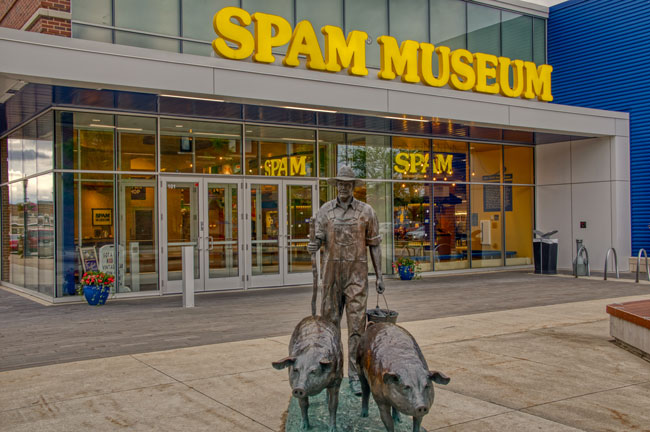
There is nothing on our planet so obscure or outrageous that you can’t find a museum devoted to its preservation. There are museums dedicated to mustard (Wisconsin), dog collars (England), hair (Turkey), vampires (France), bad art (Massachusetts), ramen noodles (Japan), toilets (India) and spam (the edible kind, Minnesota). And the Museum of American Finance in New York City.
We wouldn’t suggest that AAII’s chapters have much in common with museums EXCEPT to point out that, in addition to our ongoing stream of current programs, our communities archive a treasure trove of resources that won’t go out of style anytime soon.
Among the chapters that have populated their online AAII Community libraries with slides, recordings and program notes are Austin/San Antonio, Eastern Michigan, Greensboro, Houston, New York City, Puget Sound, Rochester and Twin Cities.
Every community has a discussion board for members to post questions, comments and the occasional rant. You can contact other members individually to set up informal SIG meetings. And you don’t have to live in the neighborhood to sign up and reach out. All AAII communities are open to all AAII members, free of charge.
Don’t overlook the power and potential of our Local Chapter communities for one-on-one connections and solitary exploration. Whatever drives your interests, we hope you’ll let our chapters be a stop along the way.
—Hollis Wagenstein-Hurturk, AAII Chapter liaison
Sign up for Chapters
www.aaii.com/ChapterEmail
See Upcoming Events
https://community.aaii.com/events/calendar






JOHN L from NJ posted over 2 years ago:
BARRY J from TX posted over 2 years ago:
You need to log in as a registered AAII user before commenting.
Log InCreate an account