

Related

Portfolio Strategies
The S&P 500 index is experiencing one of its most volatile years since the financial crisis of 2007–2009.

Charles Rotblut leads a class in AAII's new Essential Investing Video Course. Go to https://www.aaii.com/ves for more information and to subscribe.
The S&P 500 index is experiencing one of its most volatile years since the financial crisis of 2007–2009. Through mid-October, the large-cap index has risen or fallen by 2% on 38 trading days. This is well above the post-financial crisis average of 14 days.
Only 2020 saw more days with a daily change of greater than 2% (44).
Not shown in the chart here are days with a daily change of at least 1%. The S&P 500 has had 99 of such days this year so far—just 10 days shy of 2020’s total but far above the post-financial crisis average of 55 days per year.
Though often thought of in terms of downside moves, volatility refers fluctuations in price—both positive and negative—when discussed in terms of stock market movement. As you can see in the chart here, there has been a nearly equal number of days with big upward moves as there have been with big downward moves.
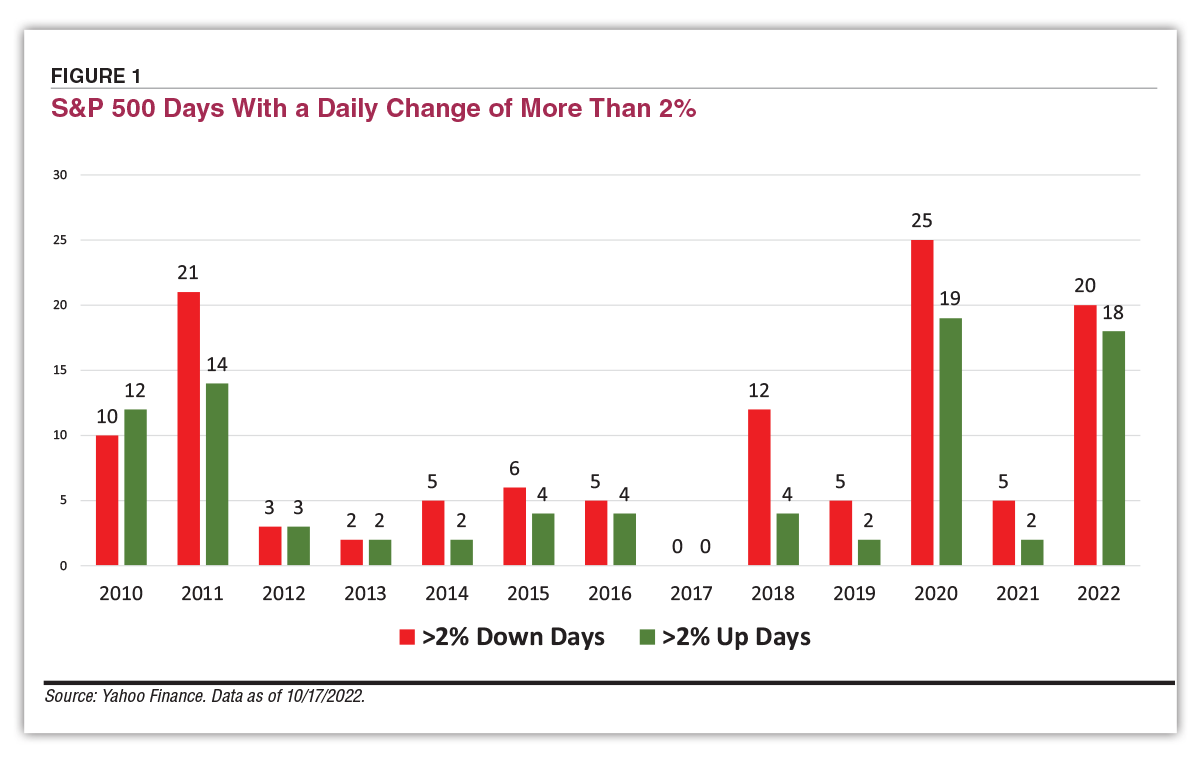
People rarely complain when there is a high level of upside volatility. It’s the big downward moves that unnerve investors.
We’re all familiar with the reasons why this year has been volatile: inflation, tightening monetary policy, the war in Ukraine, ongoing supply chain issues, the so-called “smart money” being awfully reactive, etc. How the market’s swings affect a given individual investor depends on their need for portfolio withdrawals.
Downside volatility is a gift to investors saving for long-term goals. The lower prices allow each dollar saved to buy more shares. If you are in this camp, be greedy.
A safe assets bucket (e.g., an allocation to cash equivalents) can help those taking withdrawals to avoid selling stocks (and bonds) when they are down in price. If this isn’t an option, see if your portfolio income (dividends, distributions from funds, coupon payments from bonds, etc.) is enough to support withdrawal needs during downswings.
In between contributing and withdrawing is the age-old advice of staying the course. The sizable market moves in both directions that have occurred this year have increased the behavioral risk of attempting to time the market. Misjudging the market’s direction can leave you with far less wealth than if you simply do not make any portfolio changes.
Portfolio Strategies

Trading Strategies

Portfolio Strategies

ED W from DE posted over 3 years ago:
ED W from DE posted over 3 years ago:
ROBERT A from NC posted over 3 years ago:
Peter N from TN posted over 3 years ago:
You need to log in as a registered AAII user before commenting.
Log InCreate an account