

Related

Portfolio Strategies
Dealing With Inflation in a Retirement Portfolio

PRISM Wealth-Building Process
Although almost all retirees over the age of 65 are covered by Medicare, many still face significant out-of-pocket (OOP) expenses for medical treatments.

Although almost all retirees over the age of 65 are covered by Medicare, many still face significant out-of-pocket (OOP) expenses for medical treatments. The adequacy of retirement income should be viewed relative to a retiree’s income net of OOP expenses.
Spurred by this year’s 14.5% increase to Medicare Part B premiums, the Center for Retirement Research published a brief examining the impact of out-of-pocket medical expenses (excluding long-term care) on retirement income, updating the University of Michigan’s 2018 Health and Retirement Study (HRS).
The study’s sample was limited to respondents at least 65 years old who were receiving both Social Security and Medicare benefits. When looking at total retirement income, the median retiree has 88% of their total income left over after OOP expenses. The lowest group (fifth percentile) was left with only half of their total retirement income after medical spending.
Medicare beneficiaries face cost-sharing for inpatient hospital care, outpatient hospital services and prescription drugs. There are also services not covered by Medicare, including dental, vision and hearing. Many Medicare enrollees buy supplemental insurance coverage, which can involve additional premiums. Retirees without supplemental plans face the full cost of services not covered by Medicare.
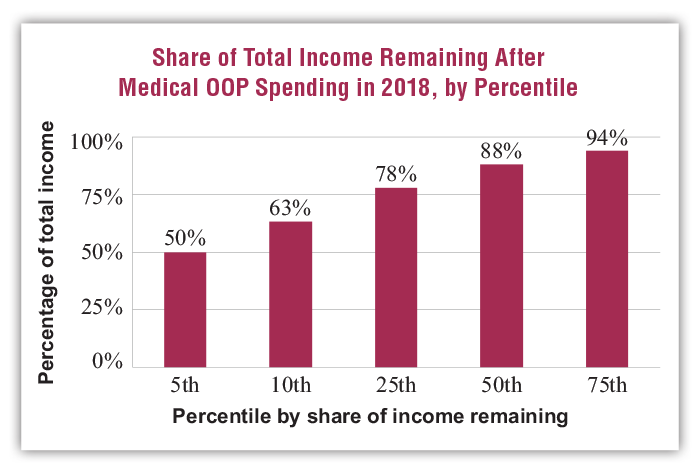
For women, the median share of total retirement income remaining after OOP medical expenses is 85%, and for men the median is 91%. The difference is largely because women have substantially lower Social Security benefits.
There is little change in the effect of OOP expenses on total retirement income when controlling for age. Those with higher income had more total income remaining.
Source: “How Much Does Health Spending Eat Away at Retirement Income?” by Melissa McInerney, Matthew Rutledge and Sara King; Center for Retirement Research at Boston College, August 2022.
Portfolio Strategies
PRISM Wealth-Building Process


No comments have been added yet. Add your thoughts to the discussion!
You need to log in as a registered AAII user before commenting.
Log InCreate an account