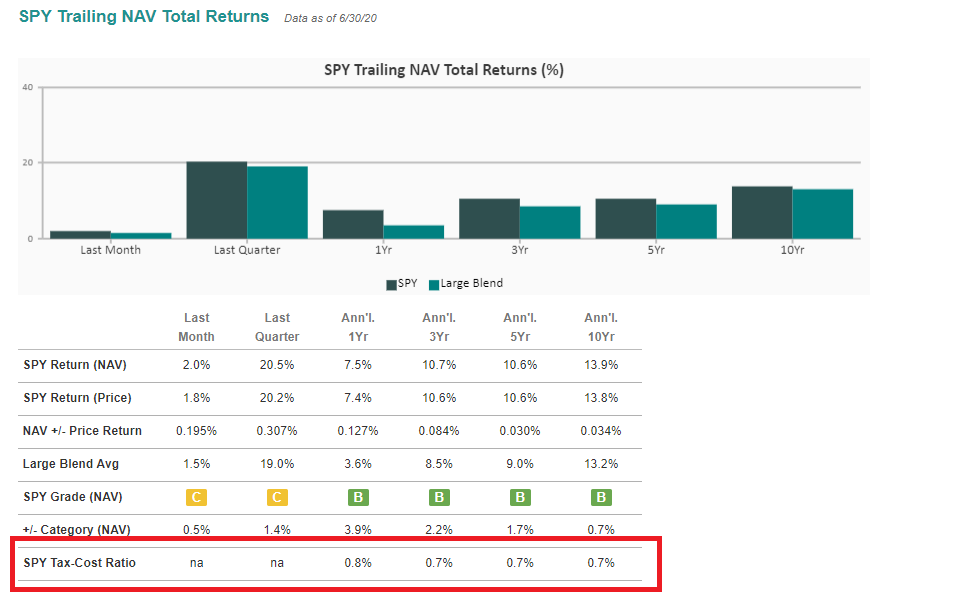
The tax-cost ratio of a mutual fund or exchange-traded fund (ETF) measures how much that fund’s annualized return is reduced by the taxes it must pay on distributions to investors—typically from dividends, interest and capital gains—each year. A fund’s turnover rate correlates with its tax-fund ratio in the event that the management team sells a holding and then distributes the capital gains to the fund’s investors.
An individual investor is taxed for two types of events when holding a stock: when the stock provides income in the form of a dividend and when it provides income in the form of capital gains if sold for a profit. Since a fund is made of up many stocks—in the case of an equity fund—investors must pay taxes on the capital gains and dividends for many stocks. If a fund has a higher turnover rate than a category peer, you should expect that fund to also have a higher tax-cost ratio due to the increased frequency in which income is distributed to that fund’s investors through capital gains.
This logic plays out on a macro-scale between ETFs and mutual funds as well. Because mutual funds are actively managed, they tend to have higher turnover rates. Because ETFs are, for the most part, passively managed―tracking an index, for example―they tend to have lower turnover rates. Due to these factors, you would expect an ETF to have a lower tax-cost ratio than a mutual fund.
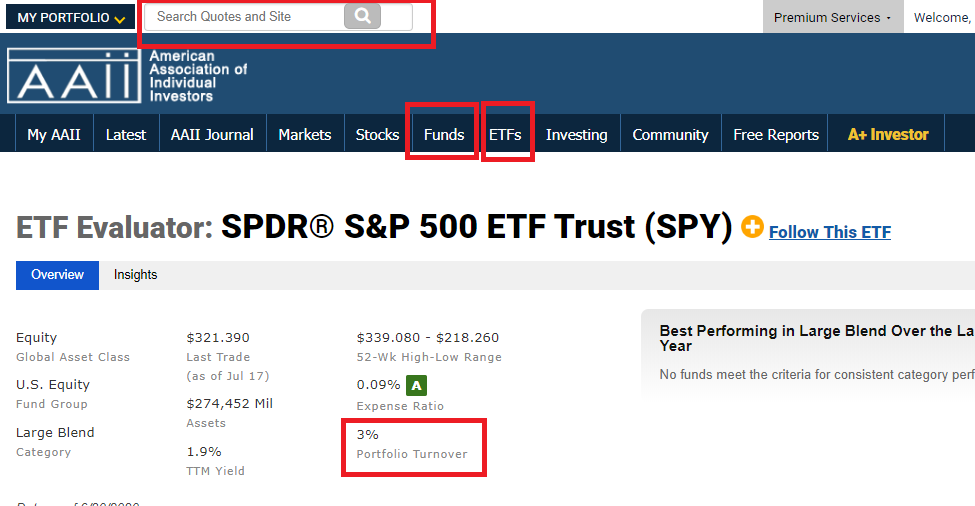
In both the Fund Evaluator and the ETF Evaluator—accessible from the Funds tab or ETFs tab of AAII.com, or by typing the name or ticker of a fund into the search box at the top of the website—portfolio turnover is available in two places on a fund’s Overview page. It can be found first at the top of the page under the fund’s name, included as part of a summary of key figures investors should consider.
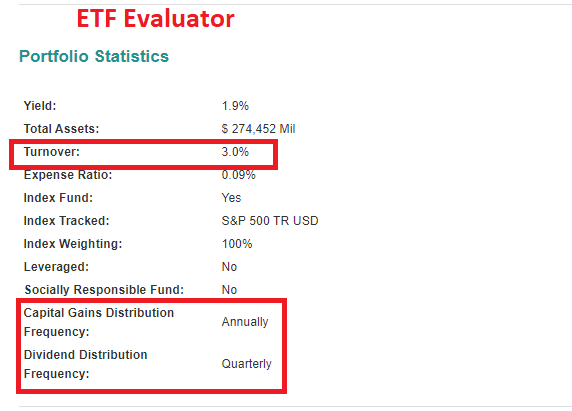
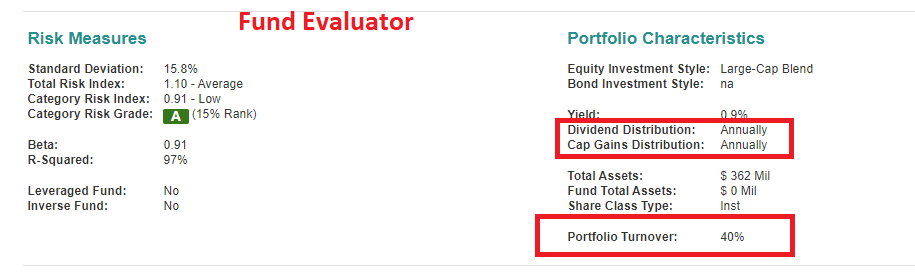
For ETFs, turnover can also be found under Portfolio Statistics. For mutual funds, it can be found under Portfolio Characteristics. In these sections, you will also find information about how often a fund distributes income to investors.
A fund’s tax-cost ratio is available at the bottom of a fund’s Trailing NAV Total Returns table in both the Fund Evaluator and the ETF Evaluator. The tax-cost ratio is provided for total annual returns over one year, three years, five years and 10 years, so you can see how the tax-cost ratio has changed over time and its impact on the total return.