 VIOG
VIOG
Investing can seem daunting due to stock market volatility and the complexity of maintaining a balanced portfolio. However, understanding asset allocation and using the right tools can significantly ease this process.
A+ Investor subscribers can access exclusive AAII My Portfolio analysis tools that give you the information to make critical decisions about your portfolio. For details on setting up a portfolio in the My Portfolio tool, click here.
At a glance, My Portfolio helps you determine if your investments are worth holding, assess your risk level and evaluate the diversification of your portfolio. Best of all, the data is customized for you and focused on the investments you are most interested in.
In this installment of Making the Grade, we draw on resources from A+ Investor and AAII to guide you through evaluating and adjusting your portfolio to align with your investing goals and risk tolerance.
Asset allocation is the cornerstone of a robust investing strategy, accounting for over 90% of a portfolio’s return variability. It involves spreading investments across various asset classes (stocks, bonds, cash, etc.) to balance risk and reward based on your investment horizon, risk tolerance and financial goals.
Steps to Determine Asset Allocation
1. Identify Your Investor Profile:

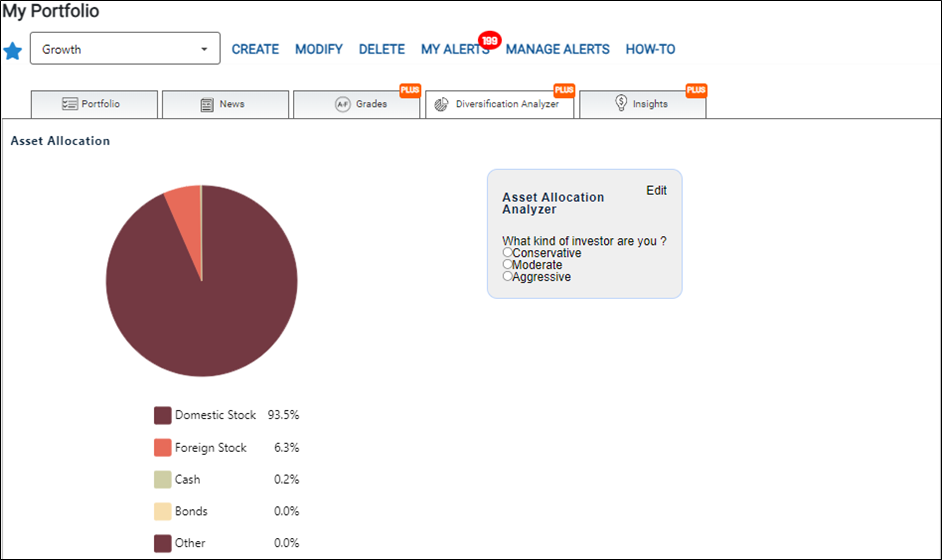
For A+ Investor subscribers, the Diversification Analyzer in My Portfolio provides a breakdown of your portfolio allocation based on the shares entered for each stock, mutual fund, exchange-traded fund (ETF) and any cash and bond holdings. This information helps determine if your investing strategy is too aggressive or not aggressive enough based on your chosen investor profile.
The first time you click on the Diversification Analyzer tab, you will be asked to define your investor type:
2. Set a Target Allocation:
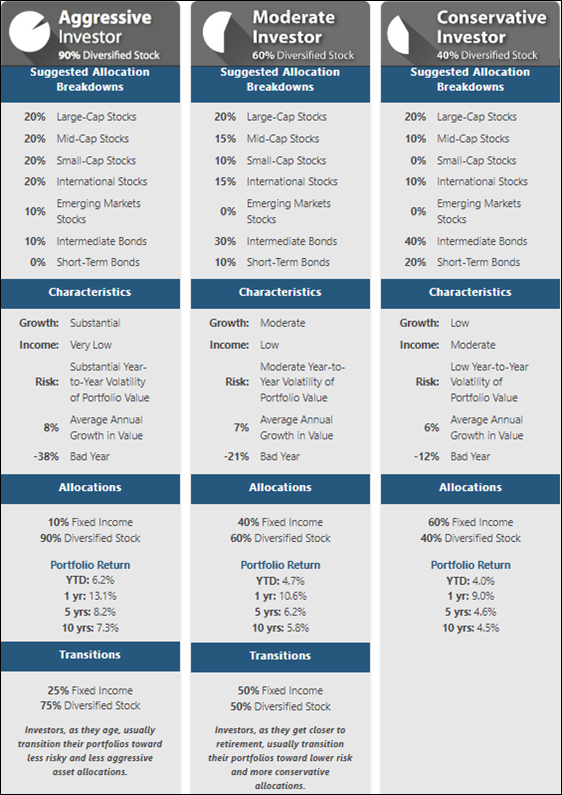
3. Diversify Your Portfolio:
For example, if an investor identifies as aggressive, the Asset Allocation Analyzer presents an analysis of the selected portfolio compared to the chosen asset allocation model. The analysis examines the underlying portfolio for mutual funds and ETFs, including cash and bond holdings and the allocation between domestic (U.S.) and foreign (non-U.S.) stocks.
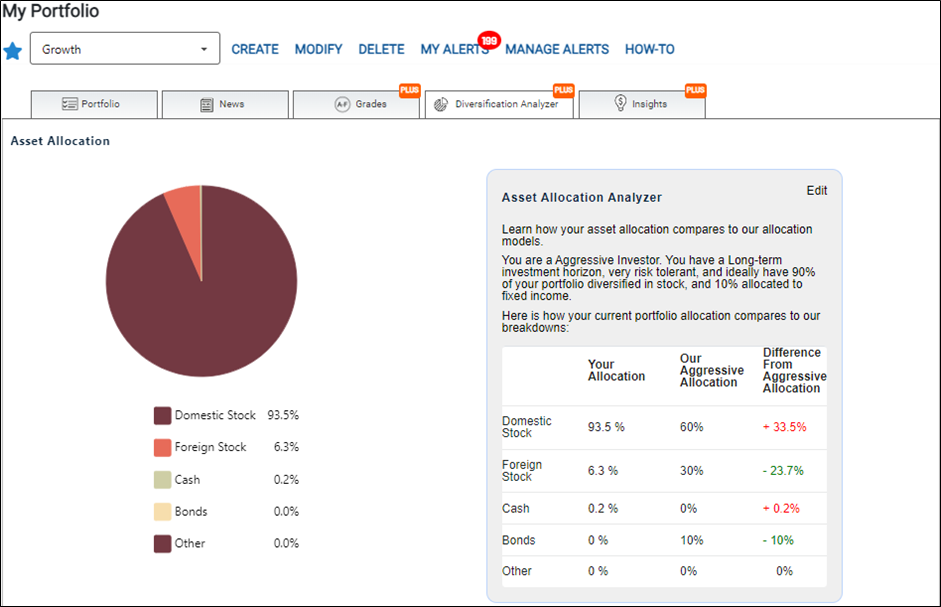
The Asset Allocation Analyzer might indicate that the portfolio’s allocation is too aggressive based on AAII’s model. For instance, an aggressive allocation model shows that the portfolio is overweighted in equities (99.8% versus 90.0%). On a more granular level, the portfolio is significantly overweighted in domestic stocks (93.5% versus 60.0%) and underweighted in foreign stocks (6.3% versus 30.0%). Additionally, the portfolio is underweighted in bonds (0.0% versus 10.0%).
Suppose the investor indeed views themselves as capable of taking significant risks to achieve above-average returns. In that case, they might consider reducing their exposure to domestic stocks and increasing their bond allocation. Conversely, if the investor is comfortable with their current allocation, the Diversification Analyzer indicates that they may be even more aggressive than previously thought.
The Diversification Analyzer is not intended to offer portfolio suggestions but to help investors determine if their asset allocation aligns with their perceived risk tolerance.
Diversification is not just limited to stocks, bonds and cash. Diversifying within asset classes can protect against security-specific risks. Even with many different investments, you may not be as diversified as you think, especially if you hold too many stocks from one or a few sectors. You can also diversify and potentially boost returns by allocating beyond large-cap stocks.
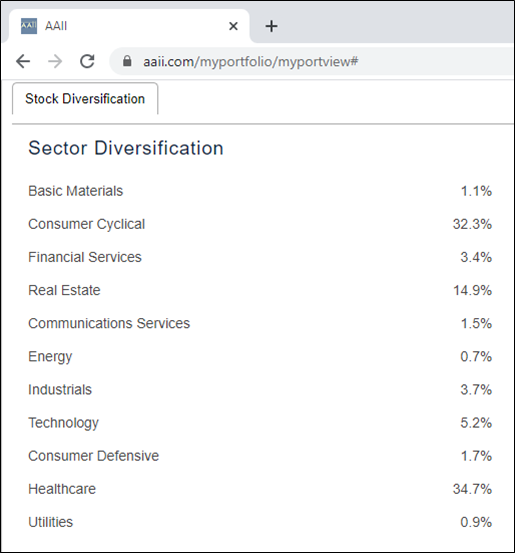
The Diversification Analyzer summarizes your portfolio by sector, size and geography. The sector diversification considers your stock, mutual fund and ETF holdings. However, the size and geographic analysis only cover the individual stock holdings in your portfolio.
In the example below, the investor is heavily allocated to consumer cyclicals and health care stocks, with very little exposure to sectors such as energy and utilities.
If your goal is a diversified portfolio, consider paring down holdings in concentrated sectors and reallocating funds to underweighted sectors.
On the Grades tab of My Portfolio, you can quickly assess the attractiveness of your investments. Stocks, mutual funds and ETFs are assigned A+ Investor Grades of A, B, C, D or F. Just like in school, A’s and B’s are good, while D’s and F’s are bad.
When evaluating your stock holdings, you can determine if a stock still warrants a place in your portfolio based on the characteristics that matter most to you, such as attractive valuations, strong growth or price momentum, positive earnings estimate revisions and surprises, or high quality.
For example, if you are a value-oriented investor, seeing stocks with Value Grades of D and F may lead you to consider removing them from your portfolio and seeking more attractively valued stocks.
Click on the stock ticker symbol to learn more about what’s driving the stock grades. This will take you to the Stock Evaluator, where you can click on the Grades tab for more details on that particular stock.
There are also grades for mutual funds and ETFs related to performance, expenses and risk. These grades indicate how a particular fund compares to others in the same category.
For example, the grades for the Vanguard S&P Small-Cap 600 Growth Index ETF (VIOG) shown below illustrate how it compares to others in the same Morningstar category (small growth).
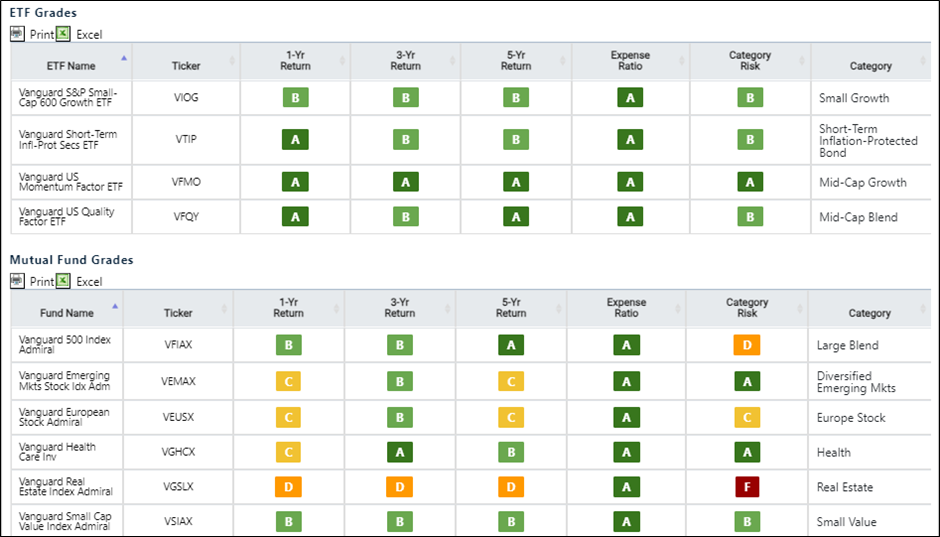
Compared to other ETFs in the small growth category, the Vanguard S&P Small-Cap 600 Growth has ranked near the top in terms of performance over the last one-, three- and five-year periods, and it ranks favorably in terms of relative risk.
Stocks, mutual funds and ETFs are graded from A to F based on various performance metrics. High grades indicate attractive investments, while low grades suggest a need for reevaluation.
Once you have evaluated your portfolio using these tools, you may wish to make adjustments:
1. Rebalance Your Portfolio
2. Adjust Based on Market Conditions
3. Consider Sector and Geographic Exposure
1. Regular Review
2. Focus on Long-Term Goals
3. Stay Informed
Managing an investment portfolio requires a strategic approach to asset allocation, regular evaluation and timely adjustments. The tools and resources AAII and A+ Investor provide can help you make informed decisions, ensuring your portfolio remains aligned with your risk tolerance and financial goals. Remember, the key to successful investing lies in understanding your investor profile, diversifying your assets and making data-driven adjustments to effectively navigate market volatility.

