Ever wonder why some investors stay calm during market crashes while others panic? The secret often lies in how their portfolios are structured. Research shows that more than 90% of a portfolio’s return variability comes from one factor: asset allocation. Let’s break down why that matters for your financial future.
The volatility seen since the 2024 presidential election reinforces the importance of choosing an appropriate asset allocation that aligns with your financial goals and personal risk tolerance. Whether you feel like you are taking on too much risk or want to gradually increase your exposure to equities, understanding how to structure your portfolio correctly is key to achieving long-term financial stability.
So, how do you know if your asset allocation is right for you? It all starts with understanding your investor persona.
AAII offers three Asset Allocation Models designed for different investor personas based on investment time horizon and risk tolerance:
You can find the asset allocation area of the AAII site by clicking on the Learn menu from the AAII.com navigation bar and selecting Asset Allocation. Here, you’ll find characteristics typically associated with investors in these categories.
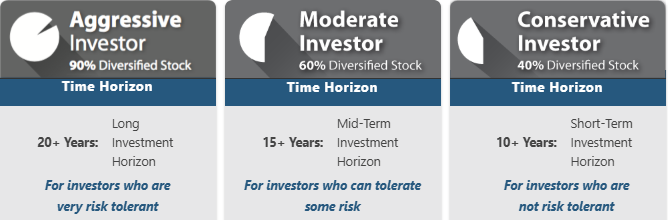
Generally, younger investors with longer time horizons tend to have a greater tolerance for risk and portfolio volatility. Conversely, those nearing retirement or with a shorter time frame for accessing their investments often prioritize capital preservation.
However, age alone shouldn’t dictate allocation decisions. Individual circumstances matter. For example, a tenured professor with a stable income and little risk of job loss might feel comfortable taking on more risk than a younger entrepreneur whose financial future is uncertain.
The suggested allocation models serve as guidelines, providing investors with insight into expected returns, potential losses in down markets and risk exposure for each profile.
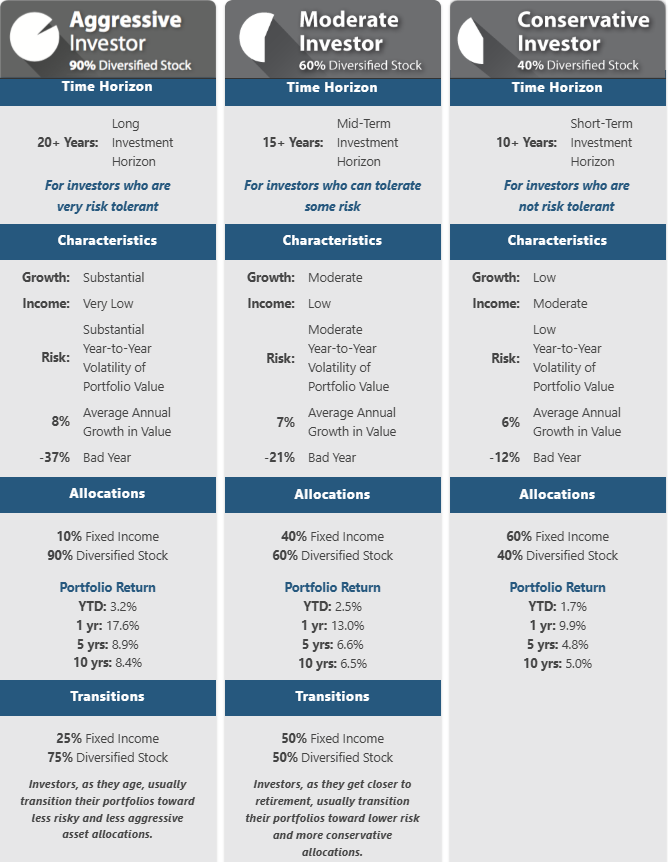
The broad asset allocation scenarios offer a clearer picture of each investor profile, showing the stock/bond allocation, risk and growth characteristics, time horizon, and suggested transition allocations.
Here you will find information such as the typical returns you can expect to generate and how much you can expect to lose in a strong down market as an aggressive, moderate or conservative investor.
Even when investors logically understand asset allocation, emotions and cognitive biases often drive their decisions. Behavioral finance studies show that psychological factors can lead investors to stray from their intended strategies, often at the worst possible times.
Here are some common biases that may impact your asset allocation decisions:
What it is: Think about how frustrating it is to lose $20 compared to how good it feels to find $20. That’s loss aversion in action—investors feel losses twice as strongly as gains, often leading them to play it too safe after a downturn.
How to counter it: Focus on long-term investing goals rather than short-term market fluctuations. If your strategy is sound, temporary market dips should not dictate drastic allocation changes.
What it is: If you’ve ever left the house without an umbrella because it’s been sunny all week, you’ve experienced recency bias. Investors do the same thing—assuming a bull market will keep running or a downturn will never end.
How to counter it: Regularly reassess your portfolio allocation in the context of long-term market trends rather than reacting to recent price movements.
What it is:Investors may overestimate their ability to predict market movements or select winning stocks, leading to poor diversification or excessive risk-taking.
How to counter it: Use objective tools and data-driven analysis to assess whether your portfolio is truly diversified and aligned with your risk tolerance.
What it is: Many investors follow the crowd, buying into overhyped assets or selling during market panic, which can lead to mistimed entries and exits.
How to counter it: Stick to your predefined asset allocation strategy rather than reacting emotionally to market sentiment.
Once you’ve determined your risk tolerance and investor persona, the next step is to evaluate your actual portfolio allocation and determine whether it aligns with your target mix.
Using A+ Investor’s portfolio analysis tools, investors can assess whether their allocations are too aggressive or too conservative. For example, an investor identifying as moderate may discover their actual portfolio is overweighted in equities and underweighted in bonds, signaling a need for rebalancing.
For A+ Investors, the Diversification Analyzer in My Portfolio shows how your portfolio is allocated based on stocks, mutual funds, exchange-traded funds (ETFs) and cash/bond holdings. It helps answer the question: Am I taking on too much risk or not enough?
The first time you click on the Diversification Analyzer tab, you are asked to define what type of investor you are:
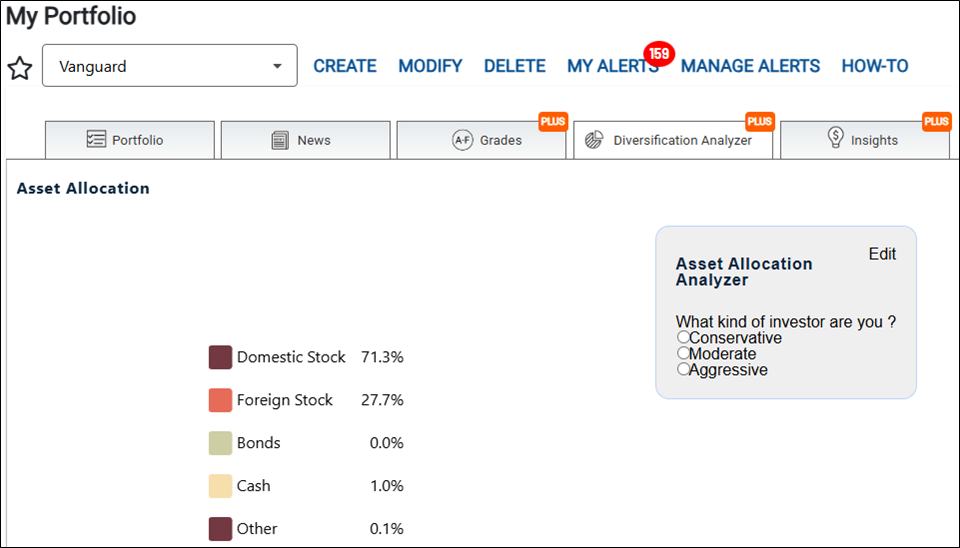
For this example, the investor identifies as being moderate. The Asset Allocation Analyzer then compares the selected portfolio to the asset allocation model. The analysis considers your individual stock and bond holdings and the underlying portfolio for any mutual funds and ETFs you have in your portfolio.
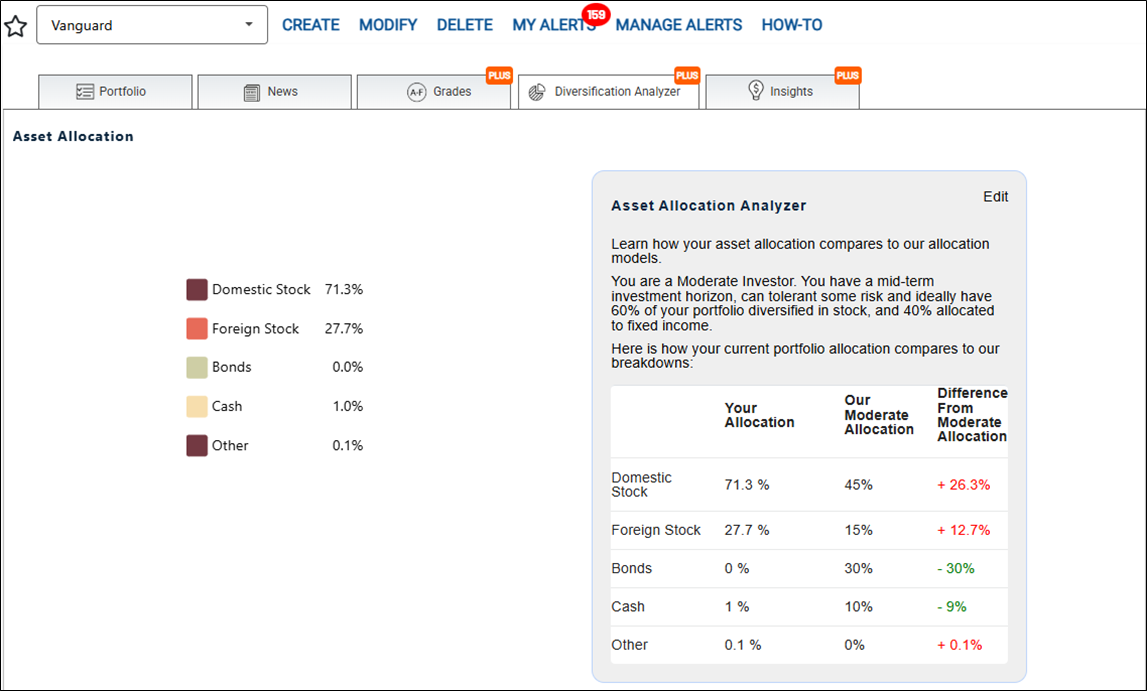
For this example, the moderate investor might find their portfolio is overweighted in domestic stocks (71.3% versus a recommended 45%) and foreign stocks (27.7% versus 15%), while underweighted in bonds (0.0% versus a recommended 30%).
If this investor truly wants a balanced approach, they might consider shifting some assets away from stocks and moving them into bonds for downside protection. However, if they’re comfortable with their portfolio’s risk level, it’s a sign they may be more aggressive than they initially thought.
The diversification analyzer is not intended to offer portfolio suggestions. Still, it is a means of helping investors identify whether they are as aggressive or conservative in their asset allocation as they think.
Once you establish a target allocation, ongoing monitoring and periodic adjustments ensure that your portfolio aligns with your financial goals.
By integrating sound asset allocation principles with an awareness of behavioral biases, investors can create a more disciplined, data-driven approach to managing their portfolios.
The best investors don’t just pick good stocks—they stick to a plan. By using A+ Investor’s tools and watching out for common investing biases, you can more confidently take control of your financial future.
Ready to see if your portfolio is really aligned with your risk tolerance? Try out My Portfolio’s Diversification Analyzer today!

