

Automate Retirement Savings and Retirement
by Charles Rotblut | September 30, 2021
Greetings from the AAII Investor Conference 360. We’ve had great presentations so far and good questions from members. All sessions are being recorded so if you were unable to attend, you can still learn from all the great knowledge being shared. Be on the lookout early next week for information about getting access.
During my “Seven Ways to Build and Maintain Wealth” boot camp presentation yesterday, I discussed how automating various actions can help prevent unintended errors. Using auto-pilot when appropriate can also limit the influence that behavioral errors and noise have on the portfolio management process. 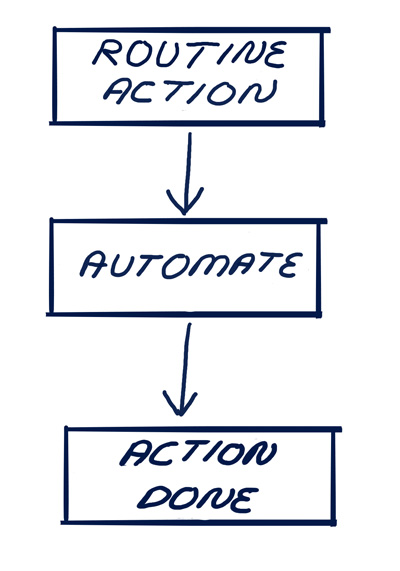
Among the actions you can automate is saving for retirement. By making use of a Ulysses contract, you make it much harder to spend the money you should be saving. A Ulysses contract limits your actions in advance. The name is a reference to Ulysses asking his sailors to tie him up before his ship approached the sirens in Homer’s Odyssey.
There are two steps to do this. This first is to set up recurring contributions to your workplace retirement plan, such as a 401(k), which allows you to invest with pretax dollars. Many companies have established auto-enrollment. This makes contributing to the plan the default option. If you’re not enrolled, contact your human resources department and do it now.
The second step is to set an annual reminder to increase your contribution—especially if your plan does not have an auto-escalation option. (An auto-escalation plan automatically raises your contribution rate over a period of time.) Even small increases make a big difference over time.
If you have an individual retirement account (IRA) or a Roth IRA, schedule recurring deposits coinciding with when you get paid. If the account is held in a brokerage account, set up reminders to invest the contributions so that the money does not sit in cash.
Once in retirement, do the opposite: schedule automatic withdrawals to fulfill your annual required minimum distributions (RMDs). Since the RMDs may trigger the need to pay estimated taxes, schedule those payments in advance too.
On the income side, set up direct deposits for Social Security, pension benefits and income annuity payments if you haven’t already done so.

- The October AAII Journal has been posted to our website.
- Conference keynote speaker Jack Brennan provides some great insights on how to reach your financial goals in the new issue.
- Fellow conference speaker Ed Slott provides nine different examples to help you better understand the rules regarding inherited IRAs.
- On Wednesday, I’ll join some of my colleagues in sharing our favorite moments and key takeaways from the conference.
AAII Sentiment Survey
The results from the latest AAII Sentiment Survey saw pessimism rise to its highest level in a year. In addition, optimism moved toward the bottom of its typical historical range.
Bullish sentiment, expectations that stock prices will rise over the next six months, decreased 1.8 percentage points to 28.1%. This is the third consecutive week that bullish sentiment is below the historical average of 38.0%.
Neutral sentiment, expectations that stock prices will stay essentially unchanged over the next six months, rose slightly by 0.2 percentage points to 31.1%. This minor uptick puts neutral sentiment only slightly under the historical average of 31.5%.
Bearish sentiment, expectations that stock prices will fall over the next six months, increased by 1.5 percentage points to 40.7%. Pessimism was last higher on September 30, 2020 (43.1%). This is the third consecutive week and the eighth time out of the last nine weeks that bearish sentiment is above the historical average of 30.5%.
Bearish sentiment is now at an unusually high level. Historically, unusually high levels of pessimism have been followed by above-average and above-median six-month returns in the S&P 500 index. Bullish sentiment, meanwhile, is at the bottom of its typical range. The breakpoint between typical and unusually low bearish readings is 28.0%.
The rise in pessimism comes as major indexes have pulled back from their record highs and experienced their first 2% daily drop in many months. Also playing a role are the return to normalcy from the coronavirus pandemic; monetary, fiscal stimulus and inflationary pressures; and earnings, valuations and the Biden administration’s initiatives.
In this week’s special question, we asked AAII members if they thought the Federal Reserve would be right to start tapering its bond purchases in November.
Nearly four out of five respondents (79%) say that they feel the Fed would be correct in tapering bond purchases. Many respondents feel that the primary reason tapering is necessary is to reduce market liquidity and inflation. By doing this, respondents hope that the market will adjust without any major interference from the Fed.
This compares to 10% of respondents who give a conditional response about what the Fed would do. One response highlights that slowing bond purchases may or may not help ease inflation. Responses in this category remark on the uncertainty of the situation and convey that there may not be one clear answer. About 8% of responses express that the Fed should not taper bond purchases. One of the main concerns is that it’s too early with the ongoing coronavirus pandemic.
Here is a sampling of the responses:
- “Yes. The economy seems to have rebounded nicely and inflation is probably going to continue above 2% annually.”
- “I think there is some optimism in the market, but not to a euphoric level. So, there is probably more room to run up.”
- “No, unless most supply chain issues are resolved, and unemployment levels are greatly reduced.”
Bullish: 28.1%, down 1.8 points
Neutral: 31.1%, up 0.2 points
Bearish: 40.7%, up 1.5 points
Bullish: 38.0%
Neutral: 31.5%
Bearish: 30.5%
See more Sentiment Survey results.

September 23, 2021 What You Can Expect at Our Forthcoming Conference
September 16, 2021 How Often Should You Look at Your Portfolio?
September 9, 2021 Low Share Prices Do Not Imply a Low Valuation
September 2, 2021 The Advantages of Stock Screening

Discussion
No comments have been added yet. Add your thoughts to the discussion!
You need to log in as a registered AAII user before commenting.
Create an account