

A Growth Stock or Not? Plus, Other Notes From the Morningstar Investment Conference
by Charles Rotblut | April 27, 2023
Featured Tickers: PIINX
PIINX
What counts as a growth stock and what counts as a value stock depends on which index you look at. Liz Ann Sonders pointed out the differences between the S&P 500 indexes and the Russell 1000 indexes as examples during this week’s Morningstar Investment Conference.
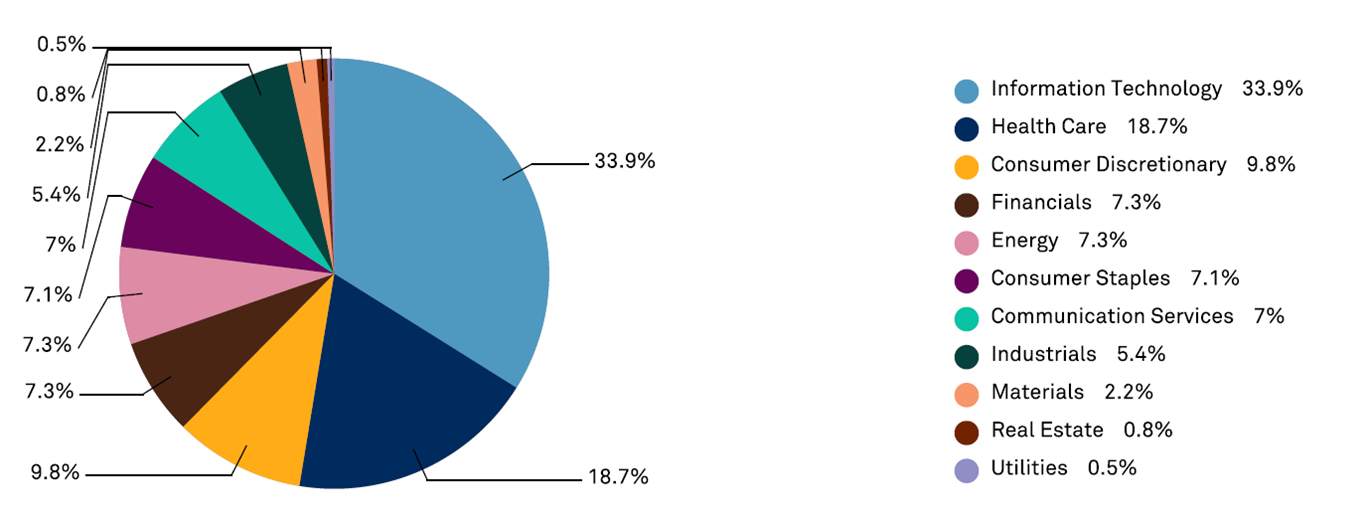
Information technology accounts for 33.9% of the S&P 500 Growth index, followed by health care at 18.7%. Meanwhile, in the Russell 1000 Growth index, technology accounts for 46.1%, followed by consumer discretionary at 17.9%.
On the value side, financials (19.3%) and information technology (17.2%) have the largest sector weightings in the S&P 500 Value index. For the Russell 1000 Value index, the largest sector exposures are financials at 18.1% and health care at 15.6%.
Similar indexes, but different growth and value weightings.
S&P 500 Growth Sector Allocation
Russell 1000 Growth Sector Allocation
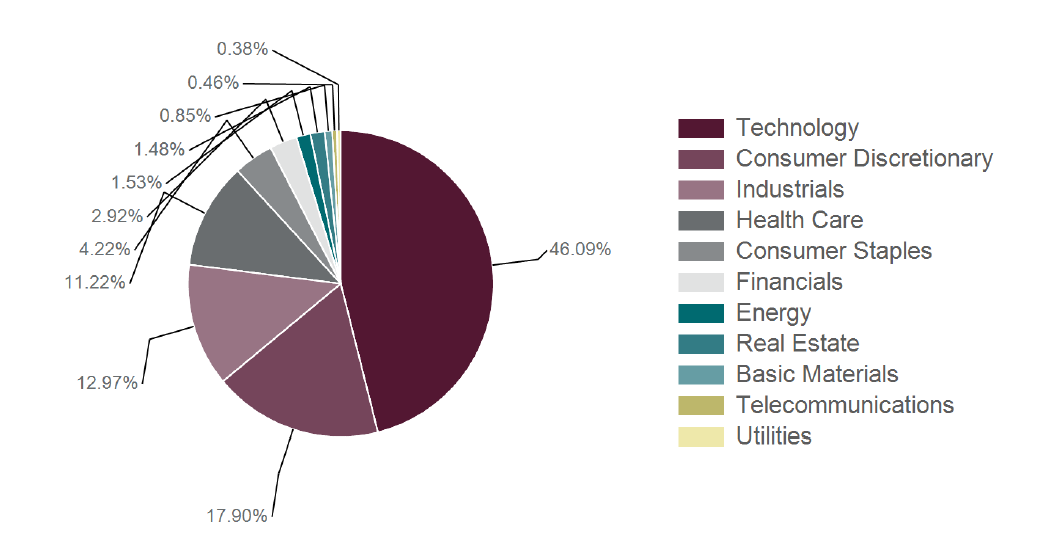
The Russell indexes select stocks from a larger universe than the aforementioned S&P indexes do. The indexes are also rebalanced on different dates—a factor that Sonders said played a big role in the disparate sector allocations. Russell reconstitutes its indexes annually at the end of June. S&P Dow Jones Indices rebalances S&P 500 Growth and S&P 500 Value quarterly in March, June, September and December. Depending on sector valuations and growth characteristics on a certain date, the weightings of S&P and Russell indexes can vary significantly.
This is an example of how investing is messy. While S&P 500 Growth and S&P 500 Value are rebalanced more frequently, they pull from a smaller universe.. Neither the SPDJI or Russell indexes are necessarily better or worse, just different. These differences matter more for someone who is using one of the indexes as a benchmark than for those owning mutual funds or exchange-traded funds (ETFs) that track one of the indexes.
More Notes From the Morningstar Investment Conference
AAII investment editor Cynthia McLaughlin accompanied me at the conference. Here are some of her takeaways:
- Moats Can Help Investors—Moats are durable competitive advantages, even if they offer slim profits. While moat investing is not a defensive strategy, it does have defensive characteristics and provides upside. One interesting metric Morningstar looks for when selecting assets for the equal-weighted Morningstar Wide Moat Focus index is 97%–98% customer retention. This is a strategy for patient investors. Per Morningstar, the index has outperformed 54% of the time since its launch in 2022. The idea is to select equities with long-term, sustainable competitive advantages.
- Thematic Funds Can Help You Catch a Shooting Star—These funds are also highly risky, so it is important both to understand the drivers of the theme and to ensure that the holdings in the fund offer thematic purity. One important thing to look for is revenues tied to the theme. Thematic purity can lead to greater exposure to small-cap stock investing, as larger firms may have diversified product offerings and do not fit into a thematic niche. At the same time, funds that are focused on narrow niches may struggle to deliver thematic purity.
And here are a few additional takeaways from me:
-
The Debt Ceiling—Several speakers were asked if the government will default. Former Secretary of the Treasury Larry Summers put the odds of a technical default occurring at 2% or 3%. He then said, “The odds of insolvency are certainly under 2% for the next decade.” PIMCO Income Fund
 (PIINX) manager Dan Ivascyn said his firm “sees default as a low probability event.”
 - ESG Shortcomings—New York University professor Aswath Damodaran was critical about how environmental, social and governance (ESG) strategies are being carried out. He’d like the companies assigning ESG ratings to come to a consensus about what characteristics warrant assigning a good E, S and G score. He further pointed out that private companies aren’t being held to the same ESG standards as their public counterparts and have more freedom not to follow ESG initiatives.
- Create a Social Security Account—Retirement expert Mark Miller encouraged everyone in the audience to create an online account with the U.S. Social Security Administration. Besides providing access to current (or estimated future) benefits, doing so will prevent a scammer from creating an account under your name.
- Exercise and Diet Can Increase Longevity—“There isn’t anything we know that helps with aging like exercise,” explained Laura Carstensen of the Stanford Center for Longevity. She also cited emerging studies showing that restricting caloric intake has increased life-spans in animals. Similar studies are now occurring to determine if this applies to humans.

-
Comparing Funds That Track the Same Index
Although index mutual funds and ETFs seek to mimic the composition and performance of an index, they are usually not exact copies of the index itself. -
Investing in Gold
With gold fever in the news, there are several choices for investors who want to add an allocation to gold to their portfolios. What you need to know about the various options. -
Drilling for Opportunities in the Oil & Gas Industries
As part of the cyclical energy sector, the oil and gas industries provide some protection from inflation. What to look for in oil and gas stocks and ETFs. -
Key Criteria to Base Your Mutual Fund Sell Rules On
Learning about the main concepts governing when to sell funds from your portfolio can help you set up a disciplined process. -
PRISM Step 4: Selecting and Managing Your Investments
In her latest My Investing Discoveries blog post, Anine Sus uses the PRISM Wealth-Building Process to help her solidify buy and sell rules for her portfolio of ETFs.
AAII Sentiment Survey
Pessimism among individual investors stayed above average for the 10th consecutive week in the latest AAII Sentiment Survey. Neutral sentiment and optimism both decreased.
Bullish sentiment, expectations that stock prices will rise over the next six months, decreased by 3.1 percentage points to 24.1%. Optimism is unusually low for the 49th time out of the past 69 weeks.
Neutral sentiment, expectations that stock prices will stay essentially unchanged over the next six months, declined by 0.3 percentage points to 37.4%. Neutral sentiment continues to be above its historical average for the 16th time out of the past 17 weeks.
Bearish sentiment, expectations that stock prices will fall over the next six months, increased 3.4 percentage points to 38.5%. Although bearish sentiment was recently reverting closer to its historical average, it is now approaching an unusually high level again. Bearish sentiment is above its historical average of 31.0% for the 70th time out of the past 75 weeks.
The bull-bear spread (bullish minus bearish sentiment) decreased 6.5 percentage points to –14.4%. The bull-bear spread is at an unusually low level for the seventh week out of the last 10 weeks.
Market volatility continues to be a concern for individual investors.
This week’s special question asked AAII members if they think investors are too bullish or bearish right now. Here are their responses:
- They are too bullish: 30.4%
- They are too bearish: 30.4%
- Their sentiment toward the market is about right: 18.6%
- No opinion/Not sure: 20.6%
Bullish: 24.1%, down 3.1 points
Neutral: 37.4%, down 0.3 points
Bearish: 38.5%, up 3.4 points
Bullish: 37.5%
Neutral: 31.5%
Bearish: 31.0%
See more Sentiment Survey results.

April 20, 2023 April Charts of Interest: Don't Jinx It
April 13, 2023 Warning Signs That Companies Are in Big Trouble
April 6, 2023 The Four Types of Risk
March 30, 2023 Remembering AAII's Derek Hageman

Discussion
Gary Johnson from OR posted over 3 years ago:
Why did you stop sending the aaii Magazine
You need to log in as a registered AAII user before commenting.
Create an account