Stock markets, by nature, are volatile. However, the market can go through periods of above- or below-average volatility, which may last for many months. When the stock market enters a period of above-average volatility, investors can get nervous about their exposure to certain asset classes, especially equities.
Asset allocation is one of the most basic, but essential, aspects of sound investing. Empirical studies have shown that perhaps more than 90% of a portfolio’s variability of returns can be explained by strategic asset allocation.
Long-term investors need to be prepared for periods of high volatility, especially to the downside. Ideally, we consider our asset allocation during periods of relative calm, so we aren’t inclined to make knee-jerk reactions when the market hits a rough patch. However, if the recent market gyrations are keeping you up at night, it may be worth evaluating your portfolio’s risk versus your tolerance for risk and long-term return needs.
To get the asset allocation formula right at all times, it is important for investors to understand their risk appetite and choose the right strategy to build wealth in the long term. Diversification helps in balancing out the risks and returns of investments and asset classes to achieve adequate returns, while at the same time minimizing the risk and increasing the probability to get the portfolio return an investor is looking for.
Whether you feel you are taking on too much risk or want to gain more exposure to equities slowly, AAII and A+ Investor have resources to help you adjust your current portfolio to a more appropriate allocation.
AAII offers members three Asset Allocation Models for three investor “personas” that are based on investment time horizon and risk aversion: aggressive, moderate and conservative.
The asset allocation area can be found by clicking on the Investing menu from the navigation bar. Here you will find the traits generally exhibited by investors in these three categories:
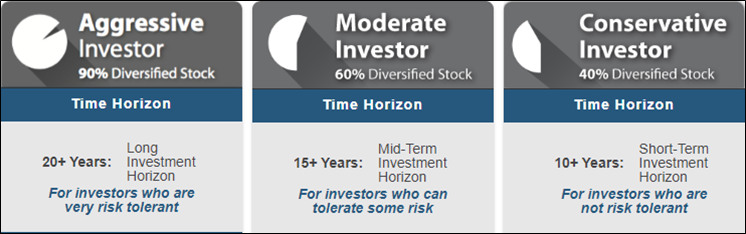
Generally speaking, the younger the investor, and the longer their investing time horizon, the greater their willingness to accept risk and portfolio volatility. However, where you are in the overall investment life cycle and your more immediate financial needs could alter your desired asset mix.
Further down the page are suggested allocation breakdowns based on three different investor profiles—aggressive, moderate and conservative:
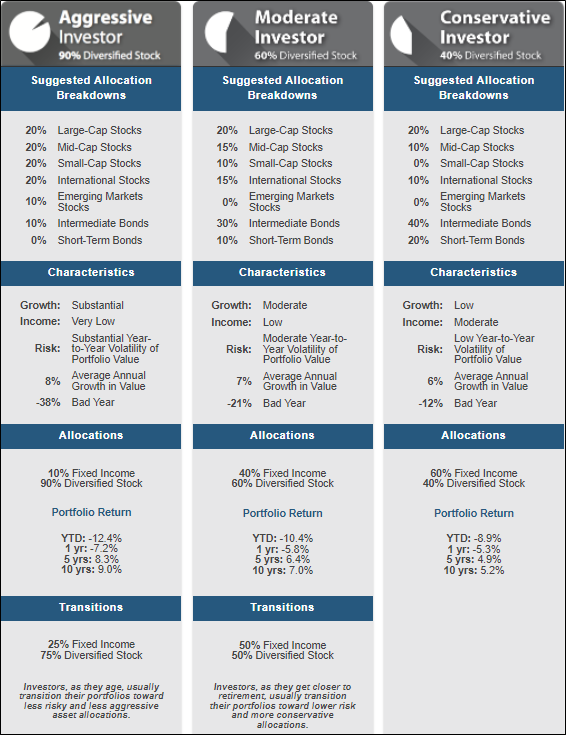
The broad asset allocation scenarios offer a clearer picture of each investor profile, showing the stock/bond allocation, risk and growth characteristics, time horizon and suggested transition allocations. You will find information such as the typical returns you can expect to generate and how much you can expect to lose in a very bad year as an aggressive, moderate or conservative investor.
The suggested allocations are meant to serve only as a guideline. Aggressive investors are generally thought of as being younger and conservative investors are usually older, although specific situations can call for diversions from this general rule. For instance, tenured professors with a steady income and virtually no risk of losing their jobs might be more aggressive with their portfolios than a young entrepreneur selling high-end jewelry.
The first steps in establishing an asset allocation strategy is knowing what kind of an investor you are and establishing a target asset allocation. AAII’s Individual Investor Wealth-Building Process helps you formulate an asset allocation strategy.
The next steps are to execute that strategy and then perform periodic portfolio analyses and, if needed, make portfolio adjustments to maintain your desired asset allocation.
For A+ Investors, the Diversification Analyzer in My Portfolio gives a breakdown of how your portfolio is allocated based on the number of shares you’ve entered for each stock, mutual fund and exchange-traded fund (ETF) plus any dollar amounts you’ve entered for cash and/or bond holdings. This information is used to tell you if you are being too aggressive or not aggressive enough given your chosen investing profile.
The first time you click on the Diversification Analyzer tab, you are asked to define what type of investor you are:
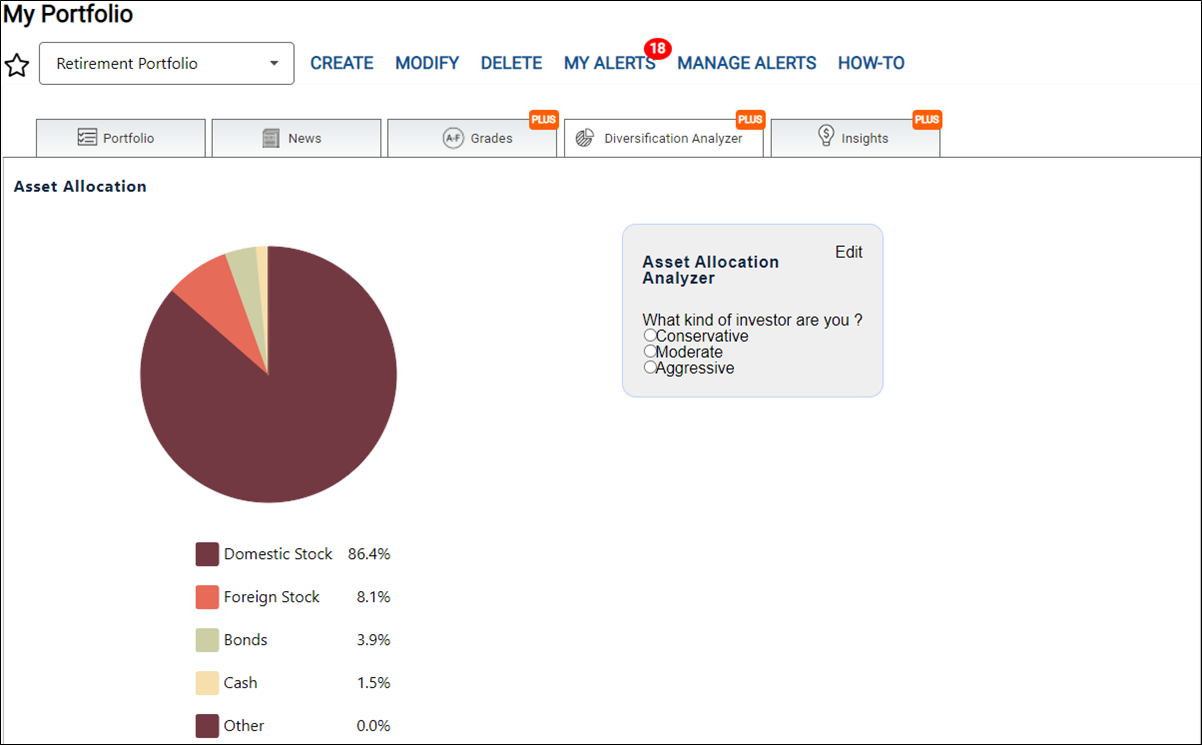
For this example, say the investor identifies as being aggressive. The Asset Allocation Analyzer then presents an analysis of the selected portfolio compared to the selected asset allocation model. For mutual funds and ETFs, the analysis looks at the underlying portfolio, looking at cash and bond holdings as well as allocation between U.S. (domestic) and foreign (non-U.S.) stocks.
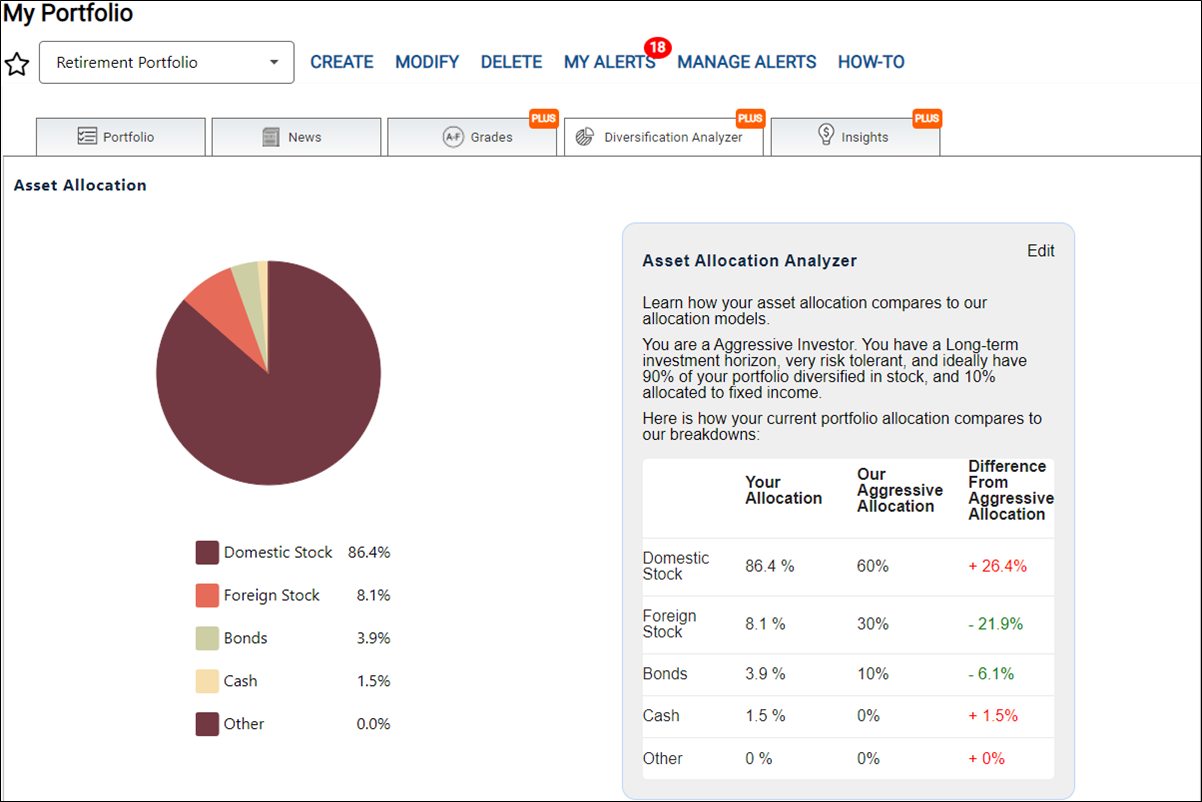
As the Asset Allocation Analyzer shows above, the actual portfolio’s allocation may be too aggressive, based on AAII’s asset allocation model.
Based on the aggressive allocation model, this user’s portfolio is slightly overweighted in equities as a group (94.5% versus 90%). However, at a more granular level, the portfolio is significantly overweighted in domestic stocks (86.4% versus 60%) but is underweighted in foreign stocks (8.1% versus 30%).
Furthermore, the portfolio is underweight in bonds (3.9% versus 10%).
If this investor truly views themselves as someone who can take on significant risk to achieve above-average returns, they could use information as a sign to consider reducing their exposure to domestic stocks and increasing their allocation in bonds. On the other hand, if the investor is comfortable with their current allocation, the diversification analyzer is showing that they may be even more aggressive than they may have previously thought.
The diversification analyzer is not intended to offer portfolio suggestions but is a means of helping investors identify whether they are as aggressive or conservative in their asset allocation as they think they are.

