As investors, we (should) pay close attention to our stocks. But, even if you are a “buy and hold investor,” this doesn’t mean you should “set it and forget it.” While stocks will go through natural ups and downs in the long run, there may come a time when the stock no longer meets the core characteristics that led us to buy it in the first place.
This may mean that, for value-oriented investors, a stock has become too expensive. Likewise, for growth or momentum investors, a company’s growth has begun to slow, or the price momentum has started to fizzle out.
For mutual fund and exchange-traded fund (ETF) investors, they may consider a change in a current holding should certain events occur:
Even if you aren’t an active trader, having a set of possible replacements in your back pocket can be helpful for these situations.
However, the number of investments at our fingertips is enormous. The A+ Investor stock universe contains more than 7,300 exchange-listed companies. Additionally, the mutual fund universe numbers more than 24,000, and there are almost 3,000 exchange-traded funds (ETFs). Doing some preliminary narrowing down of this list makes your life easier if and when it comes time to buy.
This is where a watchlist is helpful.
A watchlist is a list of securities that are being monitored for potential trading or investing opportunities.
An investor or trader may create a watchlist of several, dozens or even hundreds of trading instruments—stocks, mutual funds, ETFs, etc.—to make more informed and suitable investment decisions. A watchlist can help an investor track companies and stay abreast of financial or other news that could impact these instruments.
Alternatively, an investor may be interested in purchasing stocks in a particular sector. But if that sector is overvalued, it may offer few stocks that are attractively priced. An investor could create a list of all the stocks in that sector that would track various valuation measures, including multiples like trailing price-earnings (P/E), price-to-sales (P/S) and price-to-book (P/B) ratios, among others. When a company on the list meets a specified valuation criterion, the investor would know that this stock is a possible candidate for investment.
With My Portfolio, you can create watchlists.
A+ Investor was created, in part, to help investors identify investment ideas. The service offers daily passing company lists of AAII’s 60+ stock screens and filtering capabilities to uncover stocks, mutual funds and ETFs that meet your specific criteria.
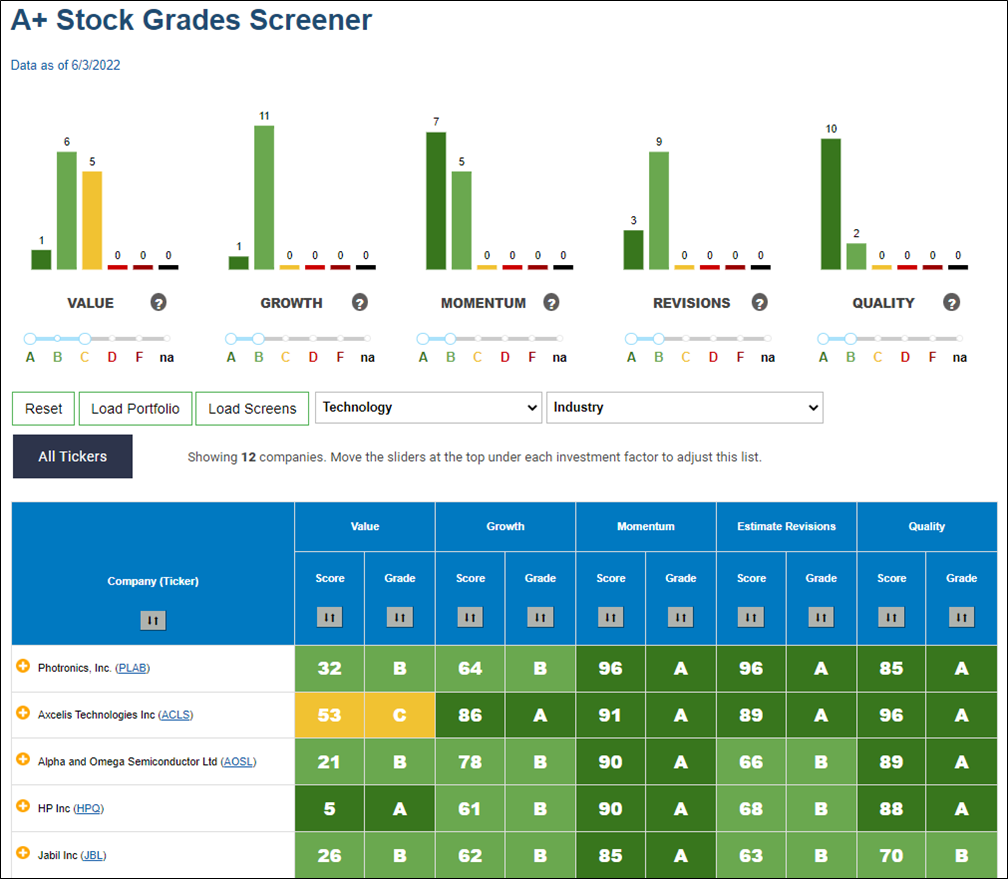
Let’s say, for example, you are interested in technology sector stocks but don’t want to overpay for them. Using the A+ Stock Grades Screener, you can isolate stocks in the technology sector that meet specific factor requirements. I created a screen for technology sector stocks with C or better value grades and B or better grades for growth, momentum, earnings estimate revisions and quality.
As of June 3, 12 companies out of the universe of roughly 7,400 met these criteria. Here is a partial listing of the passing companies with the highest momentum score:
With the Stock Evaluator pages for each of the stocks in the A+ Investor universe, you can perform more in-depth analysis of these companies to see if any of them would be a worthwhile addition to your portfolio at some point.
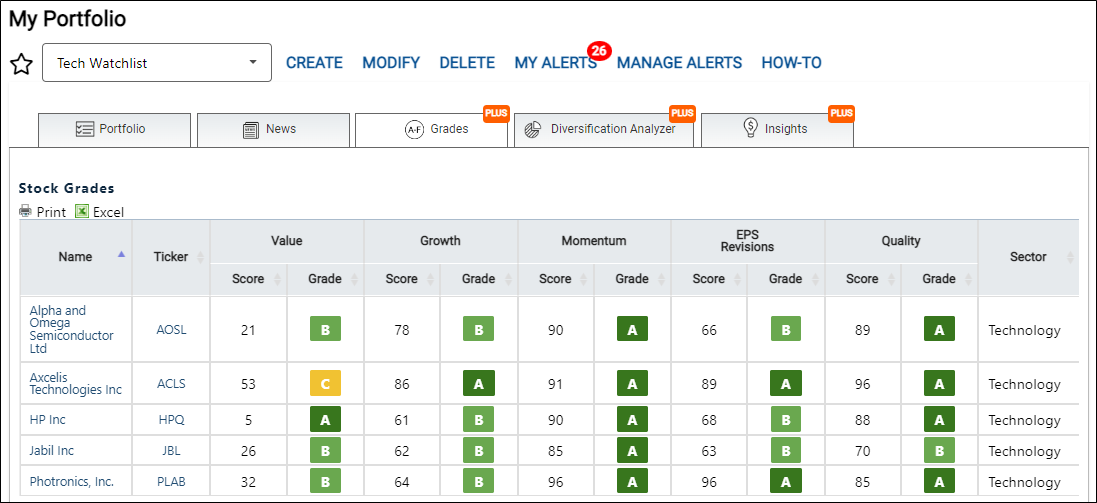
The yellow “+” signs next to tickers on this table and throughout the AAII website allow you to add these securities to a new or existing watchlist or portfolio. For this example, I added the five passing companies with the highest momentum scores to a “Tech Watchlist.”
Once you have created a watchlist of stocks, you can go to My Portfolio, load that watchlist and view a variety of data on those tickers:
Like the holdings you own, a watchlist requires periodic monitoring to ensure the securities you are watching are still worthwhile investments.
The My Screens link at the Screening section of AAII.com lets you see the latest passing company results for the AAII stock screens that you have favorited. You can also view A+ Stock Grades for the screening strategies you track and for the individual companies currently passing these screens and check the performance of favorite screens over varying periods.
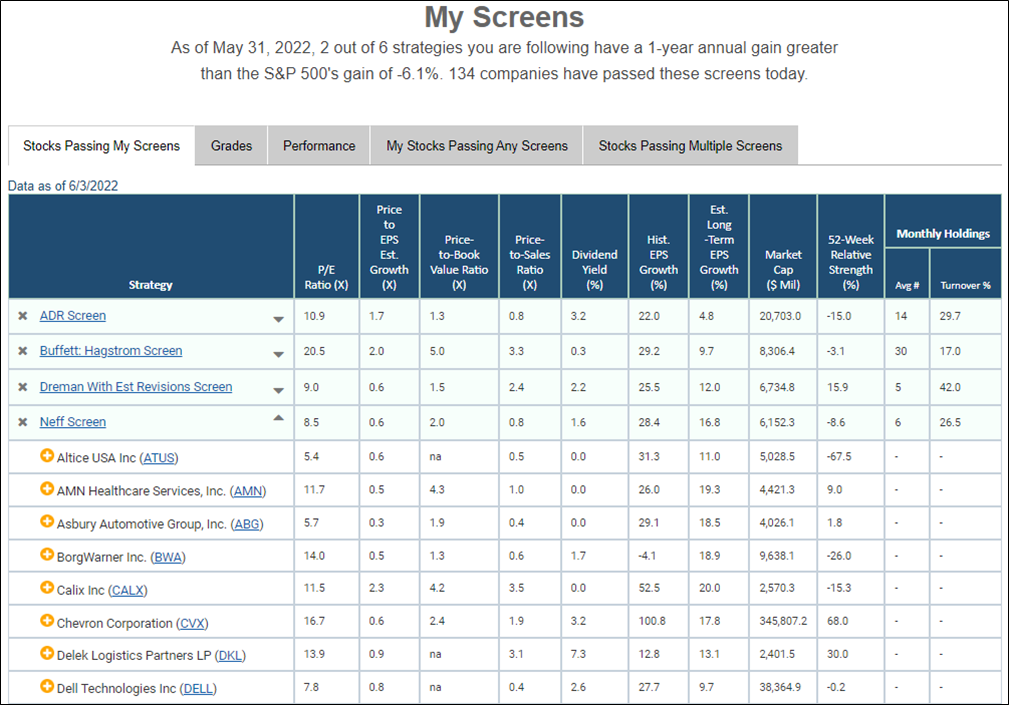
You can also add tickers from these passing company lists to a watchlist for further monitoring.
For mutual fund and ETF investors, there are several ways to identify potential candidates.
The ETF Screener and Mutual Fund Screener are tools you can use to narrow down the fund universes. There are also mutual fund and ETF first cut screens—predefined screens that isolate specific kinds of funds or those with certain characteristics.
Sticking with the technology theme, I used the ETF screener to identify technology sector equity ETFs that ranked in the top 50% of their category based on three-, five- and 10-year net asset value (NAV) returns. In addition, I also required passing ETFs to rank in the bottom 50% of their category in terms of expense ratio. Of the 113 technology sector equity ETFs in the A+ Investor universe, 10 currently meet these criteria. Here is a partial list of these 10, ranked in descending order by average annual return over the past three years:
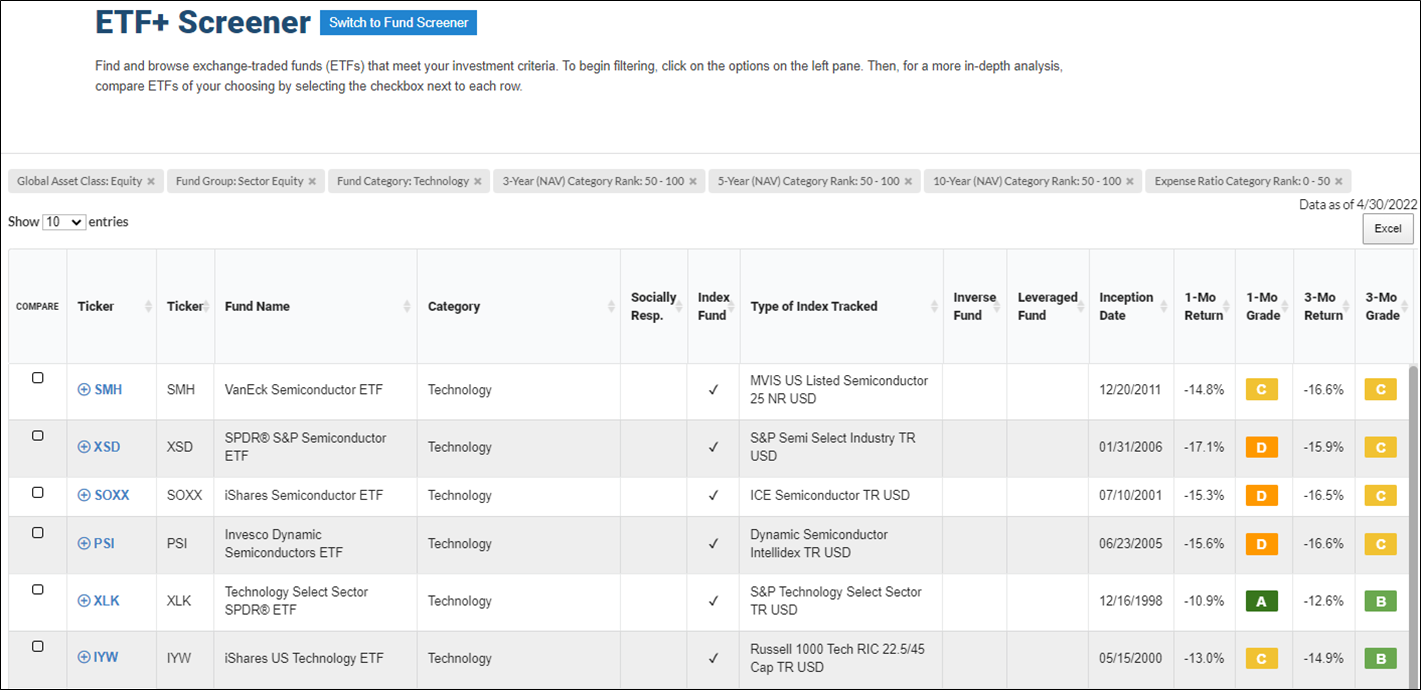
The A+ ETF Evaluator pages allow A+ Investor subscribers to look at these ETFs to see if they fit their investment profile.
I then added them to my tech watchlist if my current technology ETF started to significantly lag in terms of performance over the long term or if its expenses rise.
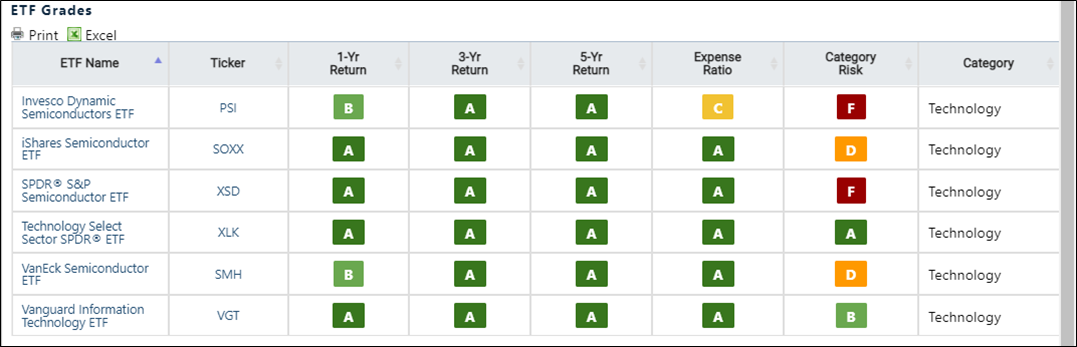
Note: If you only track a list of tickers, you will not be able to use the diversification analysis tools available with My Portfolio. To use this feature, you need to enter the number of shares you own to calculate the value of individual holdings and the entire portfolio.
Here are some additional resources from A+ Investor to help you identify potential investment ideas and opportunities:

