

February Charts of Interest: The Impacts of Inflation and Interest Rates
by Charles Rotblut | February 22, 2024
AAII investment strategist Raymond Rondeau is giving a keynote presentation on active investing at MetaStock’s online Traders Conference on February 26, covering three new AAII tools designed to aid investors with volume and intensity analysis. Registration is free for this digital event.
Many of the charts I’ve seen this month have focused on inflation. So, I’ll start this month’s charts of interest by talking about it. I’ll end with the other topic making lots of headlines: artificial intelligence (AI).
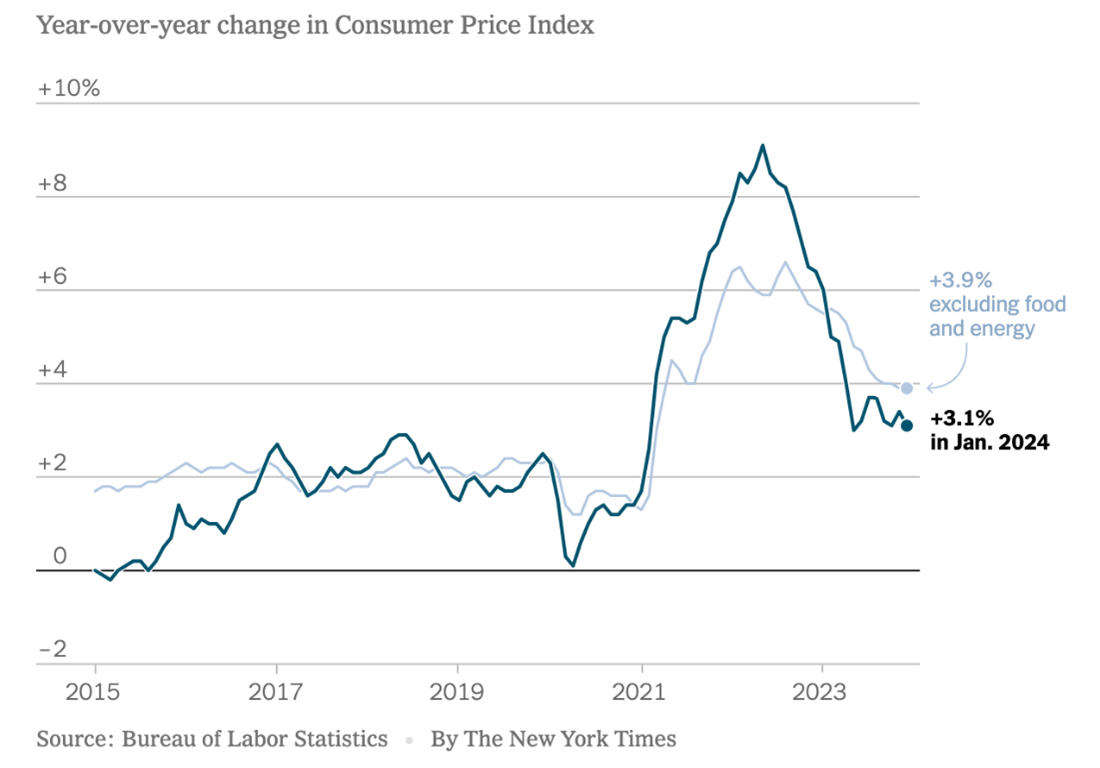
The January consumer price index (CPI) came in a little hotter than expected. Still, consumer prices are continuing to trend downward, as you can see in the chart below from The New York Times. Like other economic indicators, the CPI fluctuates from month to month. This volatility makes shorter-term trends tougher to predict.
Yes, Food Has Gotten Expensive
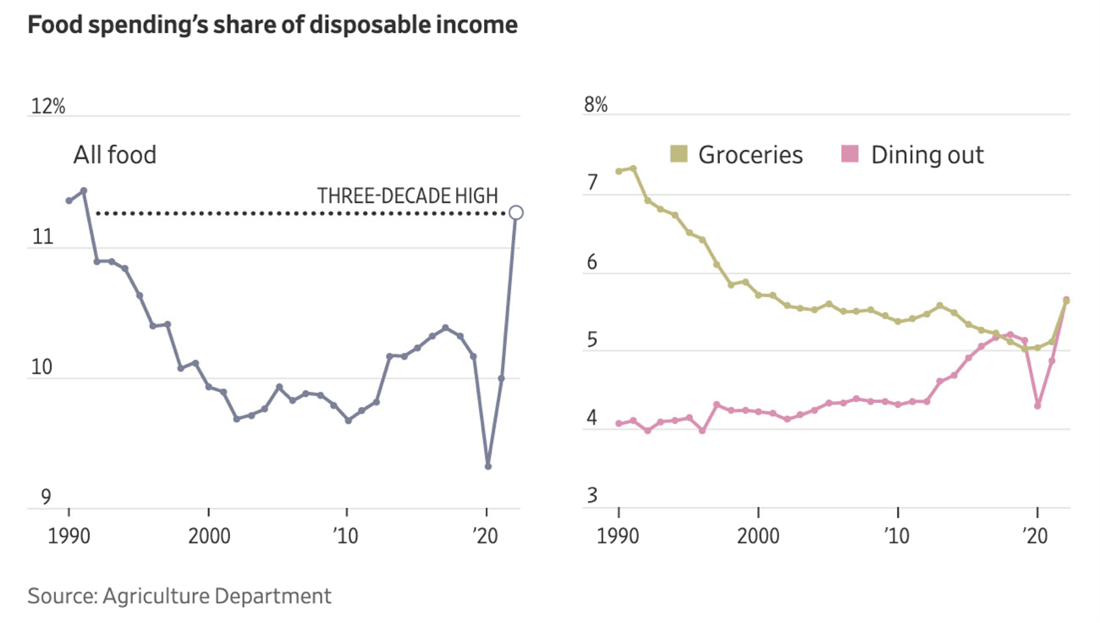
U.S. consumers are spending the largest percentage of their disposable income on food since 1991. Citing data from the U.S. Department of Agriculture (USDA), The Wall Street Journal reports that food accounted for 11.3% of disposable income in 2022.
Blame a combination of higher commodity prices and price increases by various companies that have been above the rate of inflation. (The price of a jar of Bonne Maman fruit preserves has recently risen by nearly 20%!!) Plus, as I explained to a friend, we’re now noticing the effects of compounding on food prices, with inflation pushing already inflated prices even higher. (Food inflation is a global problem, with other countries experiencing it worse than the U.S.)
My wife and I are increasingly changing what we buy in terms of groceries and where we buy them. We also now default to splitting an appetizer and entree when dining out.
A Sizable Jump in Home Prices
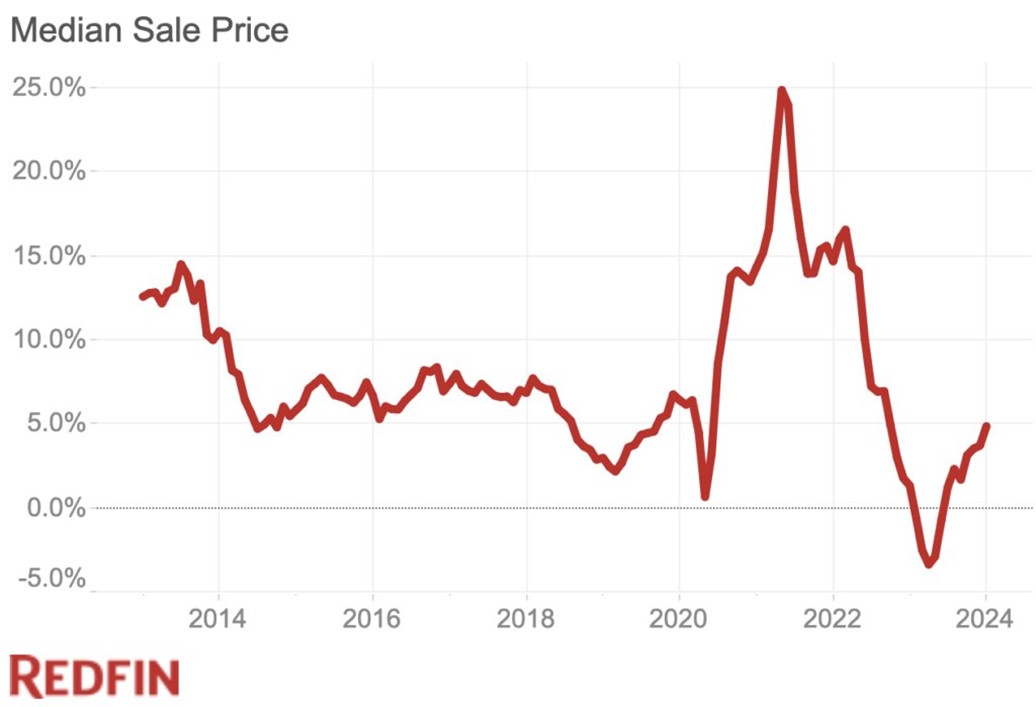
In January, median home prices in the U.S. saw their biggest jump since September 2022. Prices rose by 5.2% on a year-over-year basis to $402,343. “America’s enduring shortage of homes for sale is the primary driver of price growth,” says Redfin.
In its report released this morning, the National Association of Realtors said prices of existing homes sold last month were up 5.1%. January’s median price of $379,100 represented “the seventh consecutive month of year-over-year price gains.”
Shelter inflation is one of the CPI’s components that is pushing both the headline and core numbers higher.
Mortgage Rates Are Rebounding
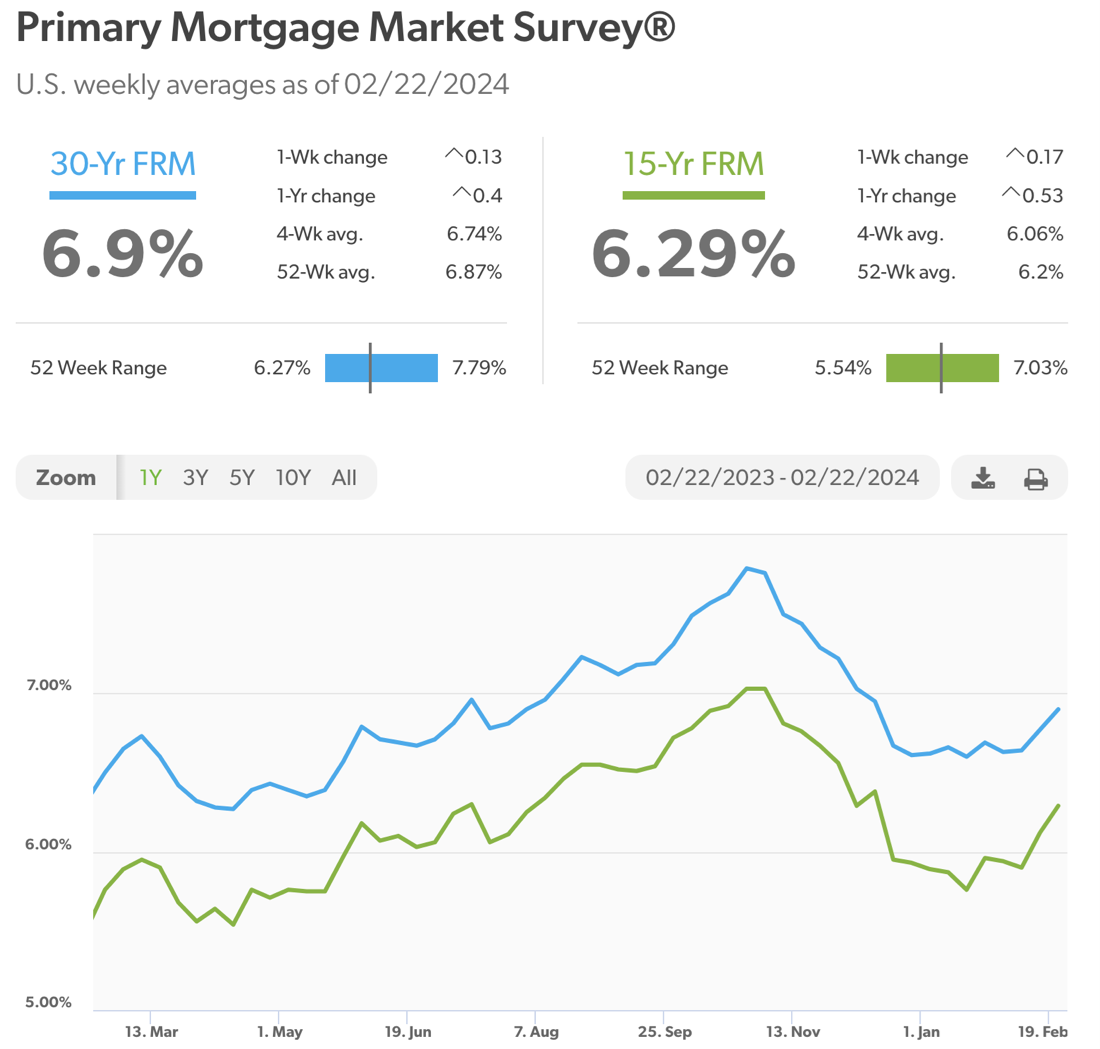
Mortgage rates have been blamed for contributing to the shortage of the housing supply. Homeowners with low mortgage rates have been reluctant to move and take on new mortgages with higher interest rates.
The combination of elevated home prices and high (and now rebounding) mortgage rates is continuing to be a deterrent for homebuyers. “Housing affordability is so low that good economic news equates to bad news for homebuyers, who are sensitive to even minor shifts in affordability,” stated Freddie Mac as part of this week’s Primary Mortgage Market Survey press release.
Fewer Interest Rate Cuts Are Now Expected
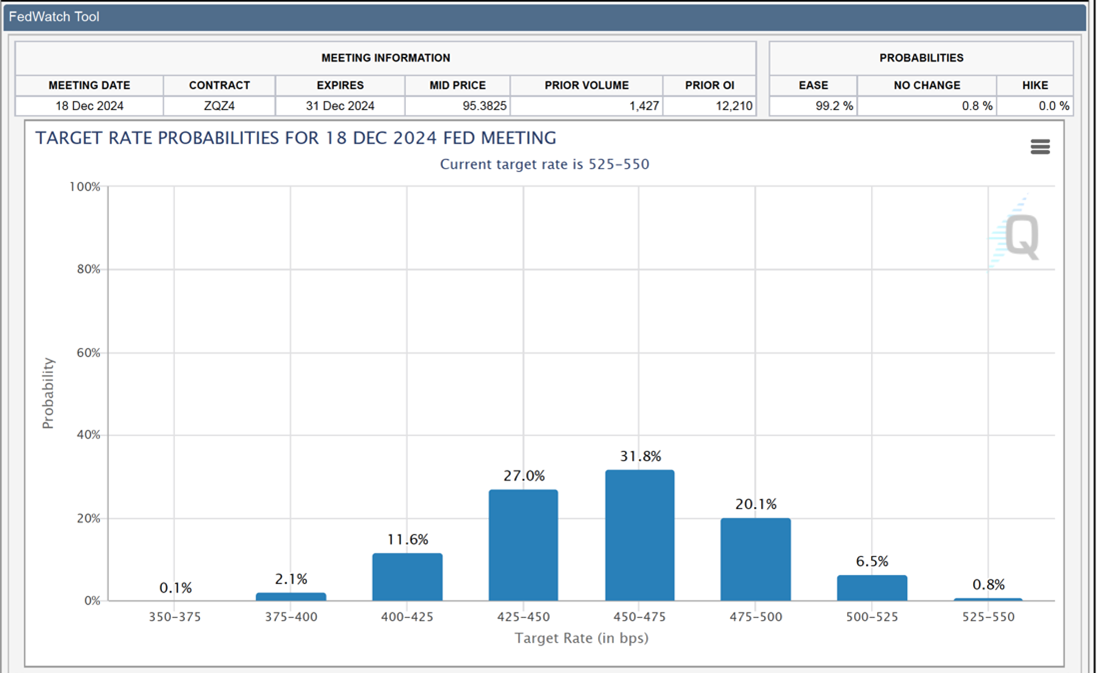
Given this month’s focus on inflation, I wanted to provide an update on interest rate cut expectations. As of lunchtime today, the CME FedWatch Tool is now placing the highest odds on four to five quarter-point (0.25%) interest rate cuts being announced this year.
Six weeks ago, traders were pricing in a 91% chance of the Federal Reserve making between five and seven quarter-point interest rate hikes. The highest probability (40.4%) was placed on a target interest rate of 3.75% to 4.00%. The odds of that happening are now down to 2.1%.
Credit Card Balances Are Rising
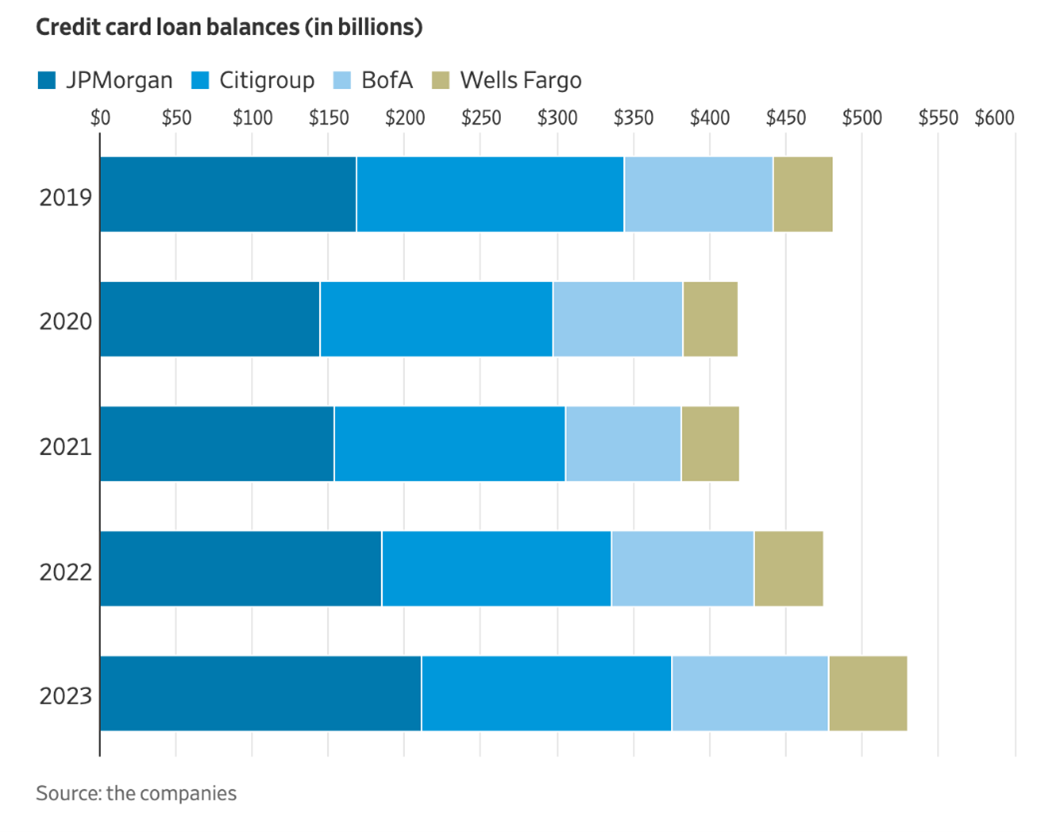
Credit card balances grew faster at the four largest U.S. banks than spending in 2023, according to The Wall Street Journal. Delinquency rates are also at the highest level since at least the fourth quarter of 2019. Higher credit card interest rates (and yes, they weren’t low to begin with) combined with higher prices have put a strain on many consumers.
The Current Hot Topic Among Corporate Executives
More and more companies are talking about AI on their earnings conference calls. Many executives are likely feeling pressure to say they are looking at how to incorporate it even if they have how no idea how they can best use AI.
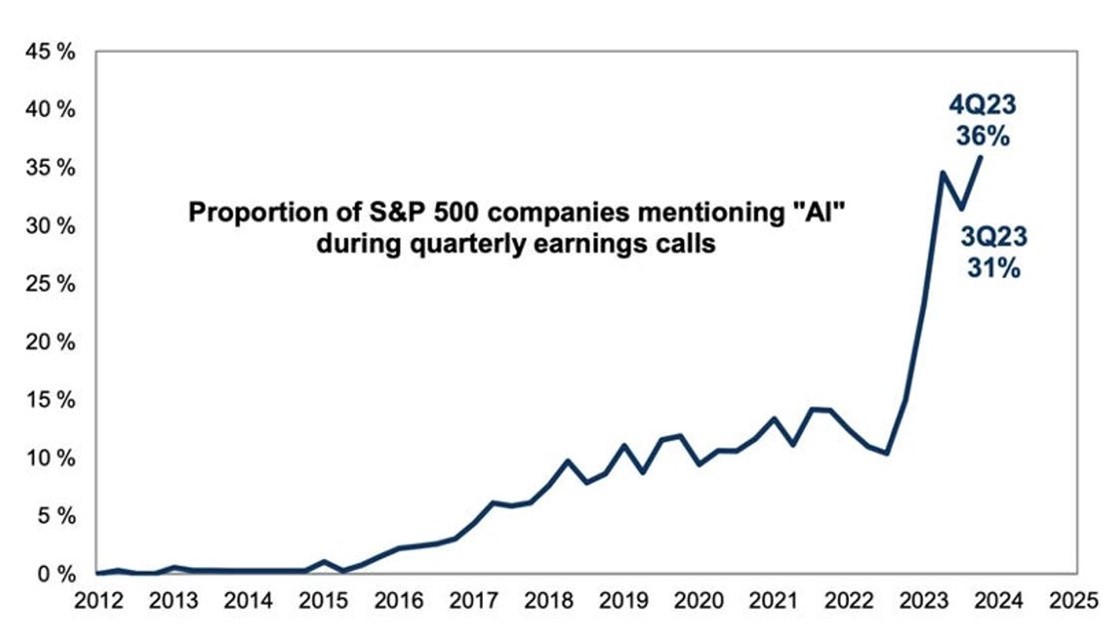
Source: Callum Thomas, Topdown Charts.
Math Is Hard for AI Chatbots
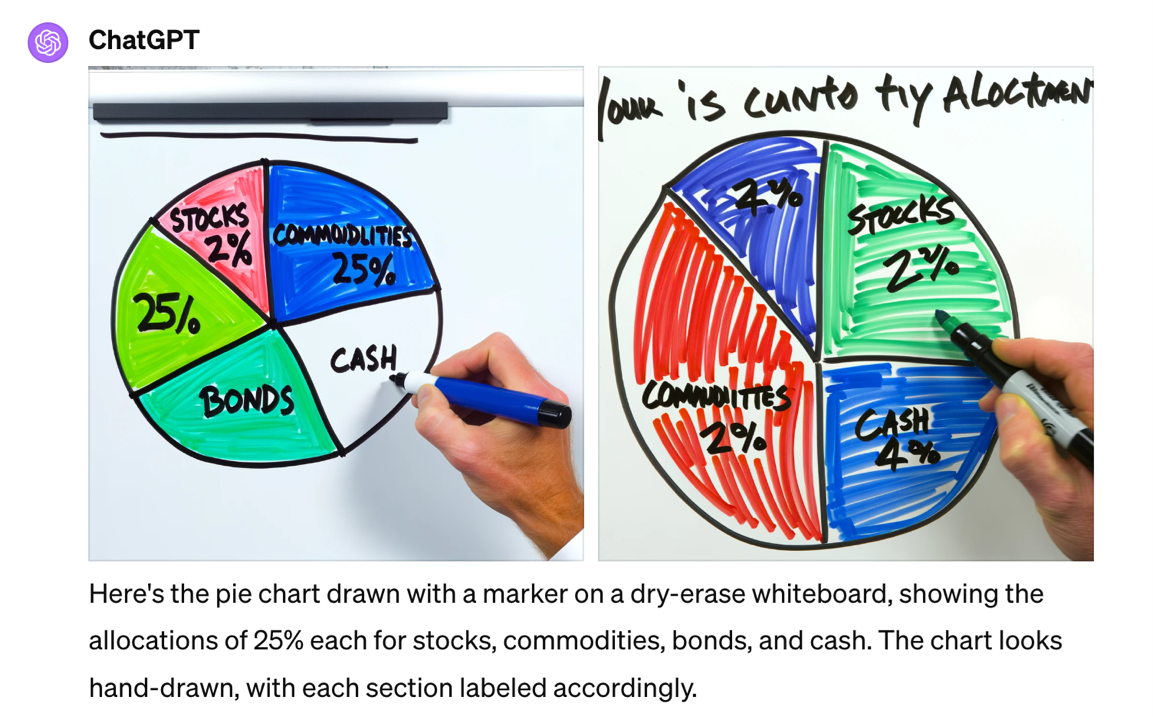
I tried to use ChatGPT to create a chart for last week’s Investor Update. I thought having the AI chatbot create a hand-drawn pie chart split evenly between four asset classes would be a simple task. It wasn’t. After several attempts, I gave up and drew the chart myself.
You can see one of the images ChatGPT created below along with what it told me about the chart. As our managing editor Jean Henrich observed, “They don’t teach enough math skills in AI schools.” The same thing could be said about how to spell “commodities.”

-
Online Exclusive: Understanding the Breakeven Inflation Rate
The breakeven inflation rate is a helpful guide for determining minimal rates of return required to maintain wealth in real terms. -
Follow the Fed, but Be Smart About It
Small-cap stocks thrive during periods of expansive monetary policy, while returns for large- and small-cap stocks are lower during restrictive periods. -
How to Find Funds Suitable for You
Tips and tools to help you define your needs and make more informed decisions when looking at funds.
AAII Sentiment Survey
Optimism among individual investors about the short-term outlook for stocks increased in the latest AAII Sentiment Survey. Meanwhile, both neutral sentiment and pessimism decreased.
Bullish sentiment, expectations that stock prices will rise over the next six months, increased 2.1 percentage points to 44.3%. Bullish sentiment is above its historical average of 37.5% for the 16th consecutive week.
Neutral sentiment, expectations that stock prices will stay essentially unchanged over the next six months, decreased 1.5 percentage points to 29.5%. Neutral sentiment is below its historical average of 31.5% for the 10th time in 12 weeks.
Bearish sentiment, expectations that stock prices will fall over the next six months, decreased 0.6 percentage points to 26.2%. Bearish sentiment is below its historical average of 31.0% for the 16th consecutive week.
The bull-bear spread (bullish minus bearish sentiment) increased 2.7 percentage points to 18.1%. The bull-bear spread is above its historical average of 6.5% for the 16th consecutive week.
This week’s special question asked AAII members which factor is most influencing their six-month outlook for stocks.
Here is how they responded:
- The economy and/or inflation: 35.8%
- Monetary policy/interest rates: 26.8%
- Corporate earnings: 16.2%
- Valuations: 12.6%
- Other: 8.6%
Bullish: 44.3%, up 2.1 points
Neutral: 29.5%, down 1.5 points
Bearish: 26.2%, down 0.6 points
Bullish: 37.5%
Neutral: 31.5%
Bearish: 31.0%
See more Sentiment Survey results.

February 15, 2024 The 25x4 Allocation Is Questionable
February 8, 2024 Very High-Cost Mutual Funds and ETFs (Along With Cheaper Alternatives)
February 1, 2024 Putting Money Into the Market, the Fed and the January Barometer
January 25, 2024 Optimism Among Individual Investors Bounced Back Last Year

Discussion
Michael from California posted over 2 years ago:
The observation "consumer prices are continuing to trend downward" seems to be misleading. The rate of increase is slowing, but prices are still rising.
Michael from California posted over 2 years ago:
The observation "consumer prices are continuing to trend downward" seems to be misleading. The rate of increase is slowing, but prices are still rising.
Larry from California posted over 2 years ago:
Remember inflation is transitory - except for the unfortunate continued tenure of Jay Powell
Rob from NC posted over 2 years ago:
I'd be truly surprised if we're finished with inflation, since the federal government is still running the printing press at full tilt. If we see another significant uptick in oil, it will really be a mess. One reason for increased food prices is the enormous increase in theft from grocery stores in the past year or so. People I know who work in that industry are alarmed and disgusted by it, and it's not confined to Los Angeles, San Francisco, and "blue states."
Karl from WV posted over 2 years ago:
If you will look at the inflation chart carefully, you will see that inflation has not dropped significantly in at least 4 months. I doubt the Fed will take any action to reduce interest rates until we see either the economy slowing to the brink of a recession, or the inflation rate dropping significantly below 3% for several consecutive months. In fact, unless one of those two things happens soon, I would expect another .25% increase. Aside: We will actually see prices drop when inflation goes negative -- and then it is called deflation.
Barry from TX posted over 2 years ago:
Charles, you called out something important that The Fed data hides and most people do not consider -- the rate of inflation integrates and compounds along multiple dimensions. (#1) As the inflation rate rises or falls, the percentage changes are computed using larger/smaller base rates. A 1% rise on a base rate of 5% is 0.5%; a decrease at 3% is 0.3%. Stock markets experience an inverse relationship; if stock prices decrease by 20%, it takes a 25% increase to recover those losses. (#2) The rising prices for the final products that consumers see incorporate ALL prior inflation rises at ALL intermediate production levels starting with basic commodities. (#3) A significant component driver of inflation is increasing salaries and benefits that compound the rate of inflation. The “fully-burdened” costs of employees are 40%-50% added to their base salaries through workplace needs (space, tools, etc.) and benefits (insurance, retirement, etc.) (#4) Workers in industry sectors demand higher salaries and benefits to help them cope with inflation and management – or unions – raise salaries and benefits to achieve “parity” with other industries. This compounds inflation as industry sectors impose rising costs on the other industries they supply and the compounding of inflation spreads. There have been several prior periods where inflation soared much higher than today. In my personal experience, I remember the early 1980s when I faced 12% inflation, had a 15% mortgage, and saw gasoline double year over year. What I saw then is what I see now. Volker was the Powell of the 1980s. When I read/hear FOMC pronouncements that inflation is “coming down,” My first thought ... wait for the other shoe to fall. One more thought to ponder. (#5) How much of the inflated stock valuations at 50% above the market index average earnings are driven by/derived from (a) the costs of economic inflation, (b) a shrinking money supply, and (c) increasing government/business/household debt? What percentage of the “profits” in your portfolio are “inflated dollars?’ Do we have inflated dollars chasing inflated dollars? If so, the risk-reward profile has shifted adversely. How far? Charles, thanks for being a thought leader with this article.
Ken from NC posted over 2 years ago:
Thank you Charles for this informative Investor Update. I have shared this info with my sister-in-law who is currently in the market for her first house purchase, but isn't having much success. Yes, the media hype about the first rate cut occurring in March was just a shooting star, and the media hype and the shooting stars that it produces is a false reality that we investors need to be very cautious about. I got an invigorating chuckle about your real-life experience with AI. Thus, all the media hype about AI and Nvidia -- watch out for those shooting stars! Lastly, I agree with the previous comments regarding inflation. I try to keep a close watch on where our money is going and the grocery food budget is a big one. Over a two year period our grocery food costs is increasing at 4.45% per annum as compared to 1.78% over a five year period. So, disinflation is good, but some deflation would certainly be more welcome!
You need to log in as a registered AAII user before commenting.
Create an account