

The Lessons We Learned From Caregiving and Estate Settlement
by Charles Rotblut | October 10, 2024
My wife and I spent the past few weeks planning my mother-in-law’s funeral and settling her estate. Lila was buried at Fort Sam Houston National Cemetery on Tuesday, next to my father-in-law. She was 92 years old when she died last month.
As both caretakers and heirs, there are lessons we learned and insights we gained that may be helpful to many of you. Here are some of the key ones.
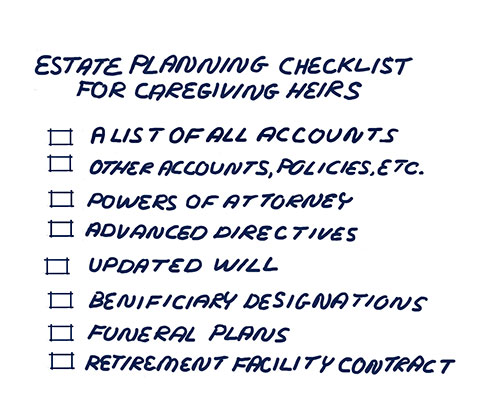 Personal Finances: We evolved from assisting Lila with her finances to fully managing them as her cognitive abilities worsened. Even if we hadn’t made that transition, simply knowing what her accounts were has been extremely helpful in settling her estate. (Insider tip: If you have a parent or close relative with Alzheimer’s disease, check their wallet to see what credit cards they have.)
Powers of Attorney: These documents made it easier for my wife to advocate for her mom when needed. The medical power of attorney was invaluable in terms of speaking with doctors, getting access to medical records and resolving health care–related issues.
Advanced Directives: These were our guiding principles for making late-in-life medical decisions. Lila filled out a detailed form about what she wanted and didn’t want. Still, there were gray areas, such as whether Alzheimer’s counts as brain damage for deciding what medical procedures should be done or avoided. Our suggestion is to not only establish advanced directives but also discuss them with those who will be making the decisions on your behalf.
Updated Will: Laws change over time, as do families. Lila’s will was previously updated to reflect the prevailing legal code. This made it easier to settle her estate. We also had a binder holding the will, trust papers and other estate-related documents. This helped immensely in terms of settling the estate.
Correct Beneficiary Designations: This simple step has made settling Lila’s estate easy. Her investment accounts had the beneficiaries listed properly and in order of primary and secondary. I’ve seen several articles over the years about lawsuits over estates where the beneficiaries were not set up or not updated. Check the designations on your accounts once per year.
Prepaid Funeral: While doing this saved money, the two other advantages were even bigger. First, Lila got to choose her final arrangements, including the coffin. Second, my wife simply had to contact the funeral home to get things moving. We still incurred some expenses—particularly transporting Lila from Illinois to Texas—but the preplanning significantly reduced the things we needed to do and the decisions we had to make on her behalf. Speaking from personal experience, if there is something you want written on your tombstone or marker, let your heirs know.
An Inventory of All Accounts, Plans, Policies, etc.: Write down anything that needs to be canceled. You may have a cell phone, cable TV, streaming service subscription, homeowners’ insurance policy, etc., that would need to be canceled. A list of them will make things easier for your heirs.
Downsize: The fewer physical things you have, the easier it will be on your heirs. Even though my mother-in-law was in memory care, it still took several trips to get everything out of her apartment.
Keep the Retirement Community Contract in an Easy-to-Find Place: Cancellation policies vary by independent living, assisted living and memory care community. Your heirs will need to know what the terms are so that they can plan accordingly. We weren’t given a strict deadline, but we were told that we would be charged for every day that we left things in Lila’s apartment. I cleaned it out quickly.

-
Guiding Heirs: Estate Planning and Investing Talks
The PRISM Wealth-Building Process can assist with communication when passing along your investing knowledge, your inventory of important documents and your final wishes. -
Estate Planning Content on AAII Retirement Investing
The October 2024 Retirement Investing newsletter covers succession planning, pet directives, the probate process and other related topics. Consider augmenting your AAII resources by subscribing. -
12 Hidden Lessons From Investment History
Investors who are willing to learn from nearly a century of data can discover some important takeaways, as revealed in the October 2024 AAII Journal.
AAII Sentiment Survey
Bearish sentiment among individual investors about the short-term outlook for stocks decreased in the latest AAII Sentiment Survey. Meanwhile, both optimism and neutral sentiment rose.
Bullish sentiment, expectations that stock prices will rise over the next six months, increased 3.6 percentage points to 49.0%. Bullish sentiment is unusually high and is above its historical average of 37.5% for the 48th time in 49 weeks.
Neutral sentiment, expectations that stock prices will stay essentially unchanged over the next six months, increased 3.2 percentage points to 30.4%. Neutral sentiment is below its historical average of 31.5% for the 14th consecutive week.
Bearish sentiment, expectations that stock prices will fall over the next six months, decreased 6.7 percentage points to 20.6%. Bearish sentiment is now unusually low, hitting its lowest level since December 14, 2023 (19.3%). It is below its historical average of 31.0% for the eighth time in nine weeks.
The bull-bear spread (bullish minus bearish sentiment) increased 10.3 percentage points to 28.5%. The bull-bear spread is above its historical average of 6.5% for the 22nd time in 23 weeks.
This week’s special question asked AAII members which factor is most influencing their six-month outlook for stocks.
Here is how they responded:
- The economy and/or inflation: 33.0%
- Monetary policy/interest rates: 23.5%
- Corporate earnings: 15.7%
- Valuations: 13.0%
- Other: 14.8%
Bullish: 49.0%, up 3.6 points
Neutral: 30.4%, up 3.2 points
Bearish: 20.6%, down 6.7 points
Bullish: 37.5%
Neutral: 31.5%
Bearish: 31.0%
See more Sentiment Survey results.

October 3, 2024 Our New Data Feed and Its Impact on Your Investments
September 26, 2024 A Snapshot of Current Stock Valuations
September 19, 2024 September Charts of Interest: Rate Cut Edition
September 12, 2024 Excess CAPE Yield Low Ahead of Potential Interest Rate Cut

Discussion
Tom from VA posted almost 2 years ago:
My condolences. I'm handling my mom's simple estate and am so thankful she had a will. (I still don't have one.) Any sort of pre-arrangement with a funeral home -- even just selecting one -- would have been good to have.
C2 from VA from Virginia posted almost 2 years ago:
My condolences as well. My mother-in-law died in July. It took us until September to get her buried due to family issues. One thing I learned is that time spent developing lineage information can be helpful. The speed at Ft. Sam Houston was fast. My wife had to wait about 18 months for her Dad to be buried at Arlington National Cemetary. Talk about holding up healing. The article was mostly spot on. I have been an estate administrator (listed or de facto) for four estates. The funeral planning alone can save family lots of grief. One thing I would add is having conversations with the kids about what they want with the nonmonetary stuff. Noticed a lot of nasty fights over who gets the coat rack, dishes, etc. Finally, the state and locality matter. Mostly, mine have been excellent (Virginia) to good (District of Columbia). The worst experience was with a locality in Maryland. One of my jokes now is that I get mad enough at my kids, I will move to that locality, die, and make one or all of them estate administrators. They won't know what pain is until dealing with that administration.
CPA-Retired from CA posted almost 2 years ago:
Tom, We're fortunate that CA allows handwritten wills - it makes it very easy to have a will, all you need is a pen and a piece of paper, and the first thing you should write is "This is my will". This is what I received from ChatGPT when I asked "Do all states in the U.S. allow handwritten wills?: No, not all U.S. states recognize handwritten wills, also known as **holographic wills**. A holographic will is one that is written entirely in the testator's (the person making the will) handwriting and usually lacks formal witnesses. States that do recognize holographic wills often impose specific conditions for them to be valid. For example, the will must be entirely in the testator's handwriting, and it must be clear that the testator intended it to be a will. Some states that recognize holographic wills include: - **California** - **Texas** - **Arizona** - **Nevada** - **Virginia** - **Alaska** - **Louisiana** On the other hand, states like **New York** and **Florida** generally do not recognize holographic wills unless they meet certain narrow exceptions (e.g., for active military personnel). It's important to check the specific requirements for wills in each state because even in states that accept holographic wills, they can still be contested or subject to strict scrutiny by the courts.
Charles Rotblut from Illinois posted almost 2 years ago:
Thank you Tom and C2. Eighteen months is a long time to wait, C2. The conversations about nonmonetary stuff are important. Heirs can have strong sentimental feelings about certain things.
Barry J from TX posted almost 2 years ago:
Charles, I add my condolences and thanks for you expanding the checklist for handling estate planning. Here is my experience with this process. #1 Holographic wills can introduce complications with the probate process, the legal process each state codifies to administer inheritance processes. My mother was a very thorough person. She took a lot of care to prepare her holographic will. She carefully wrote down specifically what she wanted specific heirs to have – both money and possessions. She left me the duty as Executor to “execute” her inheritance wishes, the bills to make this happen, and a few headaches. Her plan was simple. She carefully wrote out her will, picked two friends to witness it, and took them to lunch at their favorite restaurant. She had them read the will. Then they had lunch, She went home feeling she had solved all her estate issues. They might have had a longer lunch and better time than they should have. The only thing the ladies forgot to do was sign the will. Texas courts ruled her to have died intestate, meaning her will was unenforceable. As executor I carefully made sure that all her wishes were carried out exactly as she requested, but the intestate process added considerable downstream legal issues, paperwork, and fees to the process. #2 Complications came out of nowhere. Relatives, church friends, neighbors, and more than one total stranger claimed that she had verbally promised them specific high value items or told them she would leave them specific amounts of money. She was generous to a fault, but not wealthy enough to make these promises. Of course, intestate made all these claims interesting, aggravating, and …. moot. Years later when my brother died, some out of state relatives attending the funeral pressed their original claims to may amusement and their frustration. As Executor, I had to carefully handle all this to avoid additional legal expenses (which became my primary inheritance), but it did require making sure all claimants received a fair hearing and understood why they did/did not receive what they sought. I guess this was fair payback for all my diapers she changed, all the times she nursed me back to health, and the enormous and encouragement she provided to motivate me to become religious, educated, and self-reliant …. like her.
Barry from TX posted almost 2 years ago:
Charles, as you have observed, I have a Jones for trying to make sense of the AAII Sentiment Survey data. I seek to know what continuously updated “wisdom” this crowd is trying to provide. I realize we should discount the data because it is voluntarily self-reported and AAII never provides percentage participation statistics that would help interpret any differences across segments. When you provide supplementary data from a separate survey on a “topic of interest,” I opine that you are also trying to make sense of the levels, trends, and changes. This week’s “TOI” (possibly a homonym for “toy”?) was “Which factor is most influencing their 6-month outlook for stocks.” I found the response interesting, as usual, but the “6-month outlook” timeframe and the data groupings are more interesting than usual. The grouping of economic, inflation, monetary policy, and interest rate factors – all are heavily influenced by government policy and impact the cost of living -- reasonably makeup 56.5% of the responses. Corporate earnings and valuations are very popular and rational metrics used to make investing decisions add another 28.7% and totals 85.2% (which is very close to a 2:1 ratio). That 14.8% “Other” is the most interesting segment. It complements and extends our 2:1 ratio to a 2:1:1 ratio. Although surely an accidental statistical anomaly, I opine you amalgamated and conglomerated some interesting thoughts ranging from brilliant to controversial and deemed off-topic. This “6-month outlook” is abnormal. This next 6-month span includes features that significantly impact the 85.2% supermajority. #1 the 4Q24 earnings season (which begins today); #2 the 1Q25 earnings season (both reporting periods have traditionally significant influence on market performance), #3 the dreaded end-of-year financial “adjusting entries” which tend to smooth-over the small holes in financial statements; #4 the holiday sales season which traditionally increases consumer spending; #5 investor maneuvers to “adjust” personal income tax liabilities tend to spawn additional stock trades raising market volumes; #6 this 6-months includes most of the “good”/better months for increased market returns; #7 preliminary data on the FY24 federal spending is being used to project FY25 government budgets and will have a significant impact of Congressional budgeting during this period; #8 the current Congress has to find money to fund the government’s recent overspending; #9 the new Congress will have to face the consequences of inflation, interest rates, monetary policy AND; #10 that same Congress will also contend with how to fund interest on a rising federal debt. I will wager that some of these 10 considerations were somewhere in the thinking of that 14.8% “other” segment.
Jim I from UT posted almost 2 years ago:
My condolences as well; I’d seen Marni’s post on FB too. One big thing I’d add to the list is Passwords, including for any cell phones and computers beyond just the online accounts. I just recently retired and am beginning to assemble all of this for my wife/kids even though it seems greatly premature. By starting now, I don’t need to remember everything at once but can come back to it weeks later with more things to add. I’m thinking about storing the passwords in our safety deposit box rather than having it in our binder of estate docs in the house for security reasons.
CJ from Wisconsin posted almost 2 years ago:
Password list as suggested is a great idea. I would add that I have loaded all such files onto a thumb drive and keep it in a fire-resistance safe inside another fire-resistant larger safe right with my "White Book". The White Book is a large, divided three-ring binder with all of our trust and will information plus health care directives, etc. My son knows where it is kept and even if he forgets it is quite visible albeit secure. I update the files regularly (password protected) and update the thumb drive anytime I do. Subscriptions is another Excel file I keep active as well as my health records. I hope this will make my son's tasks easier when the time comes and make up for all the stuff he has to clean out of our home and yes, we are attacking that this winter to declutter and cleanout. Our rule is that anything permanent coming into the house must have two things removed and so far that has worked well. Thanks for the good reminders and update.
Charles Rotblut from Illinois posted almost 2 years ago:
Thank you Jim. CJ, the notebook is a great idea. We had copies of the will, powers of attorney and trust documents. My sister and I also both know where to find the info for my parents.
Barry from TX posted almost 2 years ago:
This sample of estate administration experiences seems to indicate that it is nearly impossible to construct a checklist that anticipates more than 90% of the possible issues an administrator can expect. AND that 10% includes the thorniest one. Lawyer up and take them on one at a time AND hope there is something left over after legal fees. Sometimes it's better NOT to be mom's favorite.
You need to log in as a registered AAII user before commenting.
Create an account