

A New Rule Allows Retirement Plans to Consider ESG Factors
by Charles Rotblut | December 01, 2022
Last week, the U.S. Department of Labor (DOL) issued a final rule allowing environmental, social and governance (ESG) factors to be considered in the management of retirement funds. This rule reversed a 2020 rule issued by the Trump administration. The 2020 rule had required the sole consideration of “pecuniary factors,” meaning financial and economic factors, when selecting investments and making investment management decisions.
Since ESG investing strategies have both proponents and opponents, it’s worth understanding what the rule covers and what it does and does not do.
The rule applies to fiduciaries of retirement plans covered by the Employee Retirement Income Security Act (ERISA). ERISA sets standards for most, but not all, workplace retirement plans. These include 401(k) plans. The rule does not apply to anything outside of the boundaries of ERISA.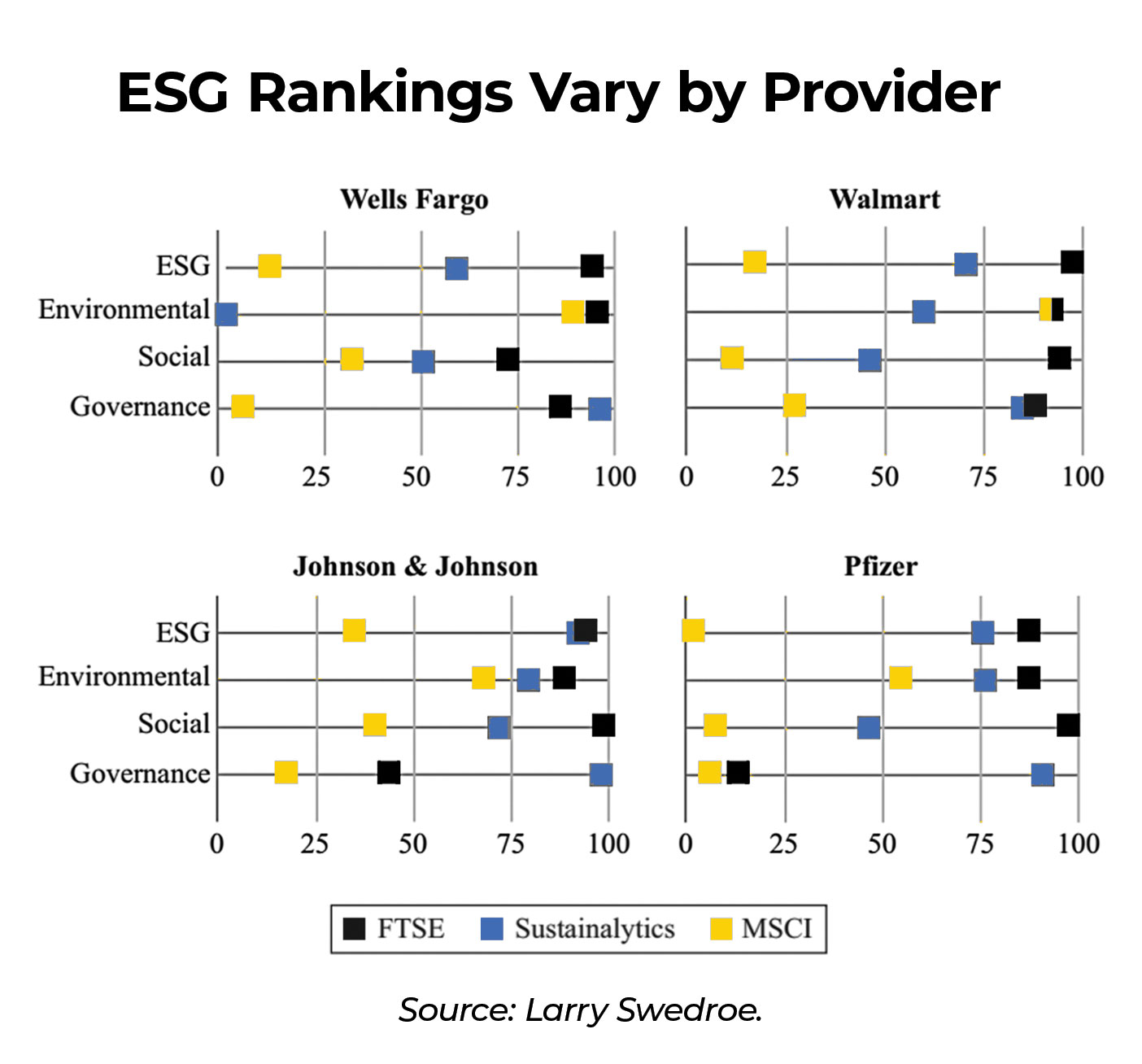
No requirement for the consideration of ESG factors is included in the rule.
In its press release, the DOL says the rule clarifies that “a fiduciary’s duty of prudence must be based on factors that the fiduciary reasonably determines are relevant to a risk and return analysis and that such factors may include the economic effects of climate change and other ESG considerations on the particular investment or investment course of action.” Furthermore, the rule “maintains the longstanding principle that the fiduciary may not accept reduced returns or greater risks to secure collateral benefits.”
Essentially, the rule gives fiduciaries the option to take ESG factors into consideration when assessing investment risk and return. Retirement plan managers can take “participants’ non-financial preferences into account when constructing a menu” of investment offerings for 401(k) type plans.
The actual implications of the rule remain to be seen. ESG funds are already available as options in 401(k) and similar types of plans. For instance, the Vanguard FTSE Social Index Fund Admiral Shares (VFTAX) is on AAII’s 403(b) plan menu. Most of the more than 60 Vanguard funds available to us are not designated as being socially responsible funds by Morningstar, however.
Most target-date funds do not have Morningstar’s socially responsible designation. Out of the approximate 2,500 target-date funds in our mutual fund database, only 41 are socially responsible. Those 41 are either BlackRock or Natixis funds. Depending on demand, it is possible that more target-date funds explicitly incorporating ESG factors could be created.
Mutual fund investors with assets held outside of ERISA-covered plans will continue to have their choice of funds. Managers of funds not designated as being ESG will continue to have the option to consider ESG-type factors to the extent their fund objectives allow them to do so. A fund manager could favor companies opting for more environmentally friendly practices or a more diverse board of directors because they see an economic benefit to doing so. A company that focuses on ways to reduce waste, for instance, could have technological advantages that make it attractive from a business standpoint. Likewise, a company with a diverse board may succumb to less groupthink and thereby be perceived as being less risky.
One big thing the rule does not address is ESG ratings. There continues to be a lack of agreement among the raters about what specifically leads to a high or low environmental, social or governance rating. Just because a fund brandishes an ESG label does not mean it invests in companies engaging in practices an ESG investor wants. Additionally, an investor could be concerned with just, say, environmental factors (such as a hunter who wants forests and streams to thrive) but is otherwise agnostic from an investment perspective when it comes to other ESG factors.
From a return standpoint, ESG funds can charge higher expenses. This impacts the actual returns investors realize. (There are also many actively managed non-ESG funds in 401(k) plans charging higher expenses.) The existence of a “greenium” has raised concerns about the elevated valuations of companies brandishing the ESG label, creating the risk of incurring lower future returns. Likewise, any strategy that excludes certain companies or industries risks having less diversification, which can in turn adversely affect future returns.

-
Addressing the Challenges ESG Investors Face
Because ESG ratings aren’t standardized and there are different definitions for green and brown stocks, socially conscious investing is necessarily a very personal decision. -
Finding ESG Mutual Funds and ETFs
Investors are increasingly applying nonfinancial environmental, social and governance (ESG) factors to their investment analysis to identify material risks and growth opportunities. AAII.com shows you which funds have an ESG focus. -
Savings Account Yields Are the Highest Since 2008
After more than a decade of extremely low interest rates, savers are finally seeing yields on their cash savings rise. -
Shop for Yields, but Be Careful About Where You Bank
The best yields can be found online. However, be sure to verify that the bank or credit union is insured. -
PRISM Step 1: Prioritizing Your Goals
Anine Sus dives into AAII’s five-step process for aligning goals with investments in her latest My Investing Discoveries blog post.
Members are looking for your input. Can you help with this question from the Allocation Strategies Community?
“What data and sources do you use to make investment decisions? Do we REALLY know how markets work?”
Tap the button and then choose the Join the Community button on the right to answer this question in the AAII Community.
Answer This Question in the AAII Community »
AAII Sentiment Survey
Optimism among individual investors about the short-term direction of the stock market fell to a six-week low in the latest AAII Sentiment Survey. Neutral sentiment jumped for the second straight week, and pessimism stayed around the same level.
Bullish sentiment, expectations that stock prices will rise over the next six months, fell 4.4 percentage points to 24.5%. Optimism was last lower on October 20, 2022 (22.6%). Bullish sentiment remains below its historical average of 37.5% for the 48th consecutive week.
Neutral sentiment, expectations that stock prices will stay essentially unchanged over the next six months, increased by 4.2 percentage points to 35.1%. The jump puts neutral sentiment above its historical average of 31.5% for just the second time since the end of July.
Bearish sentiment, expectations that stock prices will fall over the next six months, rose by 0.2 percentage points to 40.4%. Pessimism is above its historical average of 31.0% for the 51st time out of the past 54 weeks.
The bull-bear spread (bullish minus bearish sentiment) is –16.0%.
Historically, the S&P 500 index has gone on to realize above-average and above-median returns during the six- and 12-month periods following unusually low readings for bullish sentiment and the bull-bear spread.
Concerns about the economy, inflation, corporate earnings and volatility in the stock market continue to cause many individual investors to maintain a cautious short-term outlook. It should be noted that most of this week’s results were tabulated before yesterday’s comments about monetary policy were made by Federal Reserve chairman Jerome Powell.
Bullish: 24.5%, down 4.4 points
Neutral: 35.1%, up 4.2 points
Bearish: 40.4%, up 0.2 points
Bullish: 37.5%
Neutral: 31.5%
Bearish: 31.0%
See more Sentiment Survey results.

AAII Asset Allocation Survey
Cash as a percentage of individual investors’ portfolios pulled back from a 2.5-year high last month. The November AAII Asset Allocation Survey also shows equity allocations growing marginally while fixed-income allocations were flat.
Stock and stock fund allocations increased by 0.8 percentage points to 62.4%. Despite the increase, this marked the second-lowest reading since May 2020 (60.8%). Equity exposure remains above the historical average of 61.5% for the 30th consecutive month.
Bond and bond fund allocations remained relatively flat, declining by only 0.1 percentage points to 13.6%. Bond and bond fund allocations are below their historical average of 16.0% for the 21st consecutive month.
Cash allocations fell by 0.7 percentage points to 24.0%. Even with the decline, this reading is higher than 31 of the last 32 months. This is also the second time in 31 months that cash allocations are above their historical average of 22.5%.
Optimism about the short-term direction of the stock market continued to be unusually low throughout November. Concerns are looming about the overall direction of the economy, inflation and potential interest rate hikes. It should be noted that most of this month’s results were tabulated before yesterday’s comments about monetary policy were made by Federal Reserve chairman Jerome Powell.
- Stocks and Stock Funds: 62.4%, up 0.7 percentage points
- Bonds and Bond Funds: 13.6%, down 0.0 percentage points
- Cash: 24.0%, down 0.7 percentage points
- Stocks: 30.4%, up 0.3 percentage points
- Stocks Funds: 32.0%, up 0.4 percentage points
- Bonds: 3.8%, up 0.2 percentage points
- Bond Funds: 9.8%, down 0.2 percentage points
- Stocks/Stock Funds: 62.0%
- Bonds/Bond Funds: 16.0%
- Cash: 22.0%
Take the Asset Allocation Survey.
November 24, 2022 Reasons for Individual Investors to Be Grateful in 2022
November 17, 2022 Cryptocurrency Debacle Highlights Importance of Where You Bank and Invest
November 10, 2022 Monitoring My Portfolio During a Volatile Market
November 3, 2022 Investment Horror Tales and Their Lessons

Discussion
Barry from TX posted over 3 years ago:
It was the original ERISA law in 1974 that made it easier for pension funds to diversify into small-cap stocks opening up retirement funds for the use of index funds that launched the index fund revolution and made Vanguard and Jack Bogle famous. Could it happen again? That's would be a great AAII Community discussion topic. Jenna?
Barry from TX posted over 3 years ago:
The graphic on ESG ratings was credited to Larry Swedroe. His name is new to me. His LinkedIN.com profile @ https://www.linkedin.com/in/larry-swedroe-18778267/ helped me appreciate his expertise. His graphic's gist is that ESG ratings are all over the place. The parable of "the blind men and an elephant" may help us understand the message in his graphic. But, remember, after their inspections, none of the three blind men bought--- or rode on -- the elephant and they did not understand it any better than when they first encountered it. That may be a lesson for ESG, too.
John from Ohio posted over 3 years ago:
Charles, Environmental, Social and Governance efforts by corporations, sounds good on the surface as general statements by the definitions. Similar to Social Equality. I was a backpacker for 30 years. Leave no Trace behind. I'm as "Green" as they come and 100% support being good stewards of our planet. We recycle our garbage and I'm for "VIABLE" and efficient clean energy sources - NOT the underdeveloped, inefficient AND high carbon footprint energy sources they're prematurely shoving down our throats right now and trashing the Global economy as I write. Research what batteries are made of and where the material comes from. Where does the electricity to charge cars come from...coal, oil and LNG. I'm also a Libertarian - Socially Liberal and Fiscally responsible. What you do in private is your world and your business. I support truly biologically driven Gay people. But the LGBTQ+ and all the other deliberate divisive social nonsense they're trying to make 70% of the centrist to Right People believe is far more prevalent and abused of Rights than it is, is disgusting. Sexualizing children in schools is simply evil! **Environment. What kind of impact does a company have on the environment? This can include a company’s carbon footprint, toxic chemicals involved in its manufacturing processes and sustainability efforts that make up its supply chain. **Social. How does the company improve its social impact, both within the company and in the broader community? Social factors include everything from LGBTQ+ equality, racial diversity in both the executive suite and staff overall, and inclusion programs and hiring practices. It even looks at how a company advocates for social good in the wider world, beyond its limited sphere of business. **Governance. How does the company’s board and management drive positive change? Governance includes everything from issues surrounding executive pay to diversity in leadership as well as how well that leadership responds to and interacts with shareholders. This ESG business mantra is sourced and embedded in Authoritarian Socialist Globalism lead by the WEF and the immoral and human Rights nut job Klaus Schwab. This group also includes the Technocracy Globalist Larry Fink who owns and runs Black Rock, which controls majority equity stakes in almost every large corporation in the world. What these people want is total control over humans as controlled laborers through zero privacy using cell phones, chip implants and digital currency . "You'll own nothing and like it" - Klaus Schwab. China has been their test bed for these heinous Human Rights violations for 50 years. It all started with the Tri-Lateral Commission...please research this. Please do some more research on ESG. I'm violently against it. I can not support Centralized, Authoritarian Fascism using technology, misinformation and deception as oppression tools. I also pray that Elon Musk is sincere in his support of Free Speech and cleaning up the Left's politically weaponized use of Twitter.
You need to log in as a registered AAII user before commenting.
Create an account