

Don't Fight the Hedge Funds, Invest Differently
by Charles Rotblut | February 04, 2021
Featured Tickers: RE TFX
TFX
My Investor Update commentary about GameStop Corp. (GME) last week struck a chord, with some AAII members commenting that I should have made the focus about hedge funds and short-selling. I chose to focus instead on the risks of herd mentality, speculation and short-selling. Amid all of the headlines, I thought it would be worthwhile to step back and point out some lessons an outsider might notice. Not everyone agreed with that decision.
So, let’s talk about hedge funds.
Beating them is easier than you think. The HFRI 500 Fund Weighted Composite Index, which tracks the largest 500 funds, has a five-year annualized return of 5.6%. The SPDR S&P 500 ETF Trust has a five-year annualized return of 15.1%. Other S&P 500 index funds—both in mutual fund and exchange-traded fund (ETF) formats—have similar returns. Lest you think I cherry-picked this period, consider that Warren Buffett handily won a $1 million bet over a hand-selected group of hedge funds in 2017. How did he do it? He chose to hold an S&P 500 index fund for 10 years starting in 2007.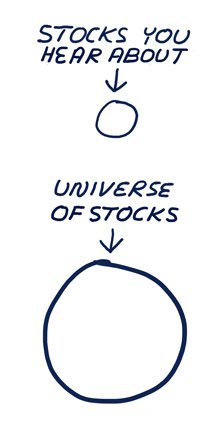
But let’s say you are an active investor. Well, use your advantages of being an individual investor. One of those advantages is never having to report performance. Hedge funds have to answer to their clients. This often leads to short-term thinking. You don’t have to report to anybody. This gives you the ability to follow long-term strategies and not worry about quarterly or annual performance. It’s a big advantage.
You also have the advantage to invest in whatever stock you want. While this may not seem like a big deal, it is. Many hedge funds—along with many other institutional investors—are restricted by their sheer size. It’s much easier to allocate, say, $20,000, $500,000 or $1 million than it is to invest billions (hedge funds) or trillions (large asset managers). Even an individual investor with a small amount of cash in their Robinhood account can buy stocks that are essentially off-limits to most hedge funds.
The universe of stocks to choose from is bigger than you may realize. AAII’s Stock Investor Pro fundamental stock screening and research database lists nearly 5,000 U.S. exchange-listed stocks. Applying the base criteria used in AAII’s Model Shadow Stock Portfolio for a minimum market capitalization of $30 million and a minimum share price of $4 to eliminate the tiniest—and frequently least traded—stocks still gives us a universe of more than 4,000 stocks. That’s quite a list to choose from.
Now think about how many stocks you actually hear about with any frequency. I haven’t seen data with exact numbers, but a reasonable estimate might be 10% of the 4,000. If we leave out the one-off mentions—where a stock makes the news headlines for a single day and then fades back into the background—it’s possible this estimate is too high. Even among S&P 500 companies, there are those that are unfamiliar to many. Everest Re Group Ltd. (RE) and Teleflex Inc. (TFX) are likely among such large-cap stocks.
The point is that the circle of potential investment candidates and the circle of the stocks you hear about are different. Is there overlap? Absolutely. Being ignored doesn’t make a bad stock a good investment, just as receiving attention doesn’t make a good stock bad. Limiting which investments you are willing to consider does, however, increase the odds of missing out on potentially good investments.
Furthermore, many of those stocks are not even on the radars of most hedge funds or institutional funds. Yes, some hedge funds might take an interest, but they simply can’t invest in or short everything. They need stocks to be a certain size and have a certain level of volume. The minimum size and volume requirements are far greater for hedge funds than they are for us individual investors.
You, of course, are not limited to small stocks. We individual investors are not bound by any size constraint. So, we can look at big and small stocks in terms of market cap. We can also hold for longer time periods and target our strategies to reach personal goals instead of having to worry about pleasing clients.
All of these advantages allow us to invest differently than the hedge funds do. Often, the way to win is to simply not play the same game.
Recent Broker Issues
I’m admittedly going a bit long with this week’s commentary, but I wanted to address the issues affecting some brokers last week.
The combination of extraordinarily high volatility and high trading volumes caused Robinhood to restrict trading in certain securities, including GameStop. The broker—which primarily makes its money from how it routes orders to market makers—was not adequately capitalized to handle the volume. In simple terms, the issue stemmed from the difference between when trades are placed and they settle. The market makers demanded more collateral from Robinhood to avoid incurring losses.
Problems and restrictions were not just limited to Robinhood last week. Access to TD Ameritrade’s mobile app was limited because of the high trading volumes. The firm also raised margin requirements on certain stocks, as did TD Ameritrade’s recent acquirer, Charles Schwab. The Wall Street Journal listed E-Trade, Interactive Brokers and Webull Financial as also having placed restrictions on trading.
Lawsuits have been filed against Robinhood, and the U.S. Securities and Exchange Commission (SEC) is looking into last week’s actions by brokerage firms. The restrictions caught many investors off guard, but the scope of the problem should be kept in perspective. The overwhelming majority of investors who weren’t trading in the affected stocks (or solely relying on TD Ameritrade’s app) probably didn’t notice much in terms of issues. Still, it’s good to see regulators paying attention to the issues.

- There is an advantage to investing in lesser-known stocks: the liquidity premium. Yale professor Roger Ibbotson explained what it is and how you can take advantage of it.
- Chris Nagy—who was formerly with TD Ameritrade—provided an insider’s view of what happens behind the scenes when a buy or sell order is placed in this 2011 interview.
- Speaking of trades, we saw a renewed interest in our InvestoGraphic about stock order types last week.
- The February AAII Journal is now online. For the first time, it features both our annual mutual fund guide and our annual ETF Guide.
- On Wednesday, I’ll explain how to use value, momentum and quality to find good stocks in our latest webinar.
AAII Sentiment Survey
Optimism among individual investors about the short-term direction of the stock market fell to its lowest level in 13 weeks. The latest AAII Sentiment Survey also shows a decrease in pessimism and an increase in neutral sentiment.
Bullish sentiment, expectations that stock prices will rise over the next six months, declined 0.3 percentage points to 37.4%. Bullish sentiment was last lower on October 28, 2020 (35.3%). Optimism is below its historical average of 38.0% for the second consecutive week.
Neutral sentiment, expectations that stock prices will stay essentially unchanged over the next six months, rose 3.0 percentage points to 27.1%. Neutral sentiment remains below its historical average of 31.5% for the 52nd time out of the past 55 weeks.
Bearish sentiment, expectations that stock prices will fall over the next six months, fell 2.7 percentage points to 35.6%. Pessimism is above its historical average of 30.5% for the fourth consecutive week.
At current levels, all three sentiment readings are within their typical historical ranges.
The ongoing coronavirus pandemic, including the distribution of vaccines, continues to have a big influence on individual investors’ outlook for the stock market. Other factors include the new administration’s policies, economic trends, the current level of valuations and economic stimulus.
In this week’s special question, we asked AAII members for their thoughts about the Federal Reserve’s decision to maintain its current monetary policy.
Slightly more than half of all respondents (51%) say that they agree and that the Federal Reserve has little choice but to continue with the current monetary policy. This compares to 38% of respondents who say that they are concerned about the consequences of this policy in the long run. Many respondents in this group also say that when rates eventually go up, it could have a devastating impact on the economy. About 7% of respondents say that the Fed’s policy is good for the market and equity holders but bad for savers.
Here is a sampling of the responses:
- “We absolutely need to print money to maintain our economy at this time. This pandemic is the type of situation where increased debt spending is warranted. However, our government has been increasing the deficit through all the good years since 2009. After the pandemic is under control, the deficit must first be eliminated and then we must begin to reduce the debt.”
- “I think the Fed has to maintain its current monetary policy. Due to the unemployment rate, rate of business closures and evictions being as high as they are, any increase in interest rates would further harm the economy.”
- “Trouble—holding rates so low and printing more money for economic stimulus has been practiced for too long.”
- “They have no choice and any decision to taper their bond buying will trigger market panic at this time.”
- “Smart policy considering that we are still in a pandemic! A little inflation later on wouldn’t be the worst thing. Remember according to the ‘cleanest dirty shirt’ theory the U.S. is still the best place to have your money. This helps the dollar and would mitigate inflation.”
Bullish: 37.4%, down 0.3 points
Neutral: 27.1%, up 3.0 points
Bearish: 35.6%, down 2.7 points
Bullish: 38.0%
Neutral: 30.5%
Bearish: 31.5%
See more Sentiment Survey results.

AAII Asset Allocation Survey
Individual investors’ exposure to equities pulled back slightly in January according to the latest AAII Asset Allocation Survey. Allocations to cash increased while fixed income remained flat.
Stock and stock fund allocations decreased by 0.2 percentage points to 67.4%. This marks the eighth consecutive month and the 10th month since the start of 2020 that stock and stock fund allocations are above their historical average of 61%.
Bond and bond fund allocations remained flat at 17.0%. This is the 23rd consecutive month and the 24th month since the start of 2019 that fixed-income exposure is above its historical average of 16.0%.
Cash allocations rebounded by 0.2 percentage points to 15.6%. The last time cash allocations were at their historical average of 23.0% was in April 2020.
Overall, allocations were mostly unchanged last month. Individual investors’ optimism about the short-term direction of stock market declined throughout January. Bullish sentiment in our weekly AAII Sentiment Survey started the month at an above-average level and ended the month with a below-average reading. At the same time, the level of bearish sentiment rose gradually throughout January.
Last month’s special question asked AAII members what allocation changes they expect to make between now and the end of 2021.
About half of all respondents (51%) say that they do not expect to make any changes to their allocation strategy during the year. This compares to 15% of respondents who say that they expect to follow a more conservative allocation strategy due to the current economic environment with more fixed income and less equities. Many within this group say that they will be reducing their allocation in stocks due to the anticipated market correction. In addition, about 10% say that they will add stocks and stock funds and 6% say they will add bonds and bond funds. Lastly, about 5% of respondents say that they will be increasing their exposure in international and emerging markets.
Here is a sampling of the responses:
• “Slightly more conservative—more cash on hand and more bonds as a percentage of total portfolio.”
• “I plan on increasing allocations to cash to be ready for a bubble burst in stocks this summer and increase allocations to Treasury inflation-protected securities (TIPS) as inflation grows this fall.”
• “I expect to reduce my stock holdings to under 50% of my portfolio. I expect a major correction in the fourth quarter of the year extending into the first quarter of 2022 at which time I want to be prepared to increase my stock holdings to 66% which is my historical level.”
• “I expect to move more into international equities (5%) as the rest of the world catches up with U.S. equity values and recovers from the coronavirus pandemic.”
- Stocks and Stock Funds: 67.4%, down 0.2 percentage points
- Bonds and Bond Funds: 17.0%, up 0.1 percentage points
- Cash: 15.6%, up 0.1 percentage points
- Stocks: 28.3%, down 1.9 percentage points
- Stocks Funds: 39.1%, up 1.7 percentage points
- Bonds: 2.3%, down 0.2 percentage points
- Bond Funds: 14.7%, up 0.3 percentage points
- Stocks/Stock Funds: 62.0%
- Bonds/Bond Funds: 16.0%
- Cash: 22.0%
Take the Asset Allocation Survey.
January 28, 2021 Observations About and Lessons From GameStop's Big Rise
January 21, 2021 Pessimism Was High in 2020, but Investors Stayed With Stocks
January 14, 2021 How Much Are Mega Millions and Powerball Lottery Tickets Worth?
January 7, 2021 11 More Financial and Investing Resolutions for 2021

Discussion
Barry C from TX posted over 5 years ago:
Point #1. Charles seems to not have learned a lot form the feedback on his article on the GME debacle. The comments were over 85% in agreement that this focus missed the whole point. The "problem" is in the "plumbing" -- 2 day rule, clearing houses, etc., of how stock transactions are processed to the DISADVANTGE of independent investors, be they Millennials or Boomers. I read over hundred pages of analysis on this issue and the AAII op ed was an "outlier" ( at best). Point #2 Pres. Joe's stock response to any question he does not want to respond to is "Com' on, guys." The graphic on page 1 showing "stocks your hear about" compared to the "universe of stocks" implies that you only hear about stocks OUTSIDE the universe of stocks. "Com' on, guys." 5th graders (in rural West Texas) understand Venn diagram logic better than AAII. "Com' on, guys."
John Lambert from NJ posted over 5 years ago:
Com' on Barry! It is naive to expect that retail investors using a "no commission" brokerage app like Robinhood could compete head to head with the professionals. Who do you think was buying the order flow information from Robinhood and paying their brokers top dollar for faster execution? Nothing will be gained by complaining about the unfairness or mistake of using a poorly capitalized broker that makes money by selling trade information! Charles is right to advise retail investors to play to their strengths.
Fred B. from FL posted over 5 years ago:
Charles, I love you dearly, but this is like doing a financial analysis on Occupy Wall Street. We have a political and sociological event here where a great majority are not making a financial investment and understand this will end badly. This may be hard to understand but the Reddit group's objective is not to make money but to make the hedge funds hurt. Why? Need a 100 page foot-noted term paper? A small example that AAII readers can relate to: The Quicken software program was bought out from Intuit by HIG Capital, a private equity firm focused on generating profits for its investors. Now Quicken must be renewed every year or the user suffers from large yellow nag ads at the top and left of the program that can't be avoided unless one renews. The annual renewal prices are comparable to the previous prices for versions that ran "fine" for years. Before, you generally wanted to upgrade about every three years but there was no gun pointed at your head to make you do this. PS: There probably are lots of both pro- and anti-Trump individuals happily working together on this on Reddit, etc. Who says America is divided?
Keith R from MA posted over 5 years ago:
Charles you swung and missed last week and tried taking things in entirely another direction (off-track) this week. Your use of the word focus makes me think you would have discussed how calm the waves were instead of talking about the iceberg. If you don't want to try, then don't.
James Maher from MT posted over 5 years ago:
I agree with Fred B., this is a sociological and political event. Something we haven’t seen before. Probably we’re going to see a lot more of this behavior. Buyer beware. The entities that purchase this data stream can damage the little guys especially if us LGs are trading short term. I’m thinking the Russians and other bad actors are using social media along similar lines. We’re seeing a hint of the future and it ain’t going to be pretty. Thanks, JimM
You need to log in as a registered AAII user before commenting.
Create an account