

Why Not Having to Trade Is a Big Advantage
by Charles Rotblut | August 19, 2021
Featured Tickers: SVXY
SVXY
Two advantages individual investors have is the ability to invest for the long term and to invest in securities with lower levels of trading volume. Many institutional investors do not have these advantages.
In some cases, strategies require trades to be made in undesirable market conditions. Many inverse, leveraged and other short-term exchange-traded funds (ETFs) and exchange-traded notes (ETNs) are at risk of encountering such conditions. Unlike we individual investors who can choose not to trade, some ETFs and ETNs have to trade.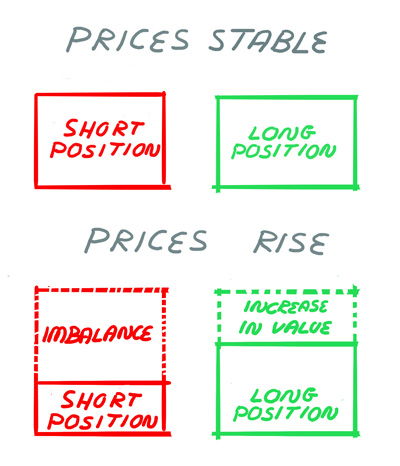
This is what happened to an ETF and an ETN in February 2018 after a sharp jump in the CBOE Volatility Index (aka the VIX). The VIX measures the expectations for future volatility priced into S&P 500 index options.
Here’s what I wrote then about the ETF and the ETN following the VIX’s large move:
We saw the adverse effects of trying to predict how others will react, with two exchange-traded products plunging this week: the VelocityShares Daily Inverse VIX Short-Term ETN (XIV) and the ProShares Short VIX Short-Term Futures ETF (SVXY). Both are bets on traders not paying premiums for protection against higher volatility. Think of them as bets on what other people will pay for insurance against yet other people becoming more skittish. The ETN and ETF worked when the markets were calm, but when volatility returned with a vengeance, their shortcomings were fully exposed. XIV lost 93% of its value and SVXY lost 83% of its value on Tuesday. Both have continued to fall. In reaction, Credit Suisse announced its intention to liquidate the VelocityShares ETN by next week. ProShares sent out a press release saying its ETF’s performance “was consistent with its objective and reflected the changes in the level of its underlying index.”
The third-quarter 2021 issue of the Financial Analysts Journal explains how a feedback loop of required trading and not enough market liquidity led to “volmageddon.” I’ll provide a summary here in lay terms. Even if you don’t trade these types of products, this is a good lesson about what happens when large trades are forced into a market that lacks the volume to handle them.
Both the aforementioned ETN and ETF were designed to realize a daily return of –1 times the VIX. Whatever change in value the VIX incurred on a given day, these exchange-traded products were expected to move by the same magnitude in the opposite direction.
The VelocityShares ETN accomplished this goal by shorting VIX futures (whose value changed in the opposite direction of the VIX). The ETN’s counterbalance was its assets under management (AUM). So effectively, the ETN sought to give investors the daily inverse return of the VIX, while the ETN’s short position in futures contracts allowed it to realize the same daily inverse return. This worked as long as an equal balance could be maintained in both AUM and the short position.
The ProShares ETF differed by selling VIX futures in an amount equal to its AUM. As explained in the Financial Analysts Journal article, “In early February 2018, the value of the SVXY’s AUM stood at $1.7 billion and the fund was short VIX futures with a notional exposure of $1.7 billion.”
They both needed to rebalance their portfolios each day to maintain their –1 times exposure to the VIX.
On February 5, 2018, the VIX surged from 18.44 to 37.32. This big move created a massive imbalance in the ETN’s and ETF’s exposure. (Short positions lose value when the underlying asset, in this case the VIX, rises in value.) To rebalance, both exchange-traded products were forced to buy VIX futures during aftermarket hours when there was less trading activity. This large amount of buying created upward pressure on the price of the VIX, which in turn lowered their value of the ETN’s and ETF’s short positions. This led to even more rebalancing and a dangerous feedback loop for the exchange-traded products.
This feedback loop was the direct result of having to trade in a market without enough volume to support the trading activity. Had they not needed to trade or held less volatile assets—and in turn, avoided facing a forced trading situation—their outcomes would have been different.
We individual investors are rarely in situations where we must trade. This gives us the opportunity to sit tight when market conditions are not conducive to getting our trades executed at or close to quoted prices.
We can also invest in smaller-company stocks. An institutional investor with billions or more to invest will have difficulty acquiring a position in a company with a market capitalization of, say, $400 million. These large investors simply have too much money to deploy relative to the dollar value of shares traded for such stocks. This creates mispricing in small-company stocks. Mispricings are opportunities for us individual investors whose comparatively smaller portfolios make it easier for us to acquire positions in such stocks.
When doing so, keep the trading volume in mind. Depending on the number of shares exchanging hands and the dollar value of trading volume, you may have to split up your trades into more than one order. You may also have to exercise some patience for the order to be filled. Neither is an obstacle for us individual investors because we’re not under pressure to complete a trade within a given time frame.

- Volmageddon was just one example of the risks associated with leveraged ETFs.
- Stocks with less trading volume are associated with higher returns, Yale professor Roger Ibbotson told me.
- There are five to six distinct factors that explain 96% or more of stock returns. Jack Vogel lists them in the current issue of the AAII Journal.
- We exclude leveraged and inverse funds for our Quarterly Mutual Fund Update and our Quarterly ETF Update.
- We’re continuing to make improvements to AAII.com. On Wednesday, my colleague Peter Nguyen will give you a tour, and reveal some “hidden gems.”
AAII Sentiment Survey
Bearish sentiment is at its highest level in more than six months, according to the latest AAII Sentiment Survey. In addition, the percentage of investors describing their outlook for stocks as “bullish” pulled back.
Bullish sentiment, expectations that stock prices will rise over the next six months, fell 3.8 percentage points to 33.2%. This is the sixth consecutive week that optimism is below the historical average of 38.0%
Neutral sentiment, expectations that stock prices will stay essentially unchanged over the next six months, rose 0.2 percentage points to 31.7%. Neutral sentiment remains at or above its historical average of 31.5% for the 16th time out of the past 17 weeks.
Bearish sentiment, expectations that stock prices will fall over the next six months, rose by 3.6 percentage points to 35.1%. Pessimism was last higher on February 3, 2021, at 35.6%. This is the third consecutive week and the fourth time out of the last 28 weeks that bearish sentiment is above the historical average of 30.5%.
At current levels, all three readings are within their typical historical ranges.
The return to normalcy from the coronavirus pandemic, monetary and fiscal stimulus and inflationary pressures are influencing individual investors’ outlook for stocks. Other factors include earnings, valuations and the Biden administration’s initiatives.
In this week’s special question, we asked AAII members to share their perceptions of the current state of the housing market.
Nearly two out of five (38%) respondents say that they perceive the housing market as being in a bubble. Many indicate that they think the bubble is overheating and out of control, citing high prices and low interest rates as causes. In addition, 19% of respondents say that they have a negative outlook, with many expecting the market to crash in the short to medium term.
About 17% of respondents have a mixed outlook, expressing that they expect prices to continue to rise in the short term but eventually begin to cool off. Approximately 13% of respondents express a positive or strong perception of the market, specifically mentioning areas in states such as California with healthy outlooks. Furthermore, 7% of respondents feel demand in the housing market is greater than supply, indicating that sellers can benefit greatly in current market conditions.
Here is a sampling of the responses:
- “It’s a bubble created by the Federal Reserve policies of 0% interest rates and monthly multi-billion-dollar mortgage purchases.”
- “It will keep going up due to inflation, then crash because no one will be able to afford the high cost.”
- “Overvalue spike is underway at the present. I expect some decline in six months or more.”
- “I continue to be optimistic that it will continue to add value, particularly in the Sunbelt.”
- “Supply down, prices up, bull market in housing.”
Bullish: 33.2%, down 3.8 points
Neutral: 31.7%, up 0.2 points
Bearish: 35.1%, up 3.6 points
Bullish: 38.0%
Neutral: 31.5%
Bearish: 30.5%
See more Sentiment Survey results.

August 12, 2021 The Key Pillars of Good Dividend Stocks
August 5, 2021 An Update on Inherited Retirement Accounts and Bankruptcy Protections
July 29, 2021 Making Sense of Stock Splits
July 22, 2021 The Relationship Between Brand Equity and Stock Performance

Discussion
Rob Fates from CA posted over 5 years ago:
I'm not a trader I'm an investor, so I am not trying to guess the direction of the market or its magnitude. The leveraged EFT sandbox is not where I want to play. I plan to stick to my strategy of dividend growth investing with solid companies that have reliably increased sales, cash flow, and earnings.
Mike C from MI posted over 5 years ago:
Really appreciate this level of insight. It's easy to say that these are inherently risky products, but I appreciate the insight about the root cause of the risk.
Barry J from TX posted over 5 years ago:
In these examples, the root cause of each fund's problems were a requirement to rebalance. I have seen many articles here and at investment brokers' websites extolling the benefits of rebalancing (1) annually or quarterly and/or (2) when your investment goals or your financial needs change. I can see how individual investors can become entrapped by a rebalancing "requirement" similar to these funds, if they, too, are forced to rebalance by changing circumstances. This seems to negate the argument that individual investors have the two advantages in the introduction or it repositions rebalancing as a optional, not required, wealth management activity. The main example of rebalancing I am familiar with is (1) rebalancing to meet asset allocations based on risk profile. EVERY risk profile analysis I have ever seen -- EVERY ONE -- is based on (at least) two falsifiable premises: (1) people are able to be honest about their risk tolerances -- although Kahneman and others have demonstrated that this premise can be easily disproven, and (2) risk tolerance is a linear function -- which as been disproven starting with Bernoulli 300yers ago and continuing through Kahneman and other behavioral economists.
Claude P from Georgia posted over 5 years ago:
I value the excellent comments posted by my colleague Barry J. I would supplement his insights by pointing out that (1) rebalancing generally involves selling certain assets (and generally buying some more unless left idle as cash), (2) the selling of assets is, for most individual taxpayers (not dealing with special accounts like IRAs), a taxable event, (3) when the net sale produces a capital gain, the funds available for reinvestment can get a substantial "haircut" from federal and state income taxes, in which case the reinvested funds can be substantially less than what they were valued at to start with. This is regularly ignored by rebalancing advocates. My point is: taxes do matter, and proper scholarship requires they be taken into account for taxpayers who can be expected to have to pay some.
You need to log in as a registered AAII user before commenting.
Create an account