

July Charts of Interest: The Small-Cap Stock Resurgence
by Charles Rotblut | July 25, 2024
Featured Tickers: AMC
AMC
The Russell 2000 index’s seven-day run through July 17, 2024, represented the largest outperformance since at least 1986, according to Dow Jones Market Data. The big jump has led various pundits to ask whether small-cap stocks are poised to make a resurgence against their larger-cap brethren.
A combination of factors is being credited for giving small-cap stocks life. They include raised expectations for an interest rate cut announcement following the Federal Open Market Committee’s (FOMC) September meeting, a lighter regulatory environment should former President Trump win the presidential election in November and strong earnings growth by small-cap stocks. The LSEG I/B/E/S blended consensus earnings estimate calls for Russell 2000 companies to grow 17.5% in the second quarter of 2024.
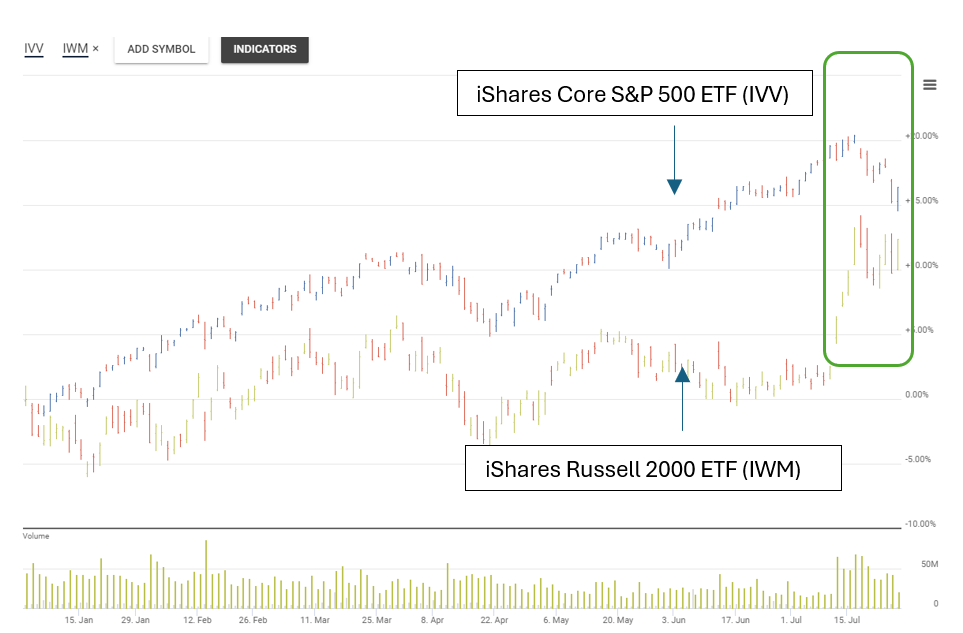
Source: AAII and QuoteMedia. Data as of 7/25/2024.
Value stocks also experienced a resurgence of their own. “The Russell 1000 Value index, meanwhile, notched its biggest lead over its growth-stock counterpart since April 2001,” added The Wall Street Journal.
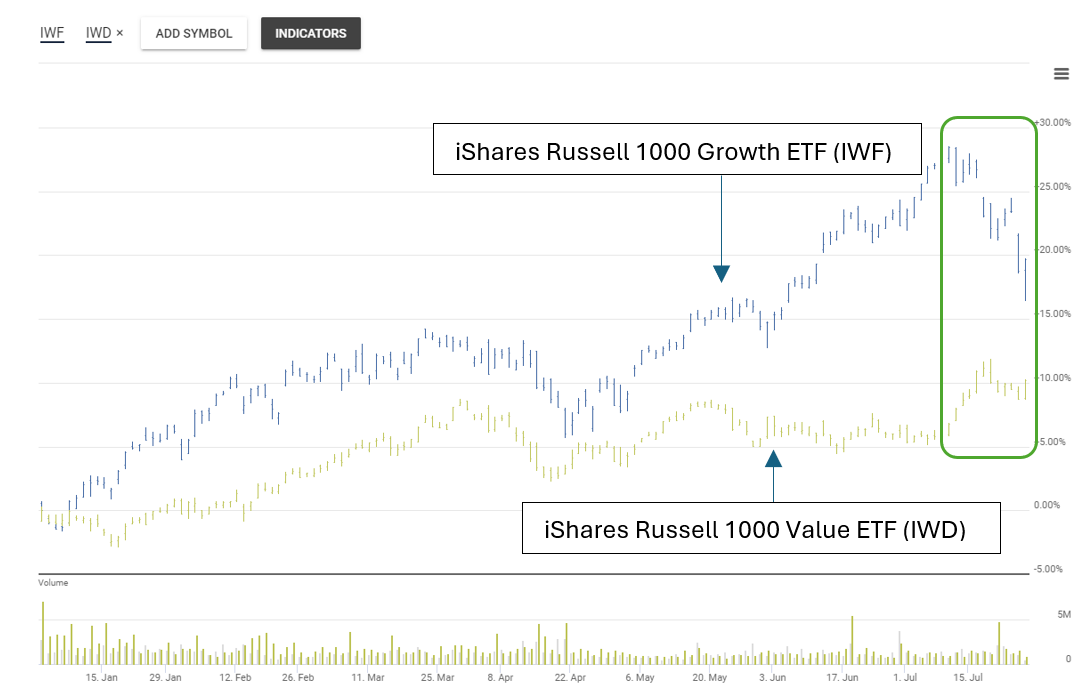
Source: AAII and QuoteMedia. Data as of 7/25/2024.
Most Large-Cap Stocks Are Lagging the S&P 500
I’ve been writing about the S&P 500 index’s high level of concentration for many months. A side effect of it is a tougher environment for stock pickers. “Only 21.0% of S&P 500 stocks have outperformed the index in 2024, on pace for the fewest on record,” wrote Ed Clissold, CFA, of Ned Davis Research earlier this month.
As you can see below, the majority of stocks in most sectors are underperforming.
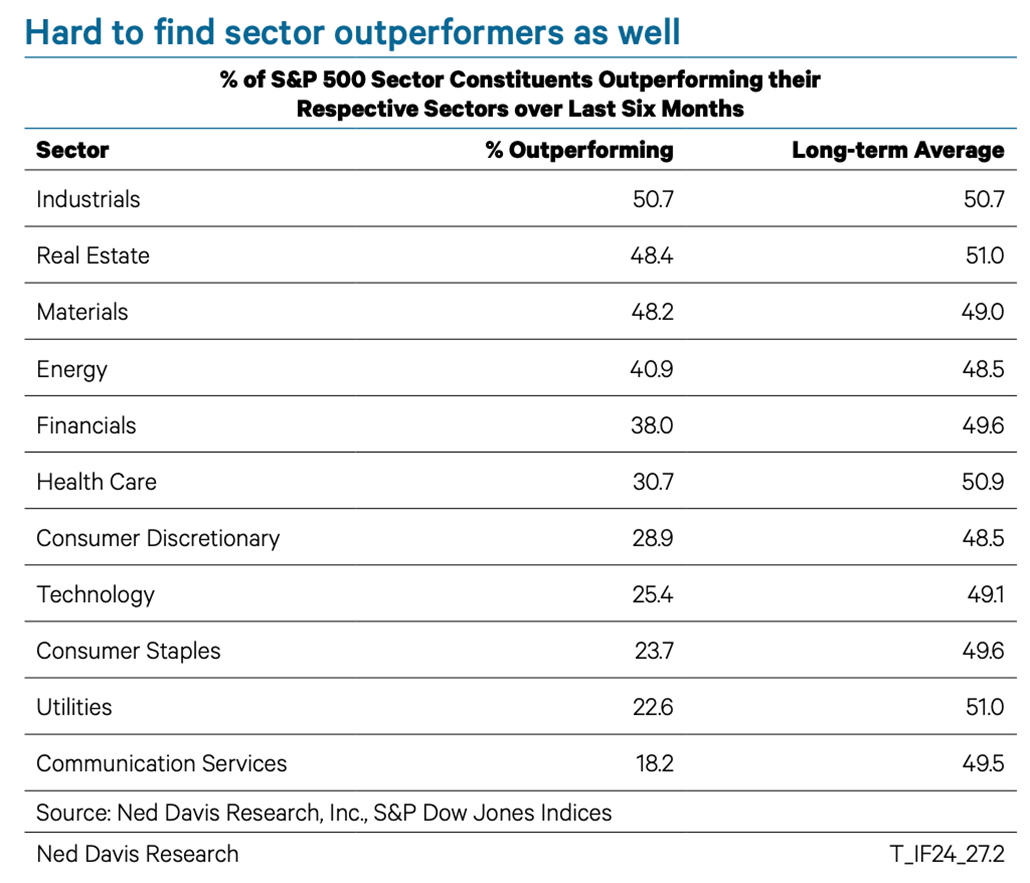
A Sign That Performance Is Relative
Though most large-cap stocks are trailing the S&P 500, Charles Schwab chief investment strategist Liz Ann Sonders points out that most remain in bullish territory. About 75% of S&P 500 stocks were trading above their 200-day moving averages as of July 20.
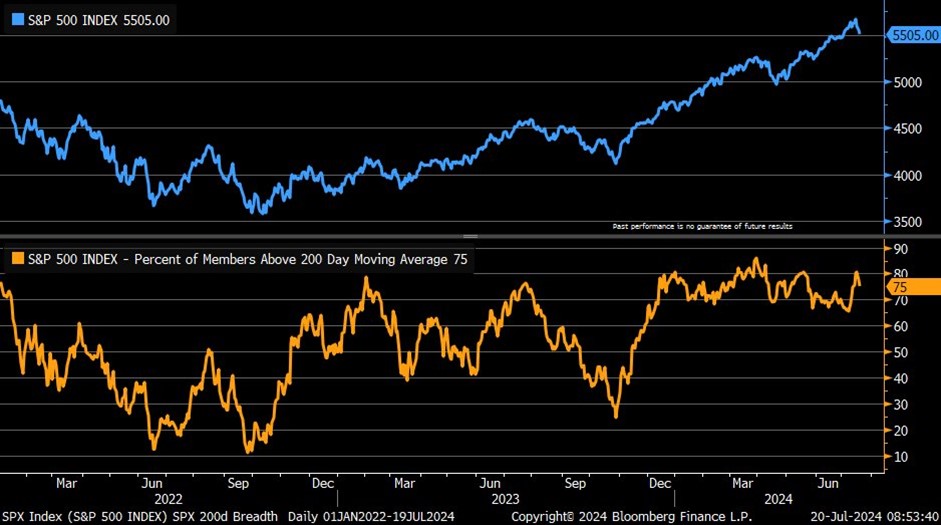
Inflation Boosts Hope for an Interest Rate Cut
The consumer price index (CPI) declined 0.1% on a seasonally adjusted basis in June. It was the CPI’s first monthly decline since May 2020. A deceleration in shelter costs helped. While this is a good sign on the inflation front, one monthly reading does not make a trend.
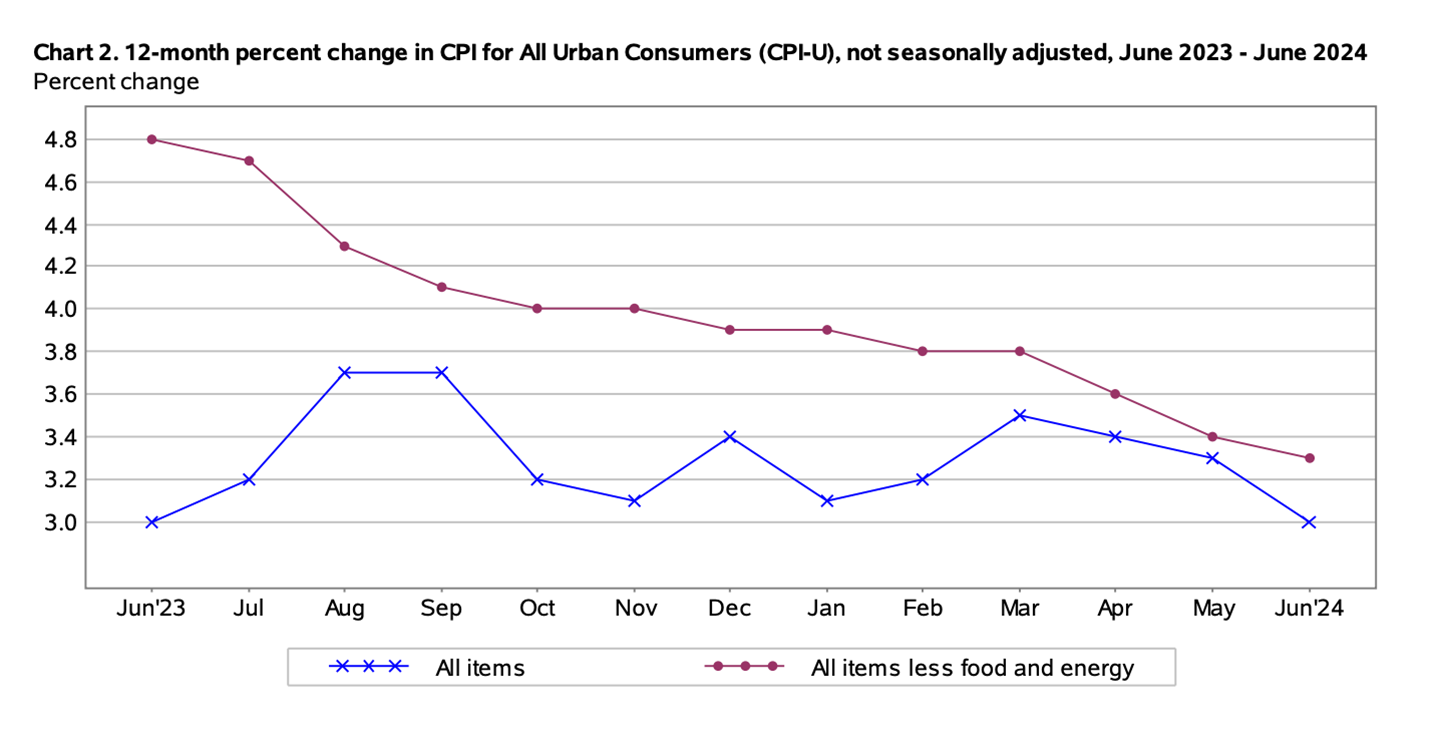
Source: The U.S. Department of Labor’s Bureau of Labor Statistics.
Bond Defaults Are Low
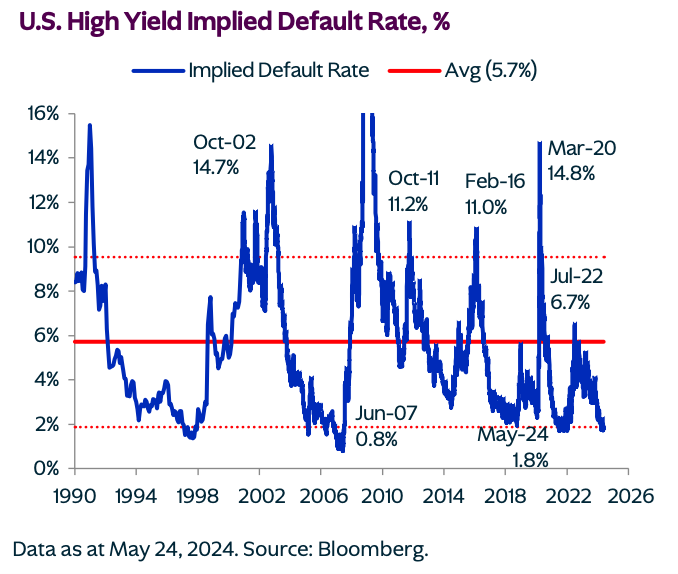
Private equity firm KKR & Co. Inc. believes that high yield spreads are pricing in about a 2% default rate today, compared to 3% at the beginning of 2024 and a historical average of 5.7%. This optimism helps to explain why investors are rotating into the riskier parts of the bond market in search of comparatively higher yields. Higher yields imply greater risk, so tread carefully.
The Bond Market Likes Interest Rate Cuts
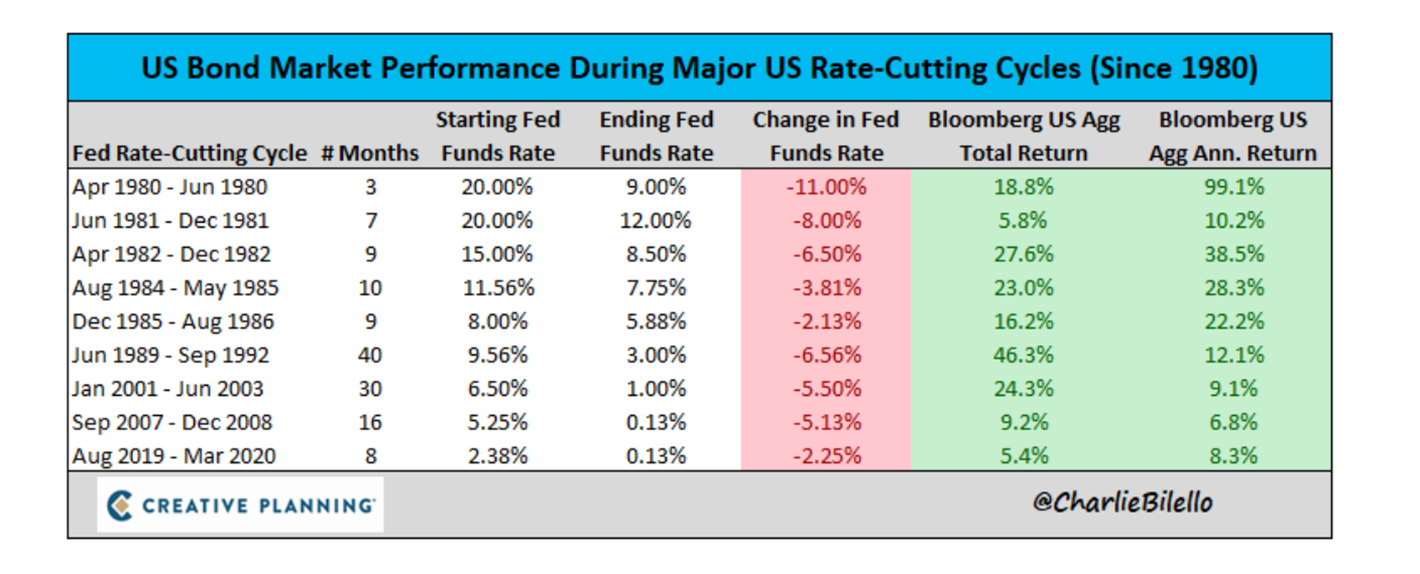
It should come as no surprise that the bond markets tend to do well once the Federal Reserve starts cutting interest rates. The chart below from Charlie Bilello shows their historical performance. Gains have varied in terms of magnitude, but bonds have risen in value during each of the last nine interest rate cut cycles.
The Box Office Is Still Not Booming
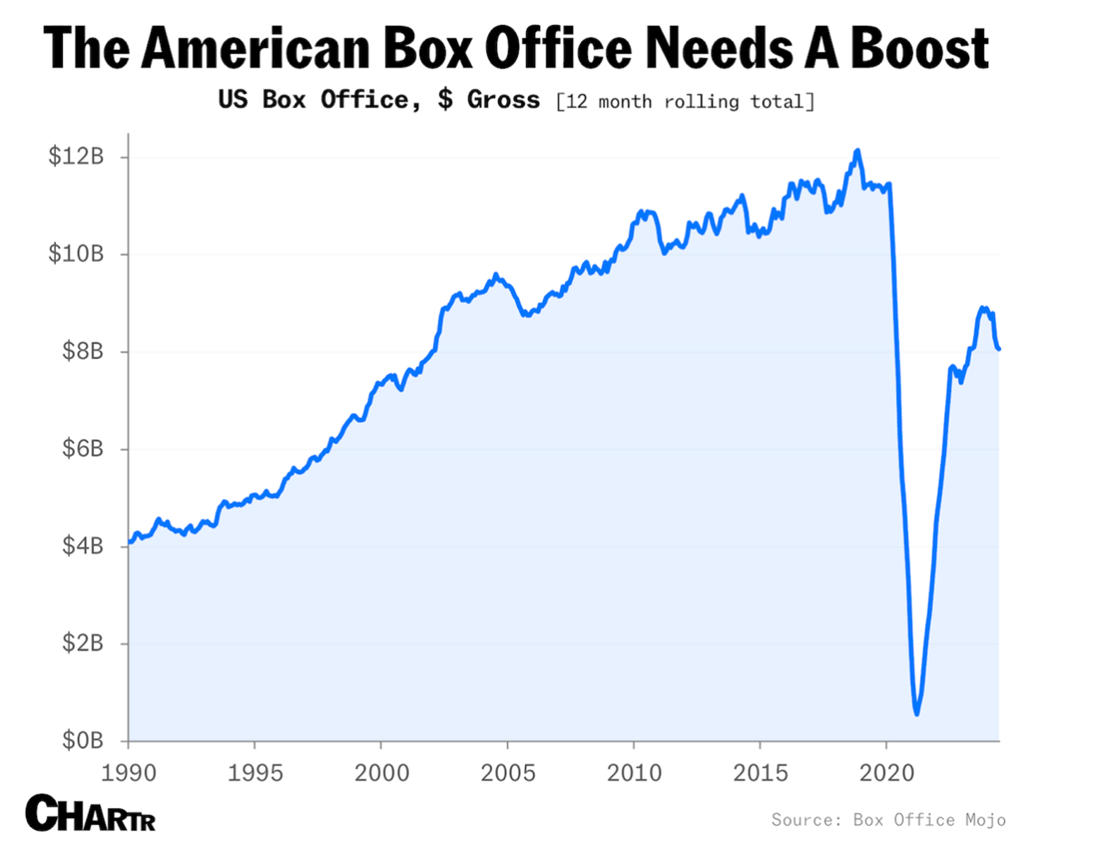
Even with ticket prices at high levels, movie theater revenues remain well below pre-pandemic levels, as Chartr shows. One reason is that going out to a movie is expensive. My wife and I made good use of our AMC Stubs membership for many years prior to 2020. Now we are very selective about what movies we watch on the big screen.
Plus, let’s face it, watching movies at home means no interruptions from other people’s cellphones and conversations. Manners, people.
Related to this is the performance of AMC Entertainment Holdings Inc.  (AMC). It has fallen significantly since its meme stock bubble days.
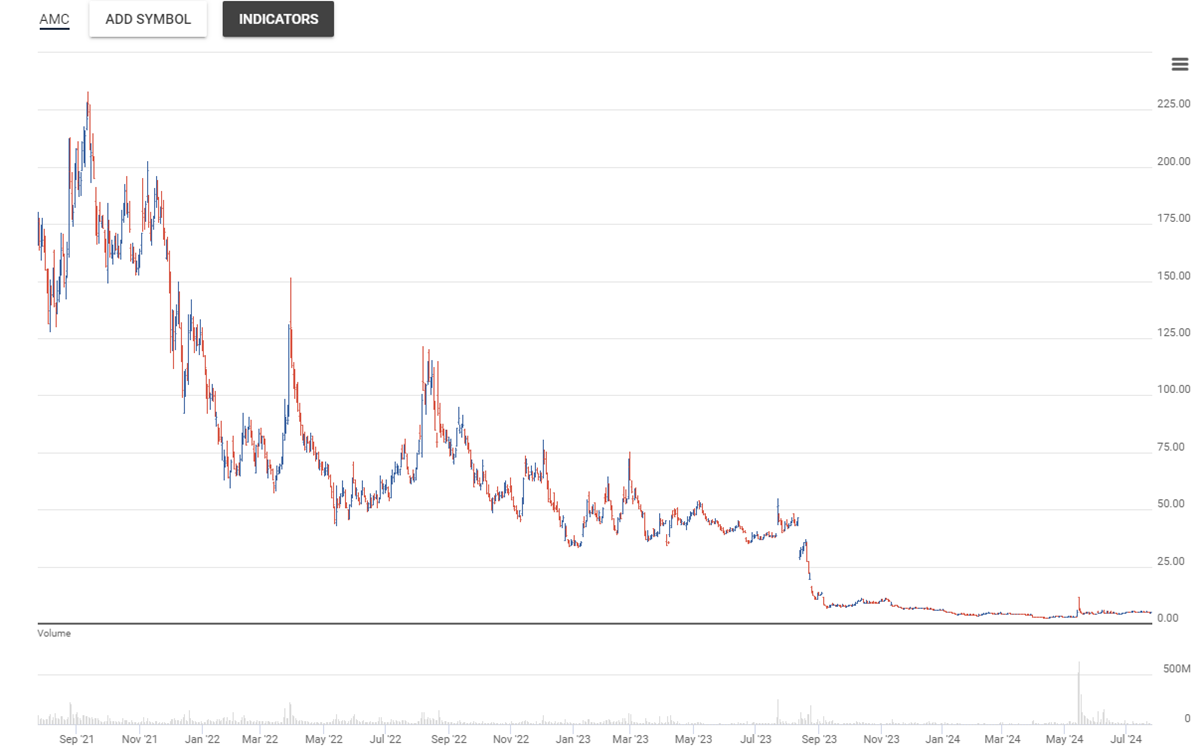
Source: AAII and QuoteMedia. Data as of 7/25/2024.

-
Tech-Related Stocks and Interest Rates Drive Allocation Model Returns
A cursory glance at the performance of the individual mutual funds used to track the AAII Asset Allocation Models reveals the story of what happened during the first quarter of 2024. -
How Interest Rate Changes Affect the Price of Bonds
Rising interest rates reduce existing bond values and falling interest rates increase existing bond values. But knowing how much bond prices can change when interest rates change will help you keep your bond risk to a level you can live with. -
Balance Sheet Basics: Demystifying What a Company Owns & Owes
Studying assets, liabilities and equity can give individual investors an advantage in judging whether a company might be a strong or weak portfolio addition. Read how in the July AAII Journal. -
The Carrie Finances: The True Cost of Spending
In her latest My Investing Discoveries blog post, Anine Sus talks about how spending habits and financial decisions can be influenced by societal norms and emotions rather than practical planning.
AAII Sentiment Survey
Bullish sentiment among individual investors about the short-term outlook for stocks decreased in the latest AAII Sentiment Survey. Meanwhile, both neutral sentiment and pessimism increased.
Bullish sentiment, expectations that stock prices will rise over the next six months, decreased 9.6 percentage points to 43.2%. Bullish sentiment is above its historical average of 37.5% for the 37th time in 38 weeks.
Neutral sentiment, expectations that stock prices will stay essentially unchanged over the next six months, increased 1.3 percentage points to 25.1%. Neutral sentiment is below its historical average of 31.5% for the 12th time in 19 weeks.
Bearish sentiment, expectations that stock prices will fall over the next six months, increased 8.3 percentage points to 31.7%. Bearish sentiment is above its historical average of 31.0% for the first time in seven weeks.
The bull-bear spread (bullish minus bearish sentiment) decreased 17.9 percentage points to 11.4%. The bull-bear spread is above its historical average of 6.5% for the 12th consecutive week.
This week’s special question asked AAII members if they think the Federal Reserve will lower interest rates before the end of the year.
Here is how they responded:
- They will announce at least one interest rate cut: 57.4%
- It’s a possibility but I’m not certain: 18.4%
- They will announce at least two interest rate cuts: 11.9%
- No, they will not cut interest rates: 11.1%
- Not sure/no opinion: 0.8%
Bullish: 43.2%, down 9.6 points
Neutral: 25.1%, up 1.3 points
Bearish: 31.7%, up 8.3 points
Bullish: 37.5%
Neutral: 31.5%
Bearish: 31.0%
See more Sentiment Survey results.

July 18, 2024 Chasing Super High Yields Can Burn Your Portfolio
July 11, 2024 Balancing Longevity Risk With Late-in-Life Care Expenses
June 27, 2024 Seven Steps for Picking the Right Fund
June 20, 2024 June Charts of Interest: High Concentration Is Covering Market Undercurrents

Discussion
Barry from TX posted over 2 years ago:
Charles, thanks for confirming all the good news (at least for my PF). 2024 has been a long slog. Small caps, Value, Growth, Large caps, AAII Neutrals and Bears are ALL UP. CPI, Bond defaults, AMC, movies, and AAII Bulls ALL DOWN. Console your bride. She isn’t missing anything; movies are terrible these days. Could you be the first to observe a new economic correlation – the Inverted Market-Movies Yield Curve? That’s how yet another (among many) prescient Chicago seer, Campbell Harvey, earned his 1986 PhD on the inverted yield curve theory. Cheers.
You need to log in as a registered AAII user before commenting.
Create an account