

October Charts of Interest: Soaring Bond Yields and Falling Bond Prices
by Charles Rotblut | October 19, 2023
Join AAII’s Wayne A. Thorp at the MoneyShow in Orlando on October 31, 2023! He provides key insights on interpreting investor sentiment and unveiling strategies for effective sustainable growth investing. These presentations offer actionable wisdom for savvy investing. Click here for more information.
Given what continues to occur in the bond market, the most appropriate thing is to start this month’s charts of interest by focusing on it.
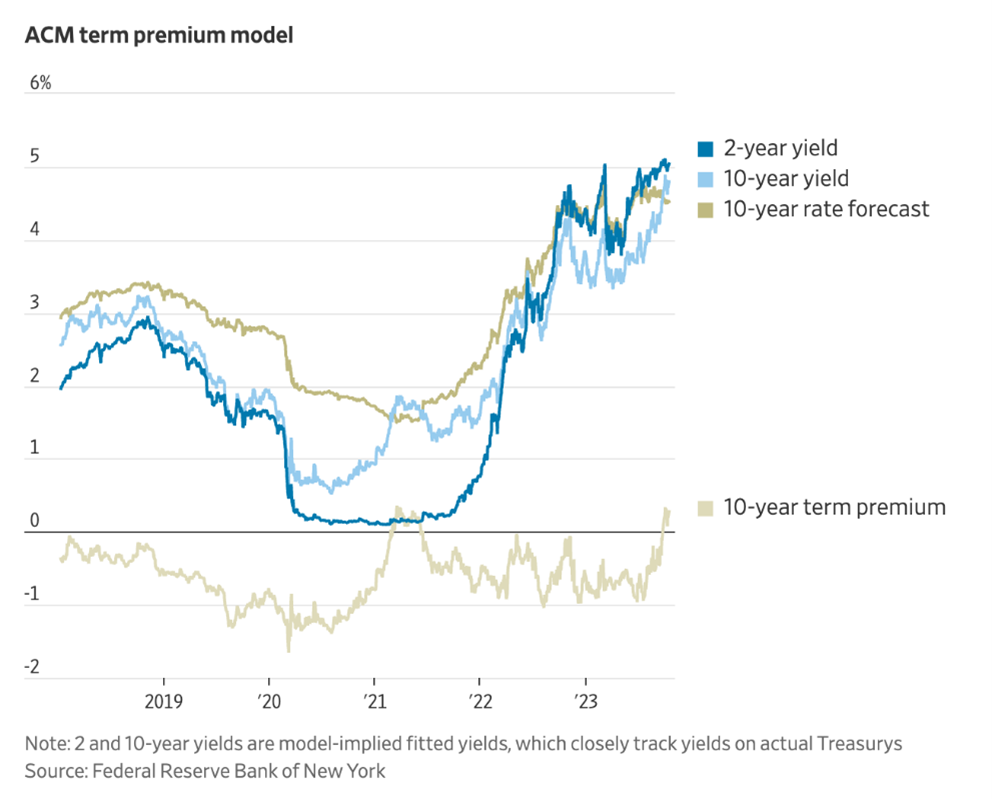
First, some background. Since the end of August 2023, yields on the benchmark 10-year Treasury bond have jumped from 4.09% to 4.91%. Among the reasons for this increase is a resetting of expectations for when the Federal Reserve will stop raising interest rates and begin cutting them.
Yesterday, The Wall Street Journal suggested that the term premium could be playing a role. This is the additional premium traders are demanding via higher yields beyond what would be attributed to monetary policy. The term premium has also risen sharply according to at least one model, the Adrian, Crump and Moench (ACM) model. Its rise suggests that traders are anticipating interest rates to stay higher for longer. As always, expectations and sentiment can change quickly.
“The Biggest Bond Crash Ever?”
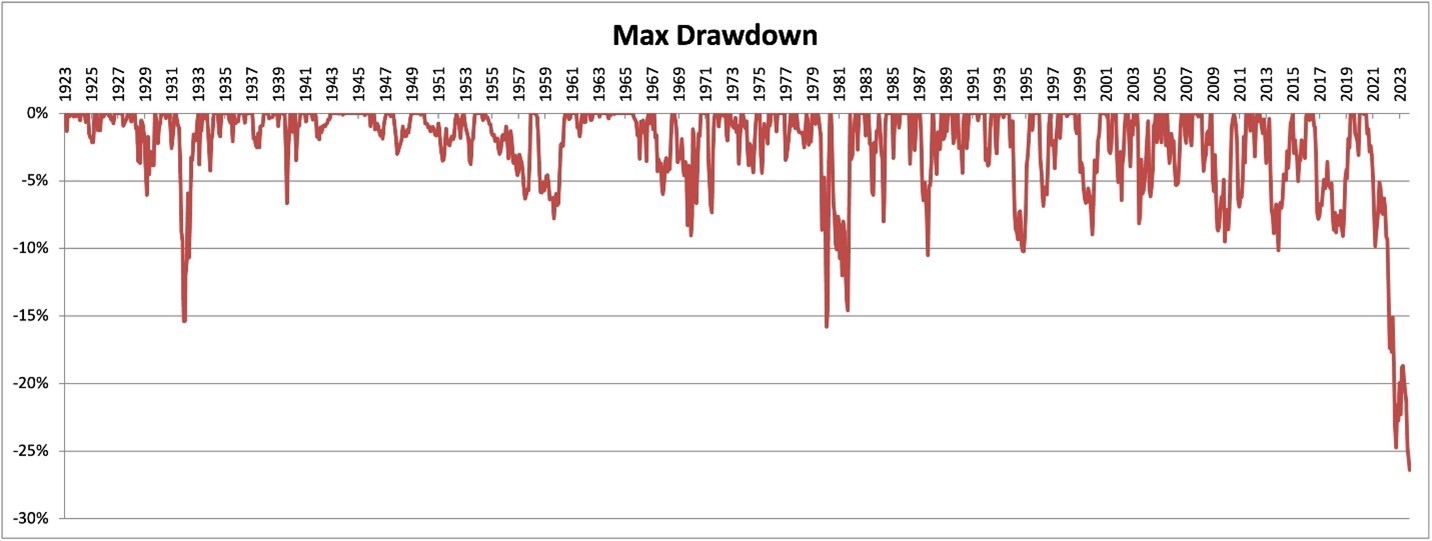
The 10-year Treasury bond yielded 0.68% at the start of October 2020. It has been in an upward trend ever since. Since yields and prices are inversely related, bonds have been in a bear market.
In a tweet posted yesterday, Cambria Funds founder Mebane “Meb” Faber described the downturn as potentially the worst bond crash in history. This chart, shared by Faber, is from Global Financial Data.
Source: Global Financial Data.
High Housing Costs Have Gotten Even More Expensive
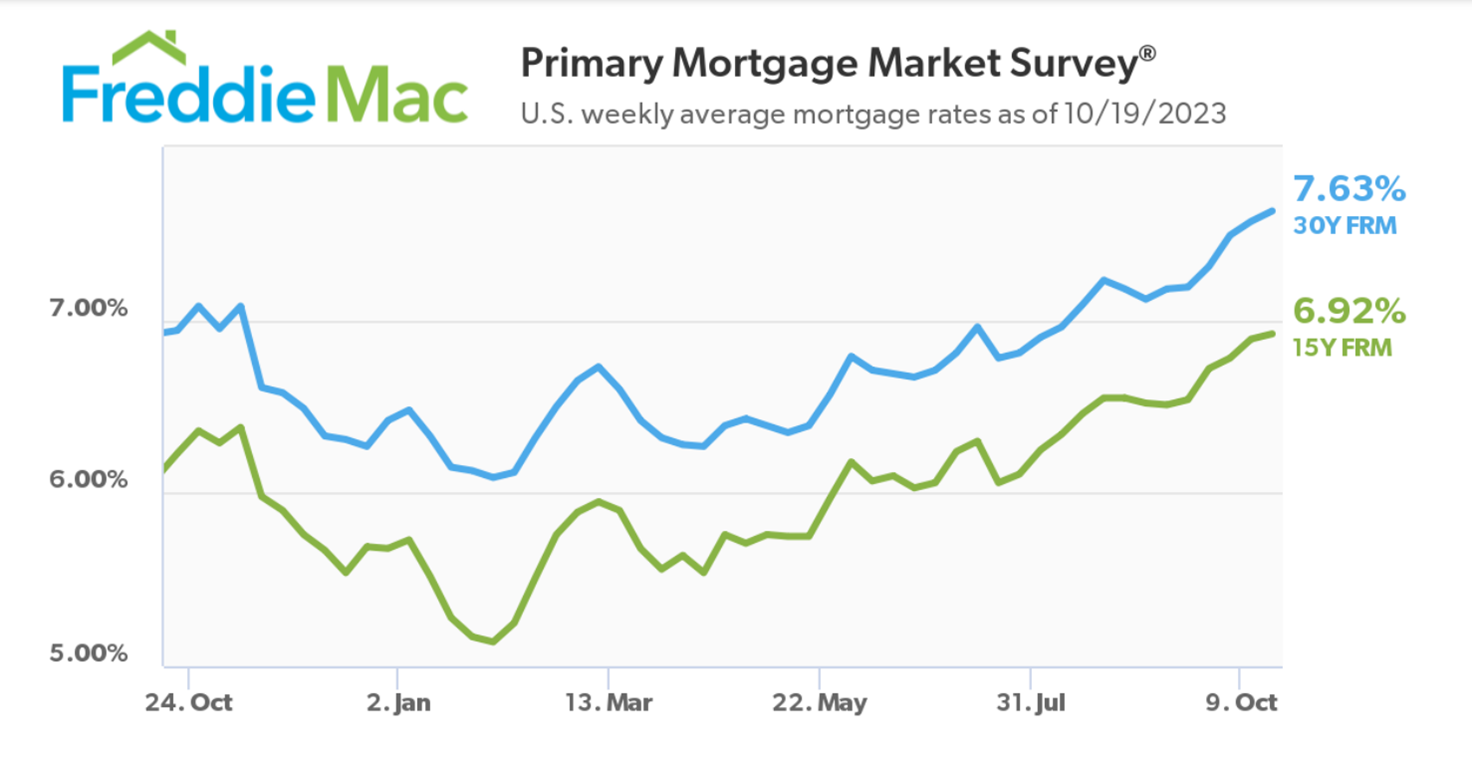
The rise in yields continues to push mortgage rates higher. Here are the latest numbers from Freddie Mac. Is it little wonder why the National Association of Home Builders (NAHB)/Wells Fargo Housing Market index fell this month?
Don’t Carry a Balance on That Card
I am one of those people who charges everything possible to a rewards credit card. It’s worked well for me because I pay off the balances weekly. Doing so keeps my spending in line. More importantly, it avoids any interest charges.
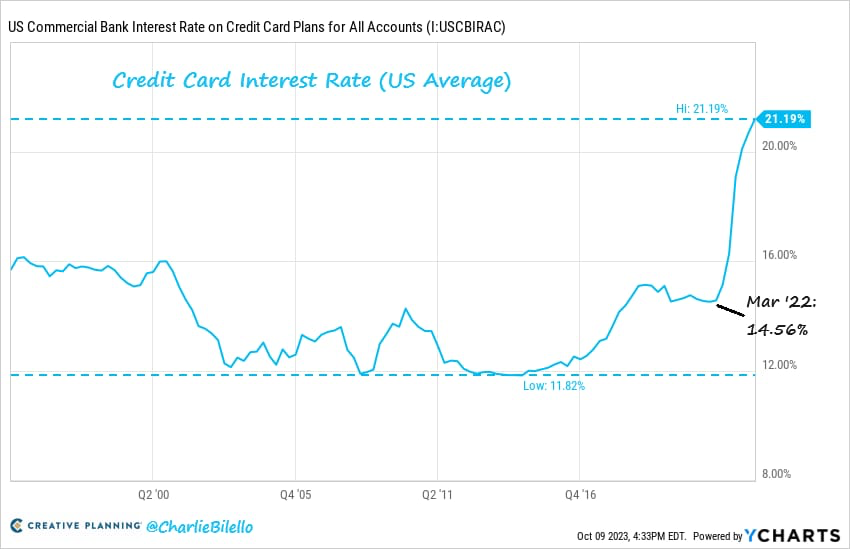
This is a good thing because the average interest rate on credit cards is now 21.19%. Charlie Bilello says this is the highest average rates have been since 1994—which is as far back as the data goes.
The Stock Market Has Largely Been Unscathed by Conflicts
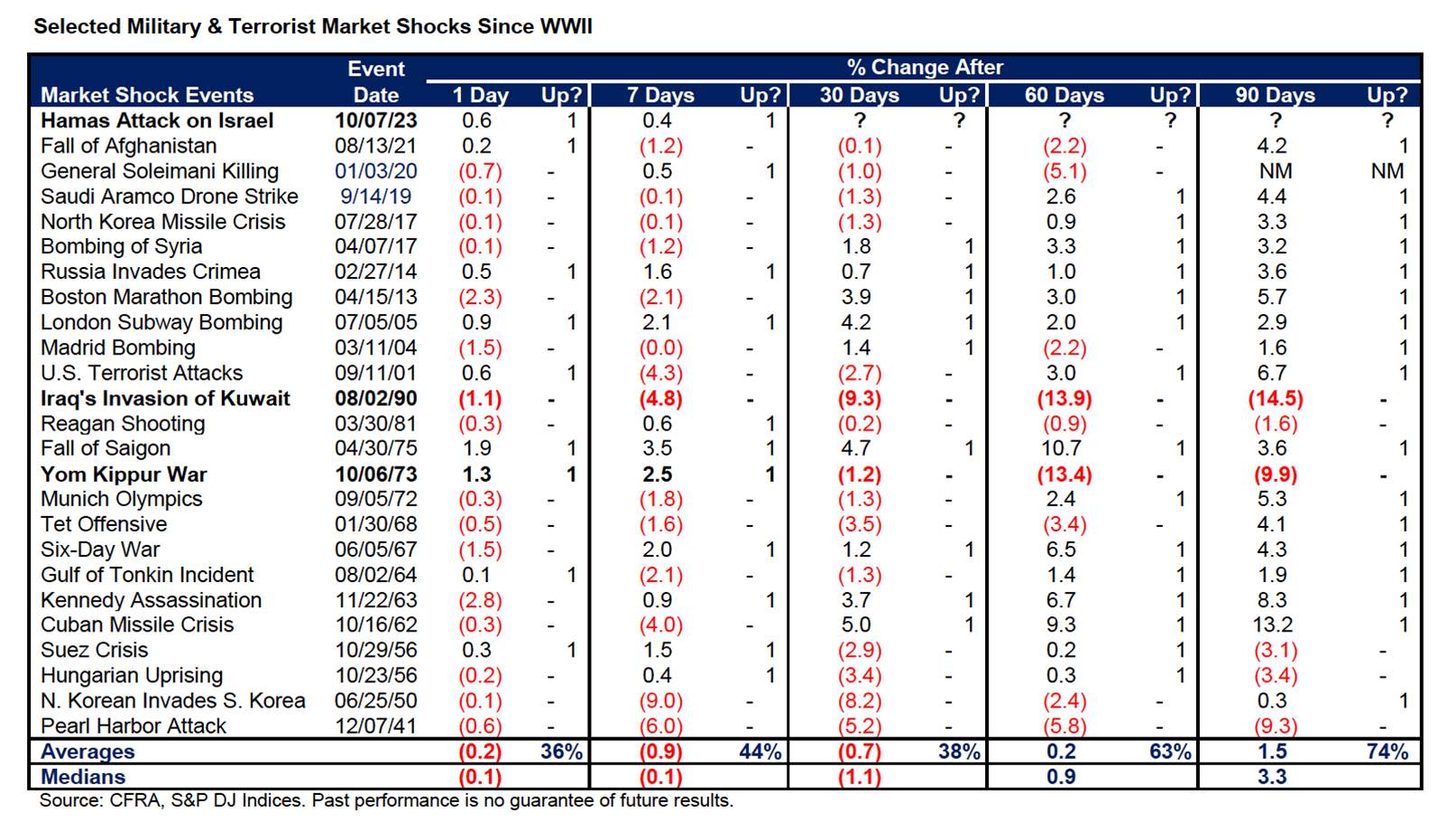
The war in Gaza following Hamas’ murderous attack in Israel has brought the prospect of wider Middle Eastern war to the forefront. While we hope this does not happen and the further loss of life is minimized, our focus here at AAII is investing, not global affairs.
To this end, here is what has happened to the S&P 500 index following past military and terrorist shocks. “In the first 30 days after 12 shocks since 1990, the S&P 500 rose an average of 0.4%,” according to CFRA Research chief investment strategist Sam Stovall. He says these returns have reflected a belief among investors that the conflicts would stay localized. However, two of the biggest drops occurred following conflicts in the Middle East: Iraq’s invasion of Kuwait in 1990 and the Yom Kippur War in 1973.
Third-Quarter Earnings Season Is Off to a Good Start
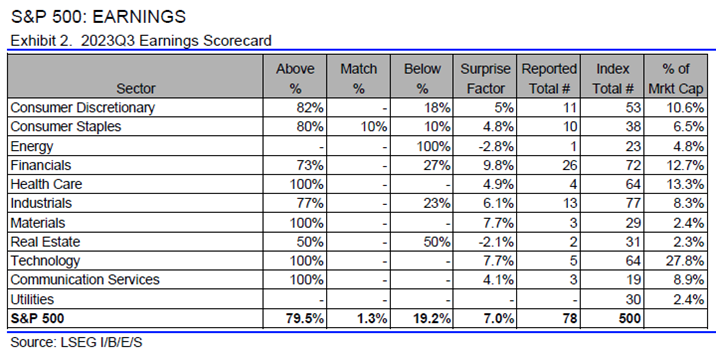
The first reported earnings from S&P 500 companies have been generally coming in above expectations. As of this morning, both the percentage of companies beating (79.5%) and the average magnitude of their beats (7.0%) are above the long-term historical average, per Tajinder Dhillon at LSEG.
Just 78 companies have reported so far, with about one-third from the financial sector. It’s not a representative sample, but still a good start.
Think You Can Forecast Weather Better Than a Meteorologist?
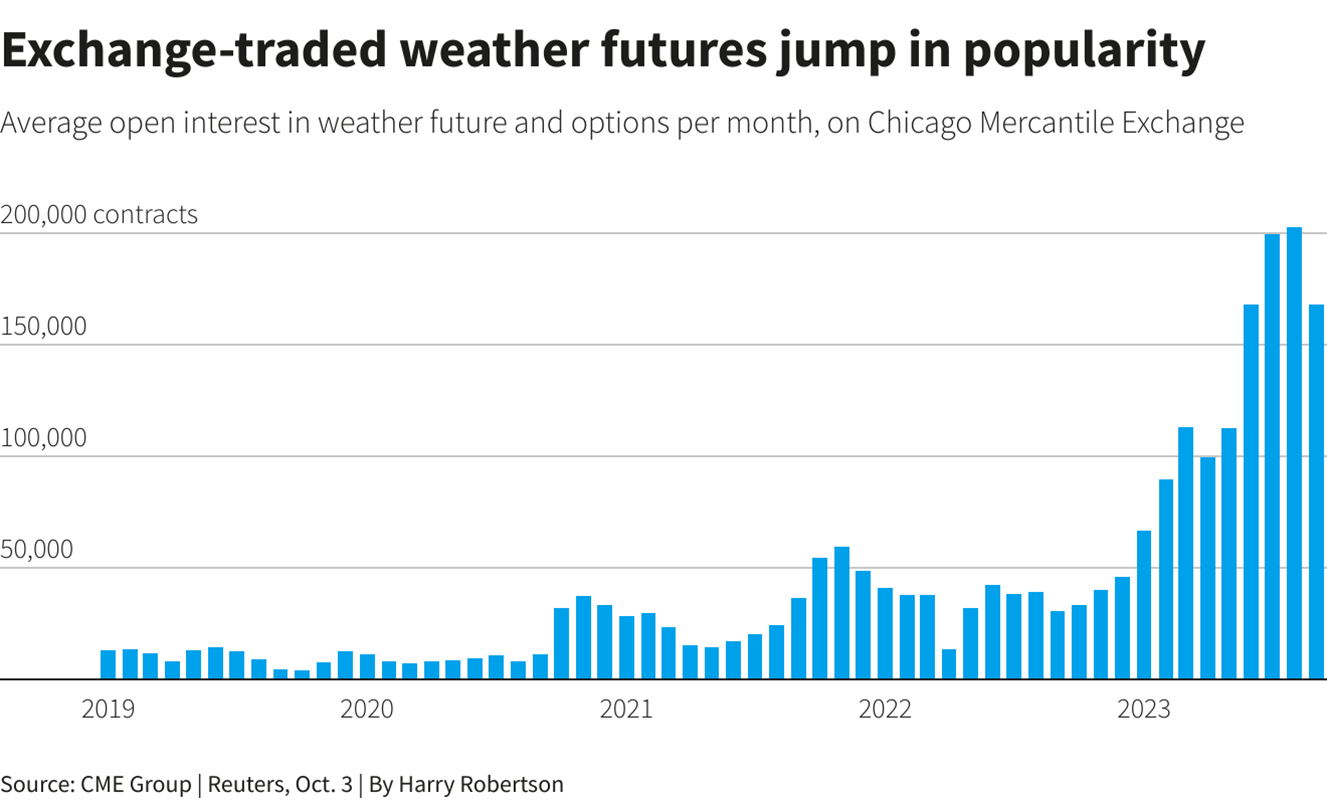
Weather forecasters have long been criticized for their prediction abilities. (And stock market prognosticators—who are even worse forecasters—should thank them for taking the heat.) Yet, this reputation hasn’t stopped traders from betting on the weather. Reuters says that “average open interest in weather futures and options was four times higher in the January to September period than a year earlier, and 12 times higher versus 2019.”
These contracts serve as a hedge against any adverse weather events occurring before the contract expiration date. These events can be a bad storm, unseasonable temperatures or something similar.
Personally, I’ll stick with checking the Dress My Run website every morning instead of dabbling in these in contracts. (Despite its kitschy name, the website rarely steers me wrong about what to wear from a weather standpoint.)

-
Fixed-Income Risks and Opportunities in a Rising-Rate Environment
Given interest rate increases, many bonds and preferred stocks are now offering attractive yields. -
Shop for Yields, but Be Careful About Where You Bank
The best yields can be found online. However, be sure to verify that the bank or credit union is insured. -
Comparing the Tax-Efficiency of High-Yielding Funds and ETFs
Some mutual funds and ETFs distribute potential tax headaches along with income to shareholders, while others are more tax efficient. -
Guiding Heirs: Estate Planning and Investing Talks
The PRISM Wealth-Building Process can assist with communication when passing along your investing knowledge, your inventory of important documents and your final wishes. -
Which Quality Attributes Best Signal Outperformance?
Researchers examined the attributes of the quality factor to see which showed the most reliability as a source of return premium.
AAII Sentiment Survey
Optimism among individual investors about the short-term outlook for stocks decreased in the latest AAII Sentiment Survey. Meanwhile, pessimism fell but remains above average.
Bullish sentiment, expectations that stock prices will rise over the next six months, decreased 5.9 percentage points to 34.1%. Optimism is below its historical average of 37.5% for the fifth time in six weeks.
Neutral sentiment, expectations that stock prices will stay essentially unchanged over the next six months, rose 7.8 percentage points to 31.3%. Neutral sentiment is below its historical average of 31.5% for the fourth time in seven weeks.
Bearish sentiment, expectations that stock prices will fall over the next six months, fell 1.9 percentage points to 34.6%. Pessimism is above its historical average of 31.0% for the fifth time in seven weeks.
The bull-bear spread (bullish minus bearish sentiment) decreased 4.1 percentage points to –0.5%. The bull-bear spread remains below its historical average of 6.4% for the sixth time in seven weeks.
This week’s special question asked AAII members what information they are particularly paying attention to as companies are reporting third-quarter earnings:
- Guidance on future revenues and earnings: 27.2%
- Whether earnings were better or worse than expected: 25.1%
- Sales and/or earnings growth: 21.0%
- Fundamentals such as the balance sheet or cash flow: 18.9%
- Other: 6.2%
Bullish: 34.1%, down 5.9 points
Neutral: 31.3%, up 7.8 points
Bearish: 34.6%, down 1.9 points
Bullish: 37.5%
Neutral: 31.5%
Bearish: 31.0%
See more Sentiment Survey results.

October 12, 2023 Index Fund Expense Ratios May Be Bottoming Out
October 5, 2023 Financial Independence and Retirement
September 28, 2023 James Cloonan's 10 Commandments for Investing
September 21, 2023 September Charts of Interest: Some Stocks Stay Expensive

Discussion
John L from NJ posted over 2 years ago:
In his book "The Four Pillars of Investing" William Bernstein said "Long term treasuries and corporate bonds ... do not have [an] acceptable return / risk profile" The chart from Meb Faber really drives that point home. I remember the 1970s and 1980s when losses in long term bonds had been going on for so long that very few were willing to invest in long term bonds. Eventually long term rates peaked and started a 40 year slide. After 10 to 20 years from the rate peak; many forgot the 1940 to 1980 nightmare performance of long term bonds. And for the next 20 to 30 years they were reaping rewards. Until recently when they discovered they were picking up nickels in front of a bulldozer.
Dennis Lima from CO posted over 2 years ago:
Thanks for the Dress My Run link Charles. I never heard of it before but will start using it before my runs and walks. Being outside gives me at least a little bit of relief from all the craziness happening in the world these days.
Barry from TX posted over 2 years ago:
Bond term premiums are rising. A bond market crash may be imminent. Housing costs/mortgage rates are rising. Credit card balances are rising and interest rates are rising. Behind ALL these trends in 5 of 7 charts is the specter of rising / higher interest rates, yet the Powell FOMC has declared a near-term moratorium on rate hikes because the economy is so strong ... AND ... the Yellen Treasury Dept is increasing the number of bonds being offered for sale (which the Fed is obligated to buy and hold at any interest rate) and the bond markets are demanding ever higher interest rates to buy them due to the fragility of the government debt structure. And the government keeps spending. As old' Ev Dirksen (of IL) said 60 years ago, “A billion here, a billion there, and pretty soon you're talking real money." The problem is that today it's trillions (that's 1,000,000,000,000,000). Guess who is going to pay for this spending spree by unelected bureaucrats. Meanwhile, Bullish and bearish AAII members are herding toward a "neutral" outlook as to where markets are headed in the next six months. There is no safety to stand still in the middle of the road. The traffic coming both ways can get you either way. That is why "the chicken" really crossed the road.
Ken from NC posted over 2 years ago:
Hi Charles, I especially liked your term premium figure above. I noticed that it has been 18+ months in which the yield on 2 yr exceed 10 yr Treasuries. (And still do!). I am interested in your thoughts on how the duration of this and past inversions compare and if there is any correlation with the depth of the “impending recession”? I always enjoy your insights and topics. Ken
You need to log in as a registered AAII user before commenting.
Create an account